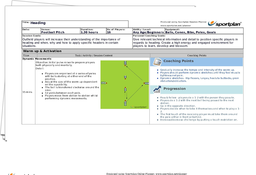
Heading the ball is a skill that can be hugely effective if used correctly, yet is one that many amateur and younger players often shy away from. Developing the correct technique plus making sure the players understand the type of header that best suits the situation is vital to breaking down any reservations players have about heading the ball, therefore making them a far more effective player.
What’s in the Session?
Begin the session with a dynamic warm-up to get your players focussed mentally as well as physically ready for the session. The technical part of the session looks at heading specifically, breaking down the skill, stripping it back to the raw idea of ‘why’ and ‘how’ before building it back up to eventually be taking it into a match-specific scenario. The session goes through each of the following stages:
Complete the session with a conditioned game to develop their skills into a match-specific situation.

The 2026 World Cup is nearly upon us. Here is Sportplan's preview for the tournament on who we think is going to do well and which teams to look out for.

Discover our new Coaching Trends section - in-depth articles covering the latest tactics, techniques and innovations across Football, Hockey, Cricket, Rugby, Netball, Basketball, Tennis, Handball and Volleyball.

Save yourself a scare this Halloween and ensure your session runs smoothly. No chaos, no fright, just structure.


Register for FREE and get coaching tips, top drills, session and more every week!