Early in the season most teams defend the way they were taught as individuals: stay in front of your player and hope everyone else does the same. It holds up until the first quick guard gets past their defender, and then the path to the rim is wide open because nobody else was ready to help.
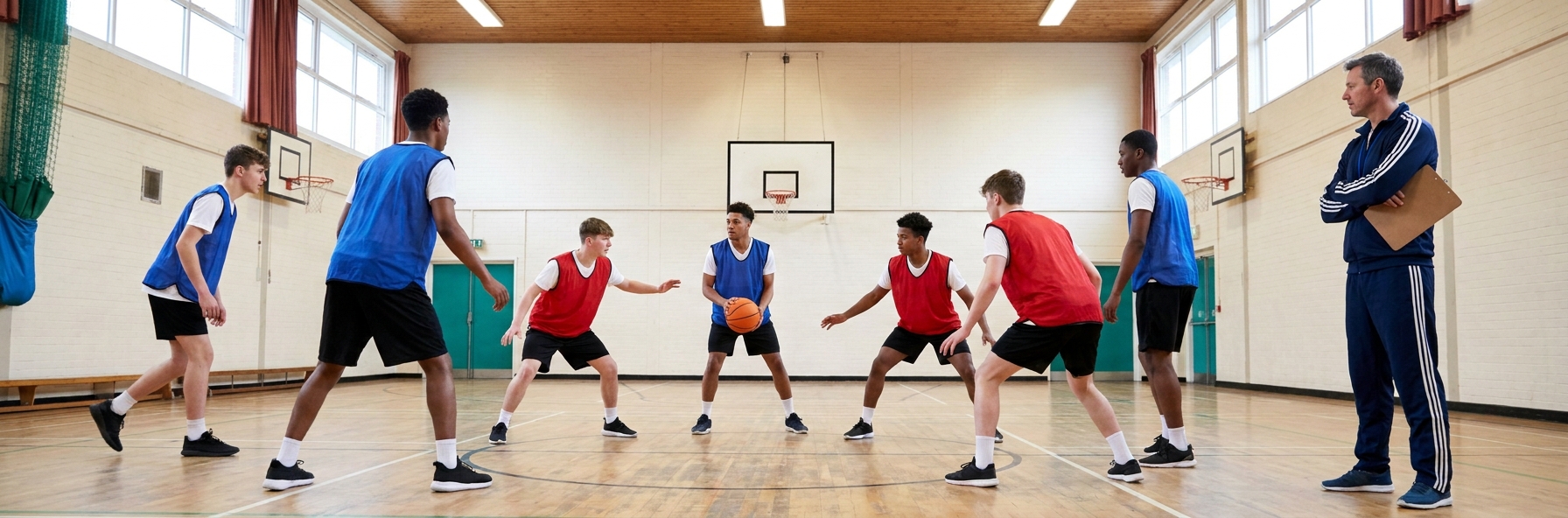
Help defence fixes that. It is not about being more athletic; it is about where you stand when the ball is somewhere else. The shell drill, four attackers against four defenders around the perimeter, is the simplest way to teach it, and it is worth building into your sessions from the very first week.
Why Help Defence Matters
No defender stops every drive on their own, especially at club and school level where players are still learning to slide their feet. When the defence relies on individual stops, one mistake means two points.
A team that understands help positions turns one mistake into a second chance. The drive meets a body in the lane, the ball gets kicked out, and a well-drilled defence rotates and closes the gap. It also takes pressure off your on-ball defender, who can play tighter knowing someone is behind them.
The Positions: Ball, One Pass Away, Help Side
Every defender's position is decided by where the ball is, not where their player is. Teach three positions and name them the same way every time.
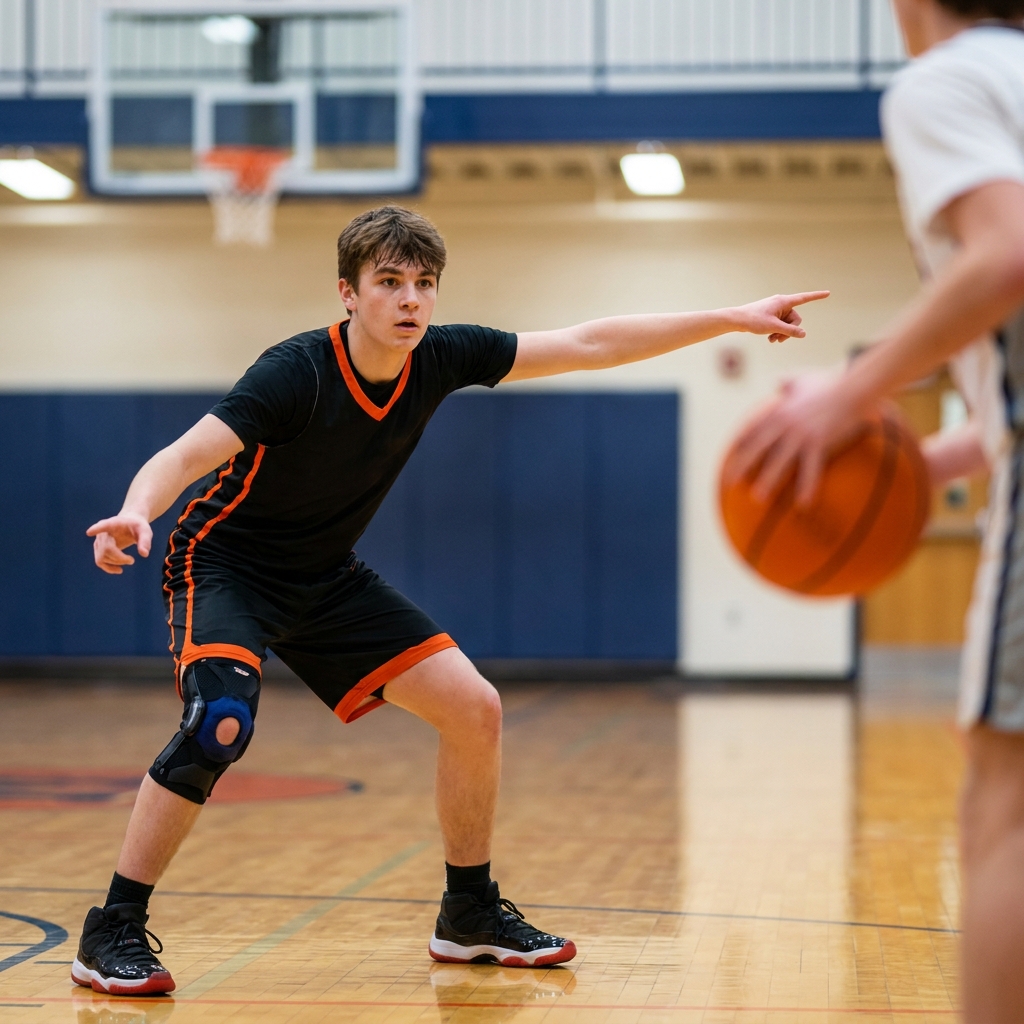
On the ball: close enough to touch, in a stance, taking away the easy drive and making the pass difficult.
One pass away: a player who could receive the next pass. The defender steps into the passing lane with a hand in it, sometimes called denial, but still close enough to recover if their player cuts to the basket.
Help side: any player two passes away, on the far side of the court. The defender sinks towards the middle of the lane with one foot roughly on the midline. This is the player who stops the drive.
For all of them, use ball-you-man. The defender should be on the line between the ball and their player, slightly towards the ball, able to see both without turning their head. Some coaches call it "pistols": point one hand at the ball and one at your player. If you cannot point at both, you are in the wrong spot.
A Four-Step Framework for Rotations
Step One: Jump to the ball on every pass. When the ball moves, all four defenders move while it is in the air. The new on-ball defender closes out, the old one jumps towards the ball into a one-pass-away or help position. Nobody stands and watches the pass.
Step Two: Stunt and recover. When a player starts to drive, the nearest one-pass-away defender takes a quick step or fake towards the ball, then gets back to their own player. It slows the dribbler down without leaving a shooter open.
Step Three: Help, then rotate. If the drive gets past, the help-side defender steps into the lane and takes it on, ideally outside the restricted area. The next nearest defender drops to cover the help defender's player, and the whole shell shifts one space. The rule is simple: the defender nearest the basket helps, and everyone behind them fills the gap they left.
Step Four: Close out and talk. When the ball is kicked out, the defender responsible sprints, then chops their feet to arrive under control with a high hand. Every step of the rotation is called out loud: "ball", "help", "I've got the drive", "rotate".
How to Train It
Start the shell at walking pace with no dribbling. Four attackers pass the ball around the perimeter, holding each catch for two seconds. The coach freezes the drill after a pass and checks every defender's position. This feels slow, but it is where the habits get built.
Next, allow one attacker to drive on the coach's call. Defenders practise stunt and recover, then full help and rotate. Only once the rotations are automatic should you go live, with attackers free to drive, cut and shoot and the defence needing three consecutive stops to come off.
Add a scoring condition that rewards what you want. The defence earns a point for a charge taken, a deflection, or a stop where every defender was heard talking. Players quickly work out that silence costs them.
Key Coaching Points
- Position is set by the ball, not by your player; move on every pass while the ball is in the air.
- Stay ball-you-man and see both, and use pistols as the quick check.
- Help-side defenders sink to the middle of the lane with a foot near the midline, ready to stop the drive.
- Stunt and recover to slow a drive without giving up an open shot.
- When the helper commits, the next defender rotates down and the rest of the shell fills the gap.
- Talk on every possession; a quiet defence is a late defence.
Recommended Drills
 Defensive Position Drill
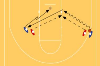 2v2 Help Defence Drill
 Defensive Denial Drill
 Breakdown Play: Furthermost Defender
Frequently Asked Questions
How far off their player should a help-side defender be?
Further than most young players are comfortable with. Two passes away, they should be close to the middle of the lane, not hugging their player on the far wing. The question to ask is whether they could beat a drive to the rim and still get back if the ball is swung to their side.
We get beaten by the skip pass after we help. What are we doing wrong?
Usually the help comes too early or from the wrong player, or the rotation behind it does not happen. Check that the nearest help-side defender is the one stepping in, that the next defender drops to cover, and that closeouts start while the pass is in the air rather than when it is caught.
Is the shell drill suitable for younger or beginner teams?
Yes, as long as you slow it down. Walk it through with no dribbling, freeze after each pass and let players point to where they should be. Beginners pick up ball-you-man and help side quickly when it is taught as positions rather than a system.