The Evolution of Goalkeeping
Twenty years ago, a goalkeeper's job was simple: stop shots, catch crosses, and punt it long. Today, the best keepers in the world complete more passes than some midfielders.
The modern goalkeeper is expected to be the first playmaker. They initiate attacks, offer a passing outlet under pressure, and dictate the tempo of build-up play. If your keeper can't play with their feet, you're starting every attack with 10 players.
Why Building From the Back Works
When executed properly, playing out from the goalkeeper creates a numerical advantage. The opposition must commit players to press, which opens space higher up the pitch. One successful pass to beat the press and suddenly you're attacking with acres of room.
The alternative - going long - gives you roughly a 50/50 contest. Building from the back, when done well, maintains possession while drawing opponents out of their defensive shape.
The 3 Build-Out Patterns Every Team Needs
1. The Central Split
Centre-backs split wide, goalkeeper steps into the space between them. This creates a triangle that's almost impossible to press effectively. The keeper has two short options (the centre-backs) or can play directly to midfield if the press is poorly organised.
2. The Full-Back Drop
One full-back drops into the back line, creating a back three. The goalkeeper can now play to either centre-back or the dropping full-back. The opposite full-back pushes high to stretch the pitch and create an outlet if the press is beaten.
3. The Midfielder Anchor
A holding midfielder drops between or alongside the centre-backs. The goalkeeper plays short to one of the three, then the midfielder pivots to play forward. This is the hardest to execute but the most effective at breaking through the first line of pressure.
Training the Build-Out
Building from the back requires repetition and clear communication. Here's how to train it effectively:
Stage 1: Patterns Without Pressure (10 mins)
Walk through each pattern with no opposition. Focus on body shape, timing of movement, and communication. The goalkeeper must be comfortable on both feet - weak foot passing is essential.
Stage 2: Shadow Press (15 mins)
Add two attackers who apply passive pressure. They can close down but not tackle. This teaches players to recognise pressing triggers and select the right pattern.
Stage 3: Live Press (20 mins)
Full pressure scenarios. Start in a 4v3 build-out (keeper + 3 defenders vs 3 attackers). Progress to 5v4, then 5v5. Award points for successful progressions past halfway.
Recommended Drills
These drills will help your team master building from the back:

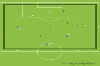
Sample Session: Building From the Back
A 60-minute session to develop your team's build-out play:
- Warm-up (10 mins): Goalkeeper footwork drills with short passing circuits
- Technical (15 mins): Pattern recognition - walk through all three build-out shapes
- Game-Related (20 mins): 6v4 build-out game - attacking team must complete 5 passes before crossing halfway
- Game (15 mins): 8v8 with mandatory goalkeeper involvement - goal only counts if GK touched ball in build-up
Common Build-Out Mistakes
- Static positioning: Movement creates passing lanes - if no one moves, the press wins
- One-footed keepers: Opposition will force them onto their weak side - train both feet religiously
- Slow tempo: The press gets set if you dawdle - play with purpose and speed
- No escape route: Always have a long option if the press is perfect - don't force it into danger
- Poor communication: The goalkeeper must command - if they're silent, chaos follows
Frequently Asked Questions
What if my goalkeeper isn't comfortable on the ball?
Start with low-pressure passing circuits in every training session. Even 10 minutes of footwork before the main session makes a difference. Build confidence gradually - don't throw them into high-pressure build-out scenarios until they're ready.
Should we always play out from the back?
No. Building out is a tool, not a religion. If the opposition presses perfectly or conditions make short passing risky, going long is the right choice. The best teams can do both and switch seamlessly.
What age should we start teaching build-out play?
From U10 onwards, players can begin learning positional concepts. Keep it simple - focus on the goalkeeper having two short options and one long option. Complexity increases with age and ability.
How do we handle a high press when building out?
Patience and trust in your patterns. If the press is coordinated, one vertical pass often breaks the entire structure. Train your players to recognise when to hold and when to play through. The panic pass is what the press wants.