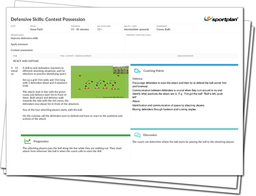
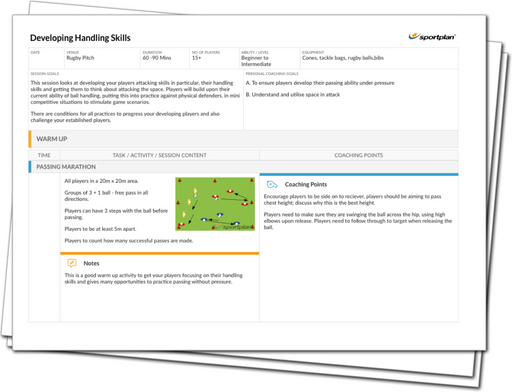
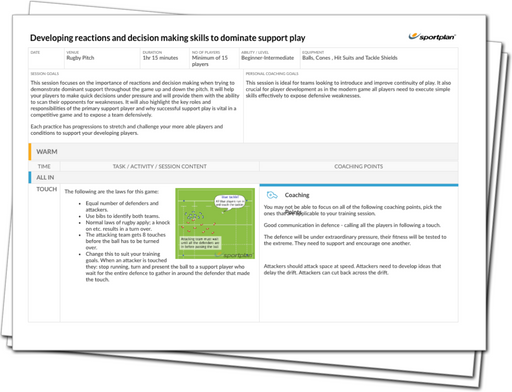
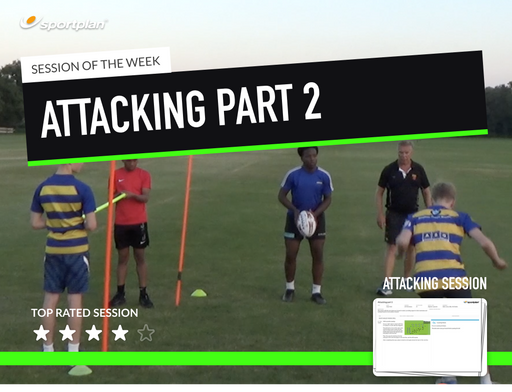
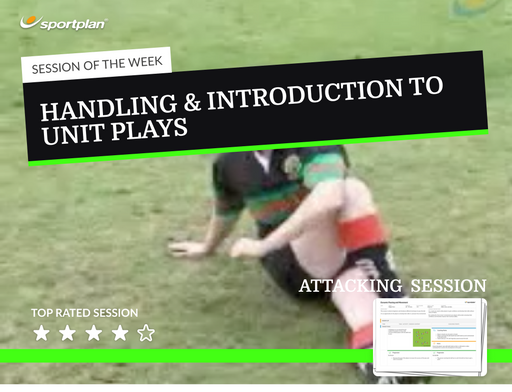
Stage 1 begins with some running ladder work (if you don't have ladders you can just use cones) and focuses on changes of pace - changing direction, slowing down and speeding up.
Once your players are nice and warm we then progress on stage 2 - which aims to help them to understand attacking patterns and react to their surroundings. Throughout the course of stage 2 you should be asking your players the following questions:
"Why did you make that decision?" and "What other decisions could you have made?"
During this stage players will constantly be making snap decisions - do they feint and go it alone or should they drop their shoulder and play the pass? Come the end of this session if you focus on the process goals (correct decisions being made) rather than simply looking at the outcome goals you'll be able to ensure your player fully take on-board the lessons this session has to offer!

in more ways than one
 sportplan_netball

in more ways than one
sportplan_rugby

Tacklers are aiming lower, so carriers who dip late put heads at risk. Teach footwork, a strong early body height and leg drive to win the collision safely.

The hooker's brake foot moved from trial into full law in July 2026. Here is how to coach it so your front row stays stable, legal and safe.
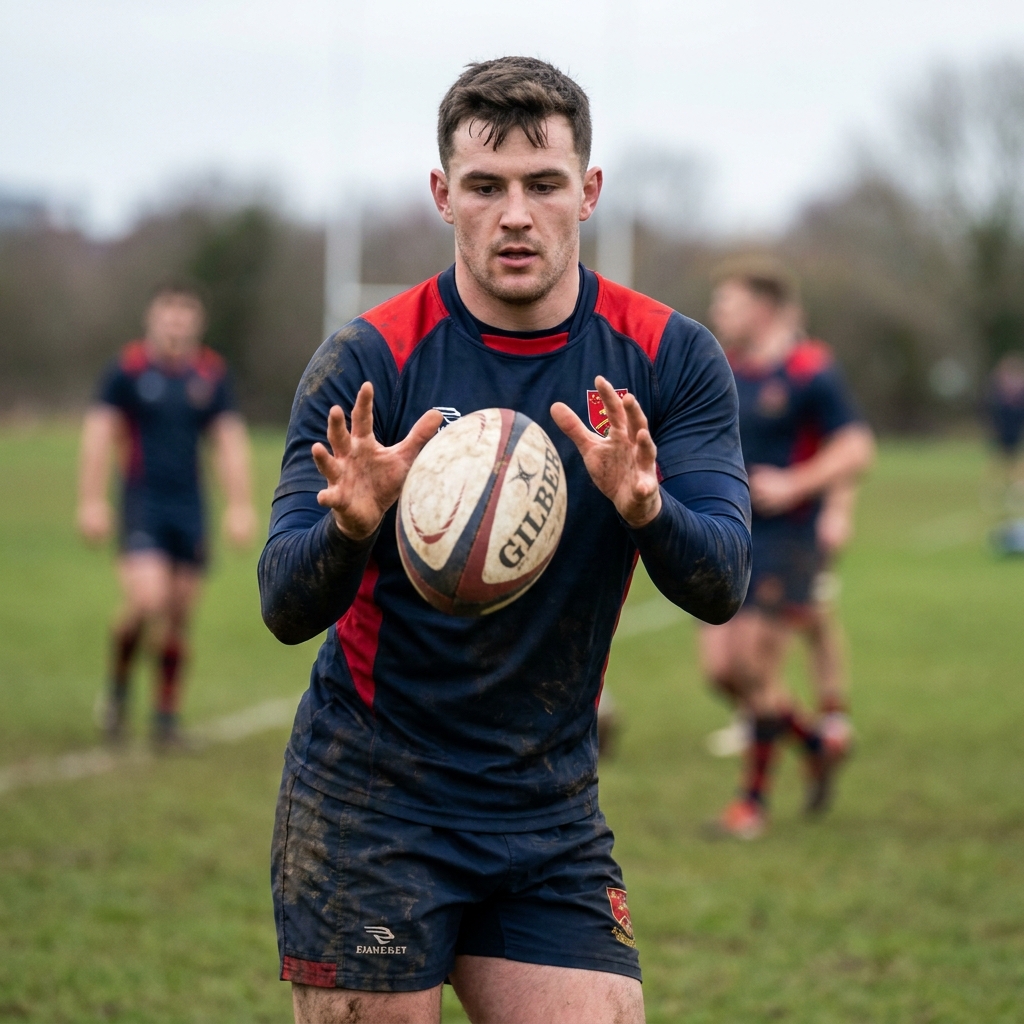
Your players can pass beautifully in a warm-up grid. Then a defender closes, their lungs are burning, and the ball goes to ground. Here is how to build catch-pass skills that hold up when it matters.