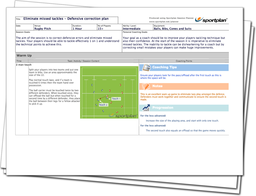
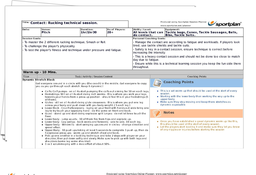
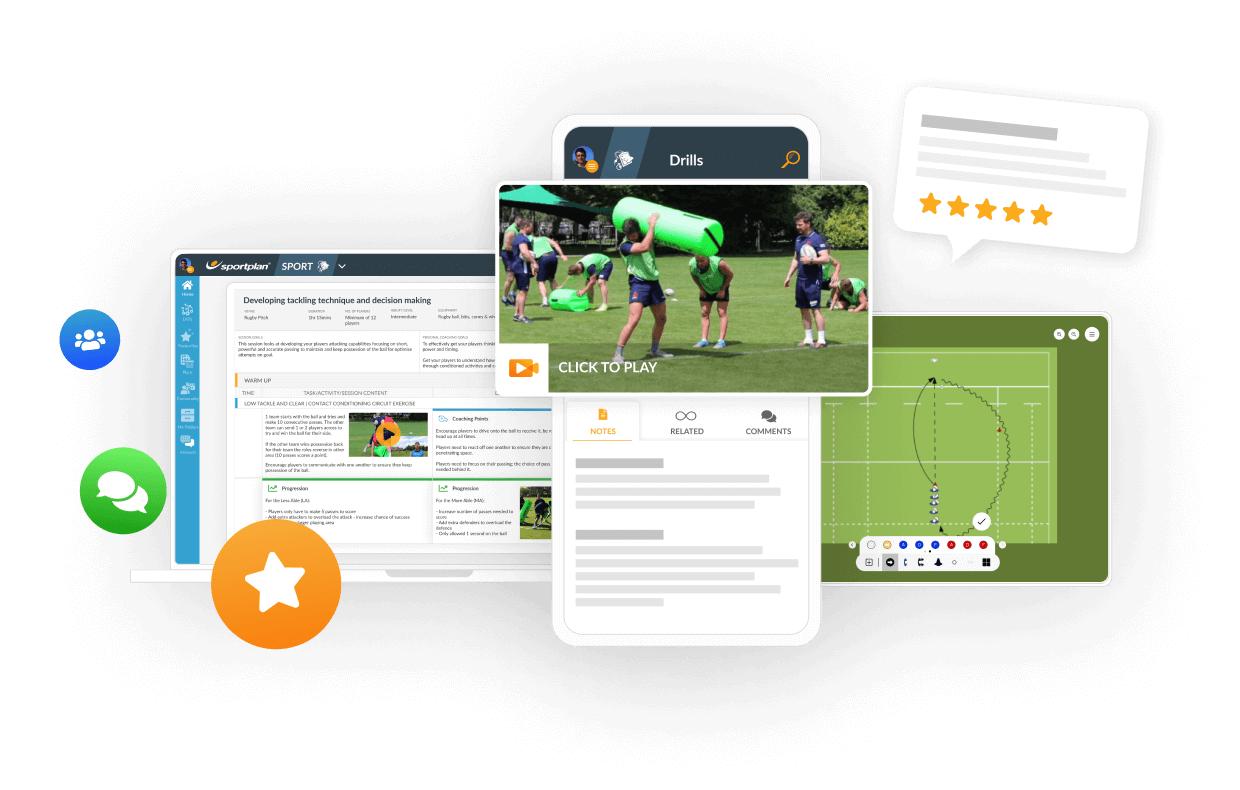
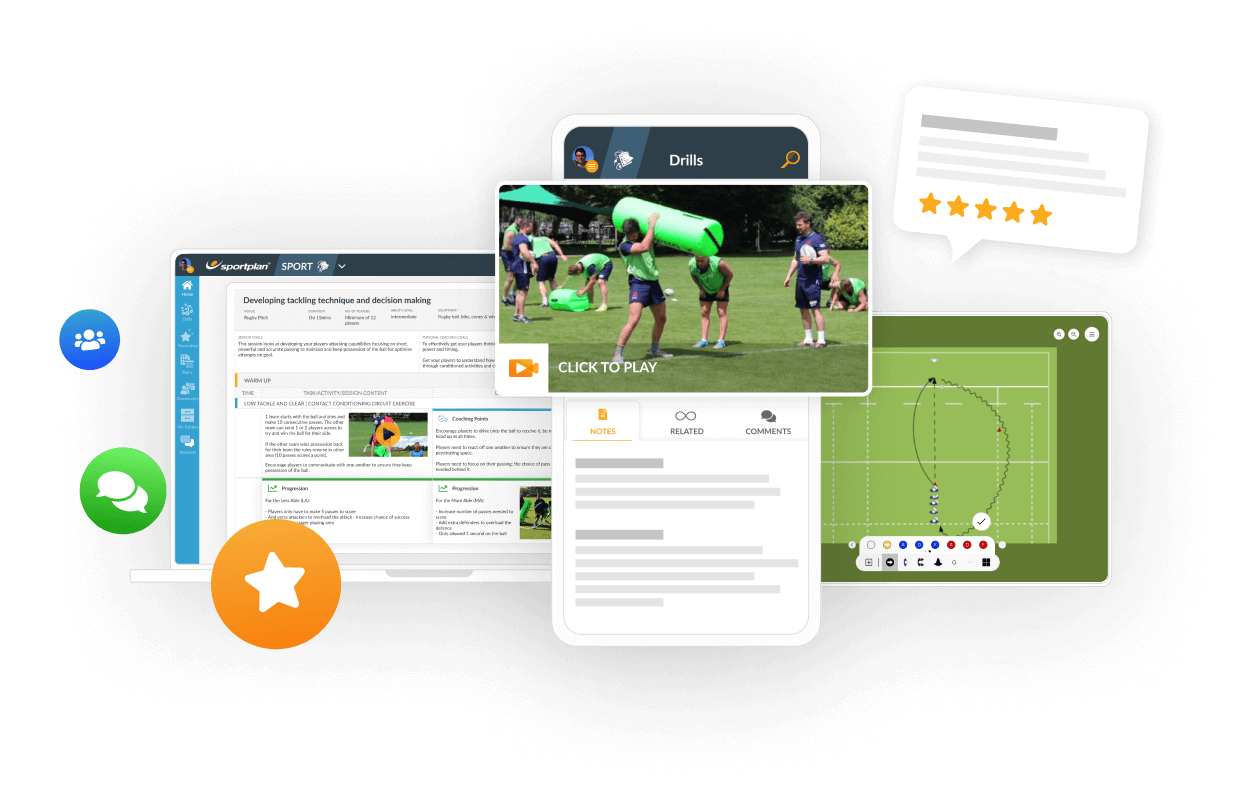
The aim of the session is to correct defensive errors and eliminate missed tackles.
Your players need to be able to tackle effectively 1 on 1, and that's where this session comes in to help your players understand the technical points needed to achieve this. The inability to tackle can be disheartening for a coach but by correcting small mistakes, as outlined in this plan, your players can make huge improvements.
What's in the Session?
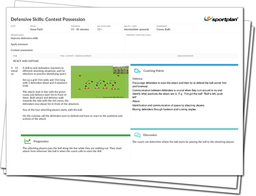
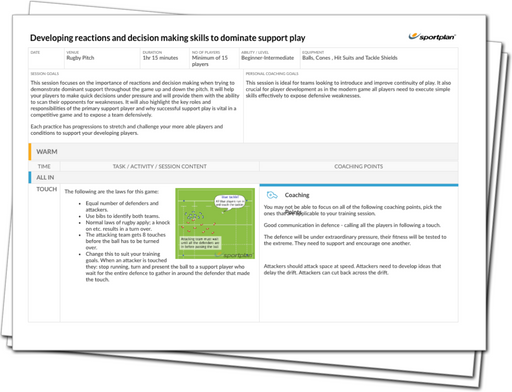
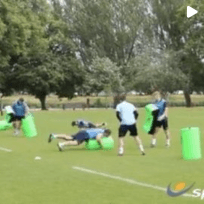
We start with an excellent warm up game to eliminate lazy play amongst the defence. Once everyone's nicely warmed up it's time to develop the skill - to do this we focus on communication at the back and stopping the offload or the player.
Once you've worked through these drills and their progressions with your players it's time to put the skills into a conditioned game, with a clear focus on defence and communication - preparing your players nicely for their next match.
in more ways than one
 sportplan_netball
in more ways than one
sportplan_rugby
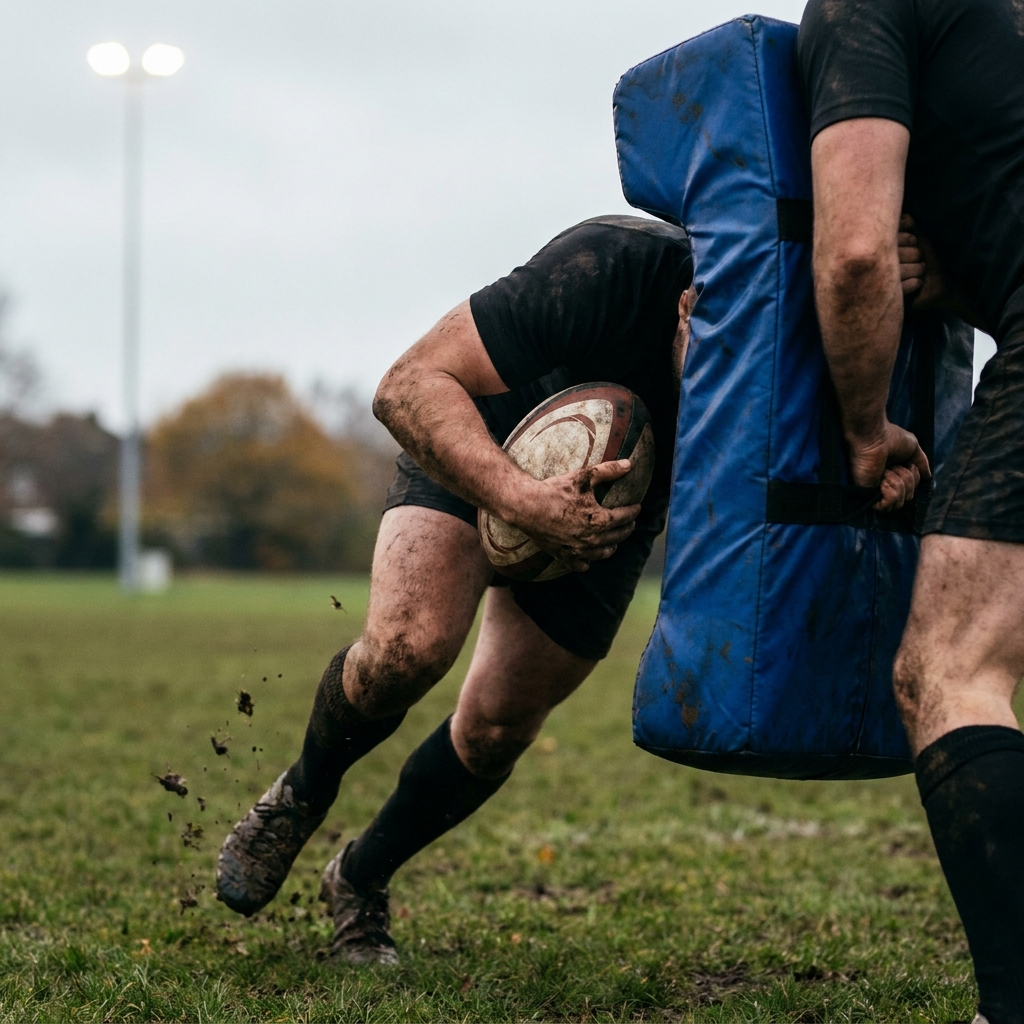
Tacklers are aiming lower, so carriers who dip late put heads at risk. Teach footwork, a strong early body height and leg drive to win the collision safely.
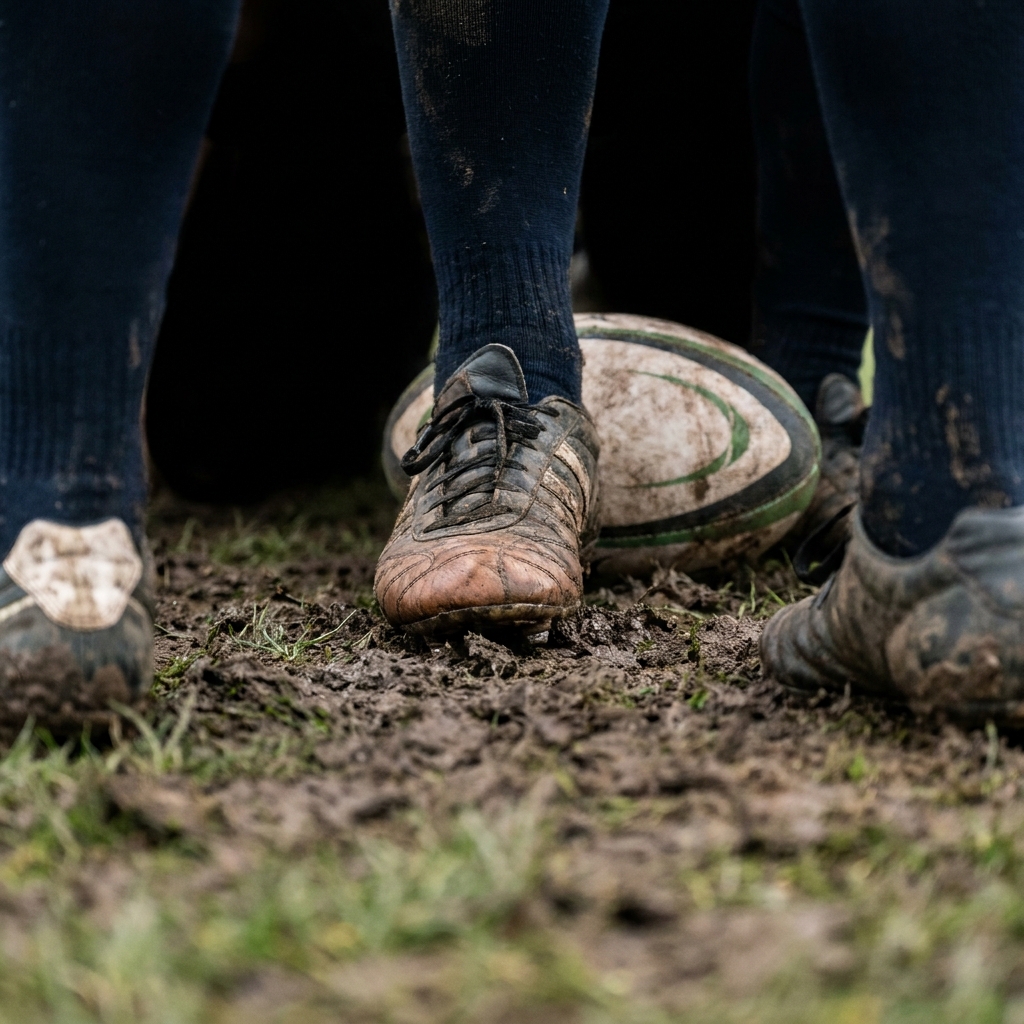
The hooker's brake foot moved from trial into full law in July 2026. Here is how to coach it so your front row stays stable, legal and safe.
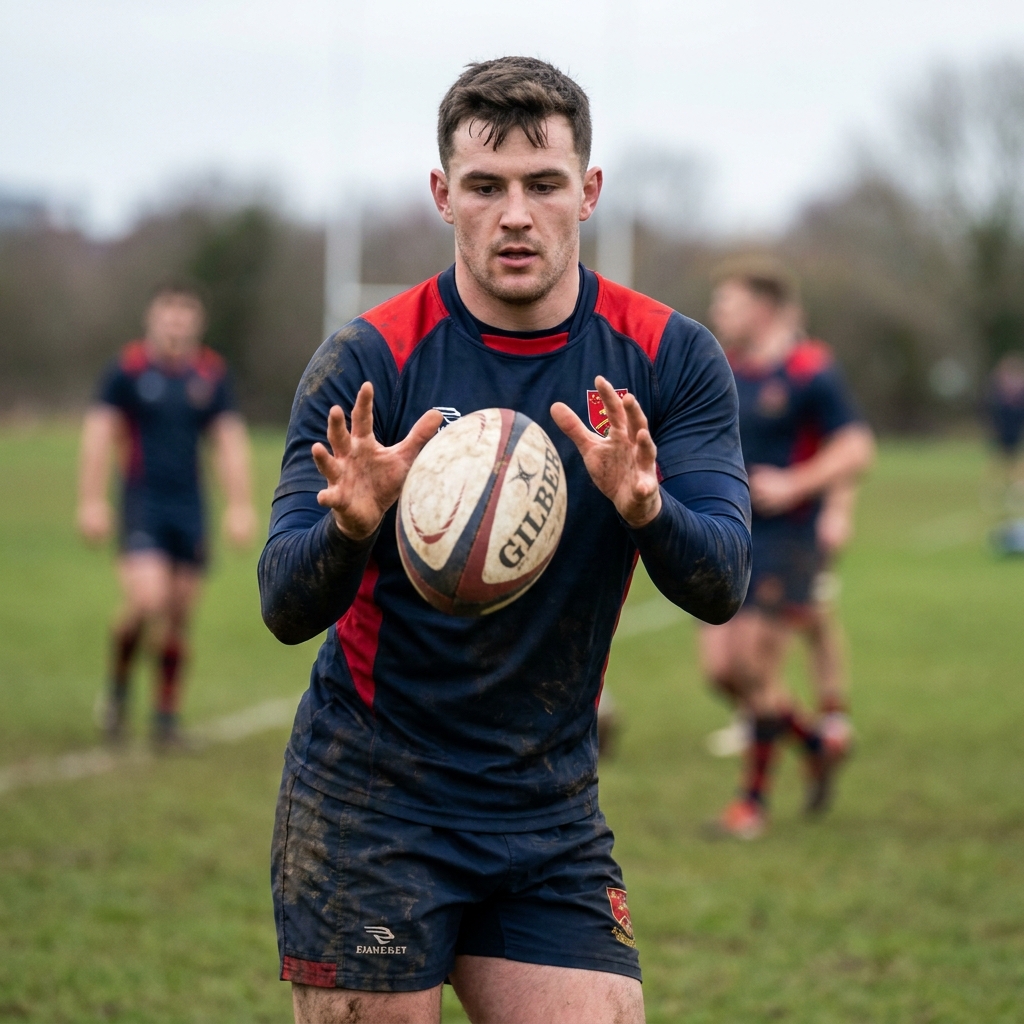
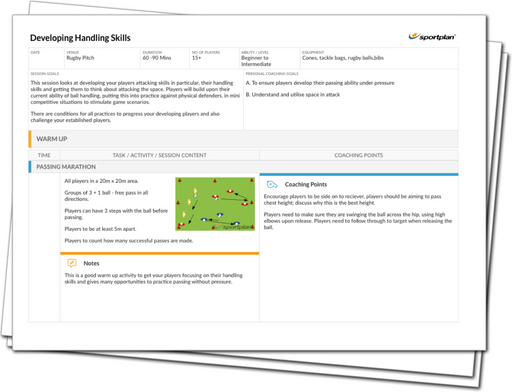
Your players can pass beautifully in a warm-up grid. Then a defender closes, their lungs are burning, and the ball goes to ground. Here is how to build catch-pass skills that hold up when it matters.