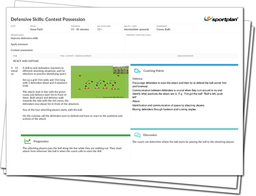
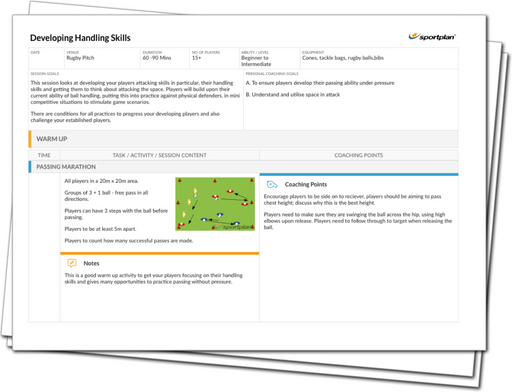
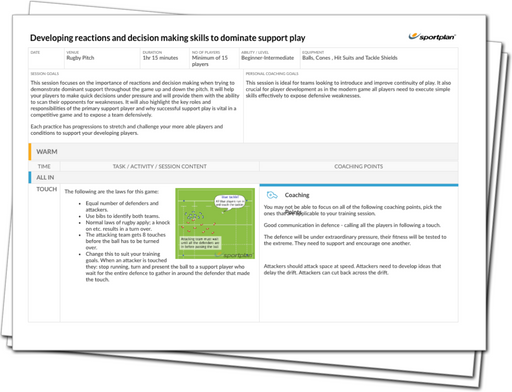
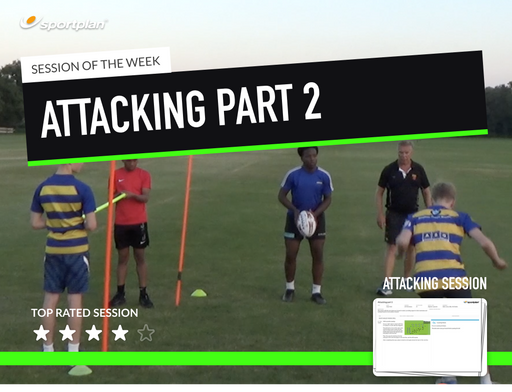
Improve how your players keep the ball alive.
The aim of the session is to get your players thinking about crossing the gain line more effectively, by keeping the ball alive and gets your players to make quick decisions under pressure, experimenting with various passing/offloading options during and after contact.
What's in the Session?
To get your players buying into the ethos of quick rugby we start this session with two conditioned games of touch, getting players to look for space and warm up their hands. Following this we develop the skill with two channel practices designed to give your attacking players success and practice offloading before finishing with a quick game that ensures the ball is kept alive.
This plan also has progressions for you more able players and conditions to develop your less able players.
Learning outcome:
All players should understand when to pass or offload (and what option is more appropriate) and should be able to pass off both hands under pressure in and out of contact.
in more ways than one
 sportplan_netball
in more ways than one
sportplan_rugby
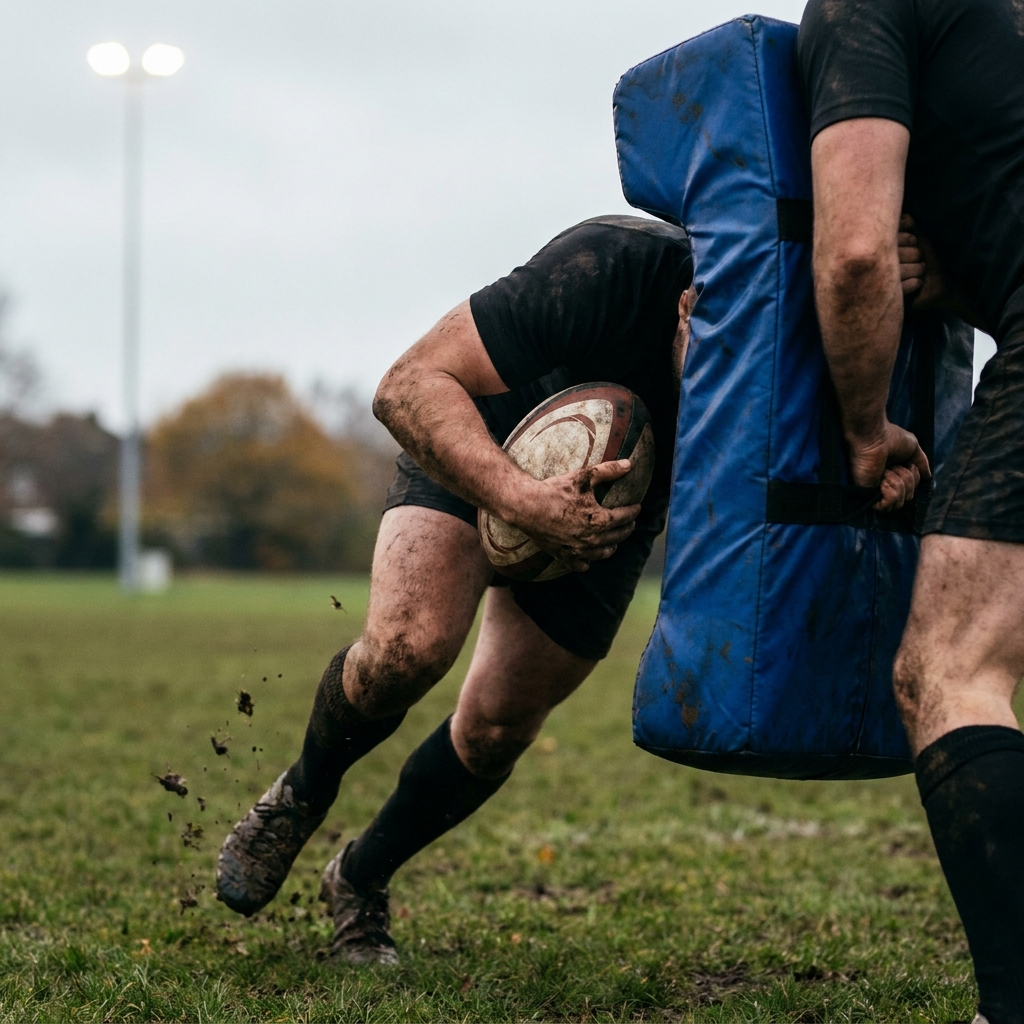
Tacklers are aiming lower, so carriers who dip late put heads at risk. Teach footwork, a strong early body height and leg drive to win the collision safely.
The hooker's brake foot moved from trial into full law in July 2026. Here is how to coach it so your front row stays stable, legal and safe.
Your players can pass beautifully in a warm-up grid. Then a defender closes, their lungs are burning, and the ball goes to ground. Here is how to build catch-pass skills that hold up when it matters.