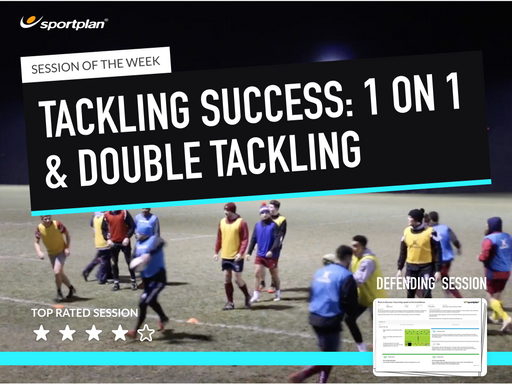
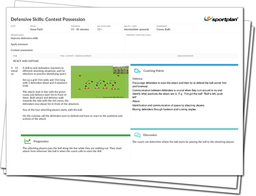
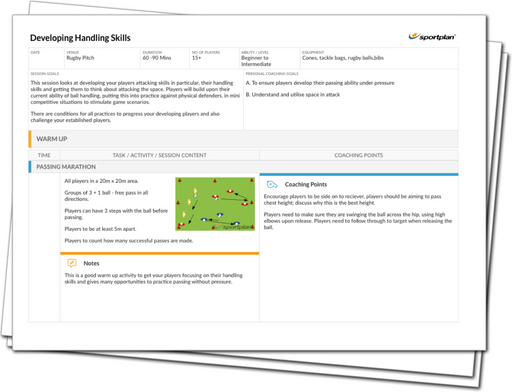
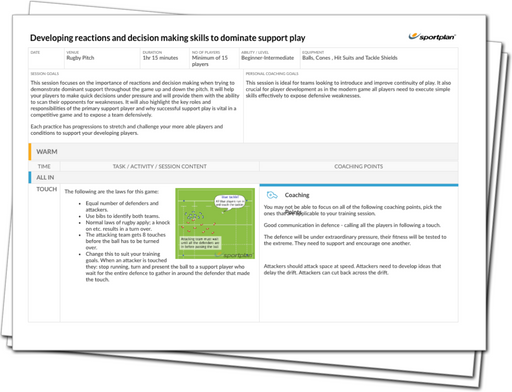
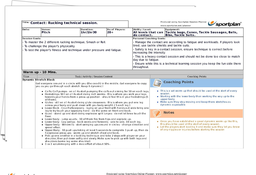
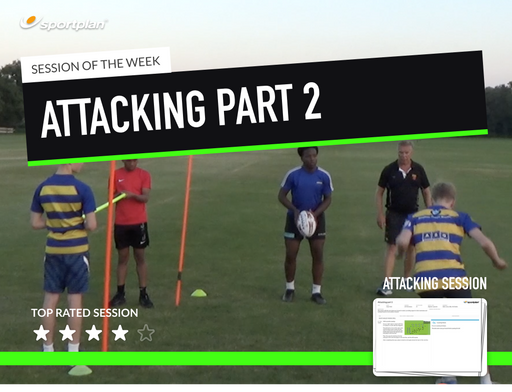
To ensure your players understand the difference between a negative tackle and a positive tackle this plan develops your players' ability to take the tackle on their own terms, in both a 1 on 1 and a 2 on 1 situation.
1 on 1 positive tackles often progress into double tackles during games. So that your players are able to tackle effectively, using the correct technique, it's important your players are well coordinated - ensuring that one player is low, and the other is high!
 What's in the session?
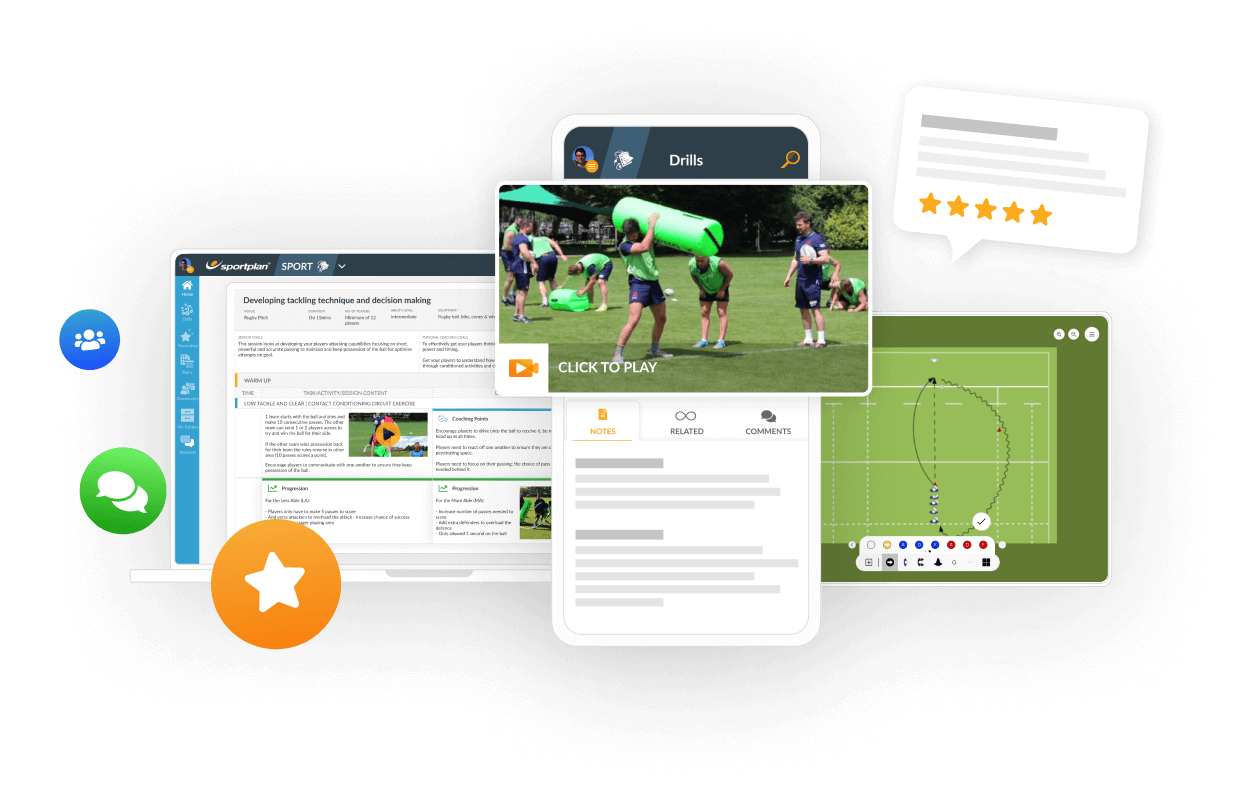
To get your players ready for contact, this session starts with two fun wrestling warm ups before then practising their 1v1 tackle technique. After this, it's time to put the tackle to the test with two conditioned games, starting with a game of continuous defence and finishing things off with an against the clock game of attack v defence!
 Positive and Negative?
A positive tackle is a tackle made before the tackle line, bringing the ball carrier to a stop. The defender making the positive tackle can then dictate how to react next as they are in the dominant position. A negative tackle is a tackle made after the ball carrier has crossed the tackle line, and the contact is controlled on their terms.
Don't be negative - try this tackling session at training tonight!
in more ways than one
 sportplan_netball

in more ways than one
sportplan_rugby

Tacklers are aiming lower, so carriers who dip late put heads at risk. Teach footwork, a strong early body height and leg drive to win the collision safely.

The hooker's brake foot moved from trial into full law in July 2026. Here is how to coach it so your front row stays stable, legal and safe.

Your players can pass beautifully in a warm-up grid. Then a defender closes, their lungs are burning, and the ball goes to ground. Here is how to build catch-pass skills that hold up when it matters.