Football: corner routines

August 2026

Rebounding is not a talent. It is a decision that a player either makes or does not make, roughly sixty times a game, in the second after a shot goes up. Teams that make it consistently win possessions they have no business winning; teams that watch the ball give away second chances all night.

Because it is a habit rather than a skill, rebounding responds to coaching faster than almost anything else you work on. A team that spends fifteen minutes a week on boxing out will look different within a month.

Why Players Do Not Box Out

The main reason is that watching the ball is more natural than finding a body. Every instinct tells a player to track the flight of the shot, and while they are doing that, their opponent has already moved past them.

The second reason is that boxing out is thankless. Nobody records it, nobody cheers it, and the player who does the work often is not the one who collects the ball. Unless you make it visible and valued, players will quietly stop doing it.

The third is that it is genuinely tiring, and it is the first thing to disappear in the fourth quarter, which is precisely when it decides games.

The Mechanics

The sequence is simple and it has to be automatic: shot goes up, find your opponent, make contact, then find the ball. Most players do those in the wrong order or skip the middle step entirely.

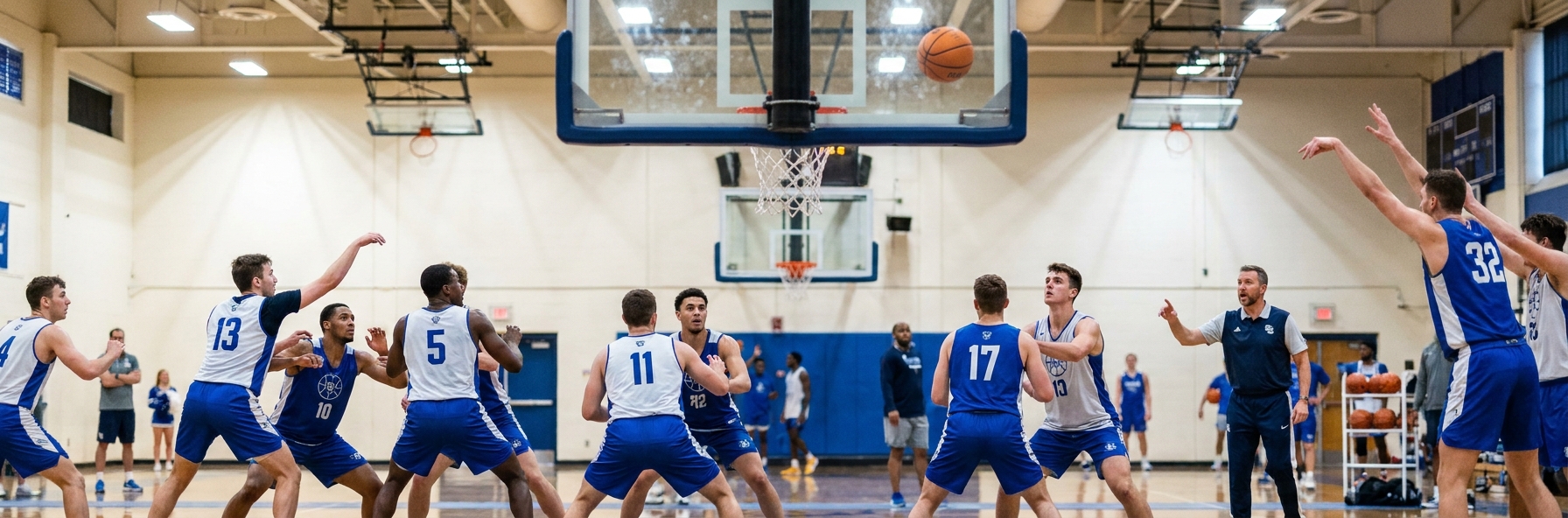
Contact is the part that gets coached least. A box out is not a passive turn and a stand; it is an active push into the opponent that establishes position and moves them away from the basket. Feet wide, low base, forearms up, backside into the opponent.

Then, and only then, go and get the ball. Pursue it with two hands, land in a balanced position, and secure it before thinking about the outlet.

Making It a Team Habit

Step One: Give it a standard and a number. Decide what an acceptable defensive rebound percentage looks like for your team and track it. What gets measured gets done.

Step Two: Count box outs, not rebounds. Credit the player who made the contact, not just the one who caught the ball, and read the numbers out. This single change fixes the motivation problem.

Step Three: Make every shooting drill a rebounding drill. Never let a shot go unrebounded in practice. Players should not be able to remember the last time a ball hit the floor.

Step Four: Train it under fatigue, at the end of sessions, because that is when it disappears in games.

Step Five: Coach the offensive board separately. Attacking the glass in offence requires a different read, and teams that only practise defensive rebounding leave easy points behind.

The Offensive Side

Offensive rebounding is a numbers decision as much as an effort one. Decide as a team how many players crash the glass and how many get back to stop the break, and make it a rule rather than an instinct.

The most productive offensive rebounders are rarely the tallest. They are the ones who move on the shot rather than after it, and who attack the space beside a defender rather than trying to go through them.

Key Coaching Points

  • Rebounding is a habit, not a talent, which makes it one of the fastest things to improve.
  • The sequence is find your opponent, make contact, then find the ball; most players skip step two.
  • A box out is an active push that moves the opponent, not a passive turn and stand.
  • Credit box outs rather than rebounds so the work gets recognised.
  • Never let a shot go unrebounded in any practice drill.
  • Set a team rule for how many players crash the offensive glass and how many get back.

Recommended Drills
VIEW ALL REBOUNDING DRILLS

Frequently Asked Questions

My team is short. Can we still rebound well?

Yes, and boxing out matters more for you than for anyone. Height wins contested balls in the air, but position wins the ball before it gets there. A shorter team that boxes out consistently will out-rebound a taller team that watches the ball.

How much practice time should rebounding get?

Fifteen minutes a week of dedicated work, plus never allowing an unrebounded shot in any other drill. The second part matters more than the first, because it turns rebounding into the default rather than a separate activity.

Should guards crash the offensive glass?

Some of them, by rule rather than by instinct. Decide who goes and who gets back, and keep it consistent. The worst outcome is everyone hesitating, which gives you neither the offensive rebound nor the transition defence.

Unfortunately there were no results for your search! Please try again
corner routines ANSWERS
View All

How do I work on set pieces fo...

Which drills are the best for working on set pieces for under 11s? Asked using Sportplan on Mobile

Edwin Hussey Coach, England

Disciplining for misbehaviour ...

Disciplining for misbehaviour? 8-11 year olds, they dont really get bored because i know that sometimes that can be the cause. How or what can i apply a bit of strictness into the team.

Archived User Coach

Drills for 4 and 5 year olds -...

Hi all, I've just started coaching a soccer team of 4 and 5 year olds and would like to discuss with my fellow coaches any drills which you have found to be safe, fun and valuable to the younger age group. I have my level 1 course under my belt and have difficulty in applying what I've learnt to the small kids. They get bored very quickly and are only interested in playing a match at the end of the session. They have no interest in passing the ball or shooting at goal whilst doing drills. Running with the ball is no problem as they are keeping active and all have a ball at their feet. As soon as they line up or have to share a ball, there are problems. I have a variety of drills which I run through with them, traffic lights, robin hood, alamo, sharks and fishes to name a few with variations of each but I crave more as everywhere I search caters for U6 upwards. I coach an U8 side midweek and have no problem with these lads as they are that bit older and have a greater level of concentration. (not by much mind). So I'm asking for advice from anyone who has coached 4 and 5 YOs and would like to know what has worked for you. PM replies welcome.  Marc

Archived User Coach

Kids are very slow and lack re...

Hello all! My kids aged 9 and 7 are very slow when compared to their peers of the same age. They don't seem to fight for the ball and get and watch others play their game. They seem to lack the urgency (heart) needed for the game. (They LOVE football). How can make them move around and react faster. Any help you are able to provide is greatly appreciated. Thanks O

Archived User Coach

Children misbehaving in traini...

Hello, I am currently coaching an u9's boys team and a majority of them are well behaved and want to play football, but the odd 1or2 tend to mess around at training which distracts the others. I have sat them out in training and spoken to the parents but still this goes on. Do I decide to kick them out of the team altogether or does anyone know the miracle cure to stop this happening?

duane Coach, England

Team thrashed every week - whe...

Team keep getting thrashed every week - where to start? Having been the sole coach/manager of a little league team for the past two years, this year I lost all my senior players. I was therefore presented with 10 brand new lads, some of whom have never played competitive football. We are 8 games in and my lads are getting thrashed every week. The main problems are that they cannot get the ball out of their half, positions are usually a mess, finishing and chance creation are non-existent, and they don't apply any pressure or are unable to tackle. The main problems are keeping the ball as a team, getting it in the opponents half and staying there, and creating/finishing chances. I only have 1 and a half hours a week with them. I don't really know what to do, and I'm a little desperate. Does anybody have any advice? Thanks for literally anything.

Coach, England

Warm up routine before footbal...

Hi has anyone got a good warm up routine for a under 18 team before a match?

DAN BRYAN Coach, England

U10 boys - How to build confid...

hi i coach a under 10's boys team.i am looking for help.unfortently we are not the best team around!all my player,s have not been playing long so we are a long way behind other teams we play i am trying to build conferdence on the ball at present they just wak it aways give up the balli am new to coaching and was wondering am i doing the right thing or should i be doing something else with them.

Archived User Coach

JOIN SPORTPLAN FOR FREE

  • search our library of 650+ basketball drills
  • create your own professional coaching plans
  • or access our tried and tested plans

Sportplan App

Give it a try - it's better in the app

YOUR SESSION IS STARTING SOON... Join the growing community of football coaches plus 500+ drills and pro tools to make coaching easy.
LET'S DO IT