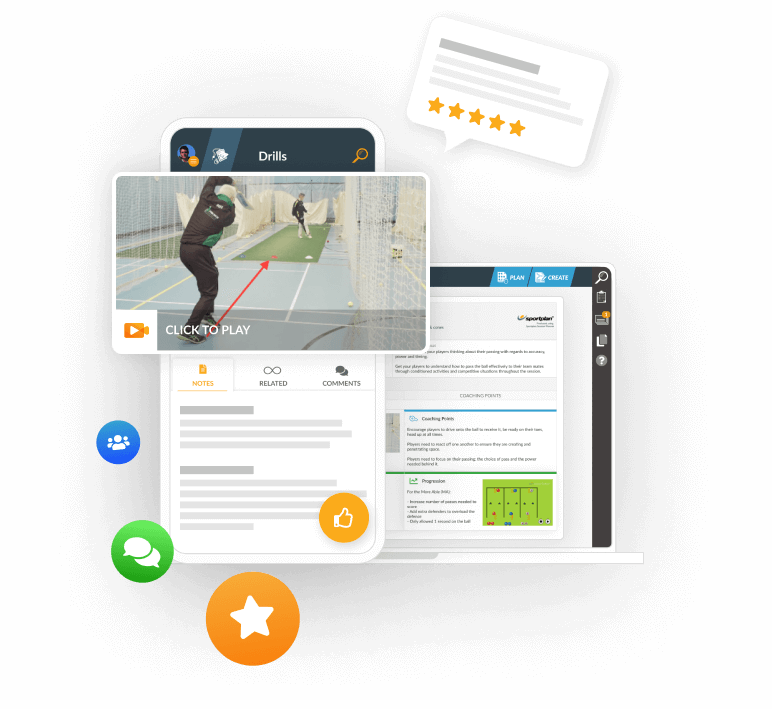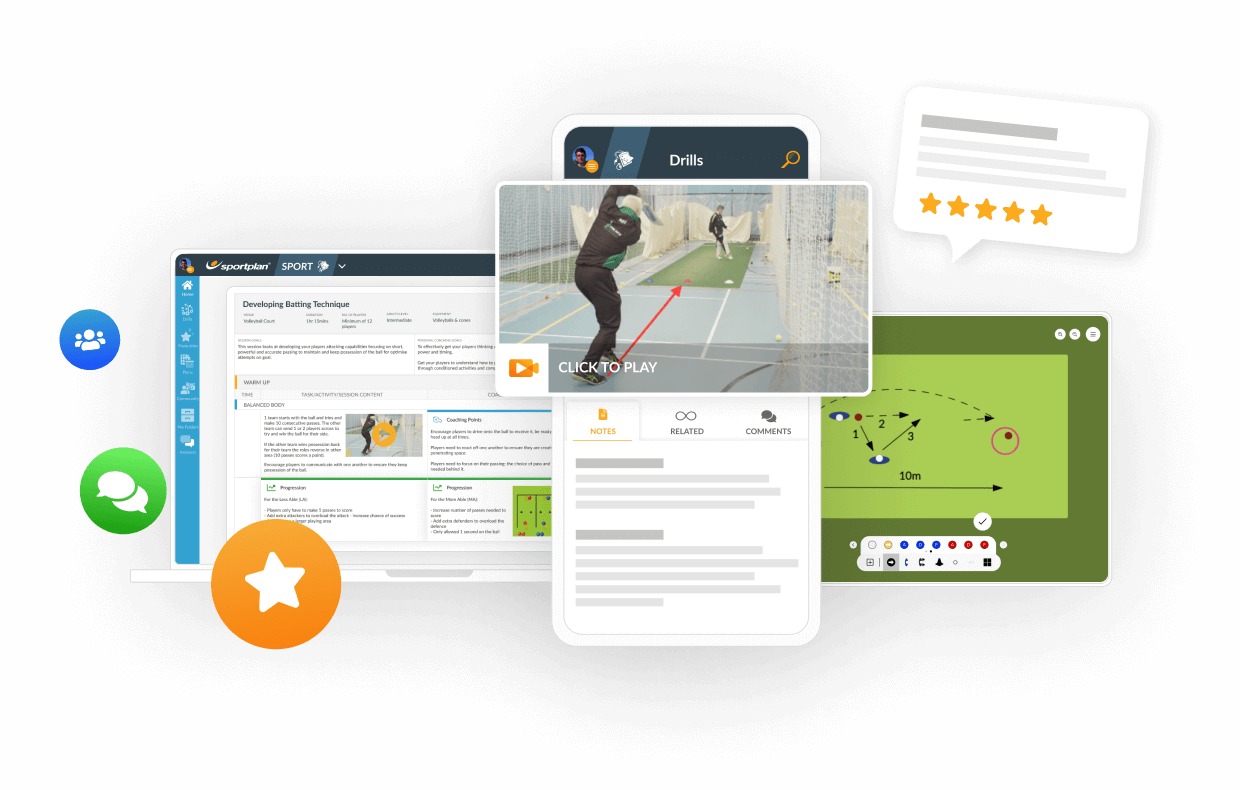
Can be done in pairs/ groups of three. One batter and one feeder minimum required. 6 tennis balls per pair/group.Feeder stands 4 meters away from batter, feeding ball as a drop feed, with arm out horizontally, and standing on the batters off side for safety. (adjust height of arm depending on height of feeder, and speed of batter to ball)Batter must use their feet and move down the wicket, meeting the ball on the second bounce, before hitting the ball through the cones.
PROGRESSIONMake target smallerAllow player to hit over the top (aerially) – still keeping shape of shot and not leaning back or hitting to hard/to the leg side.Alter distance batter has to advance to get to the ball.
Quick feet from the batter are essential when getting to the ball.When advancing down the wicket, batter must aim to keep head as still as possible, and eyes level.Batter needs to be in a still position by the time they make contact, and well balanced.Encourage player to loosen bottom hand upon impact, and maintain their weight into the shot by leaning forward not back. Bat following through straight s key, with a ‘checked’ follow through not full.
Game-based training and match simulation prepare players for real competition more effectively than isolated drills. Modern coaching integrates pressure scenarios, decision-making, and competitive situations into every training session.
Catches win matches remains cricket's truest saying. From high balls under lights to sharp slip catches, the ability to hold chances consistently separates winning teams from those that let matches slip away.
Elite running between wickets adds significant runs without risk. Quick singles, converted twos, and intelligent strike rotation separate the best batting partnerships from average ones across all formats.