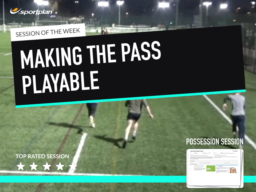
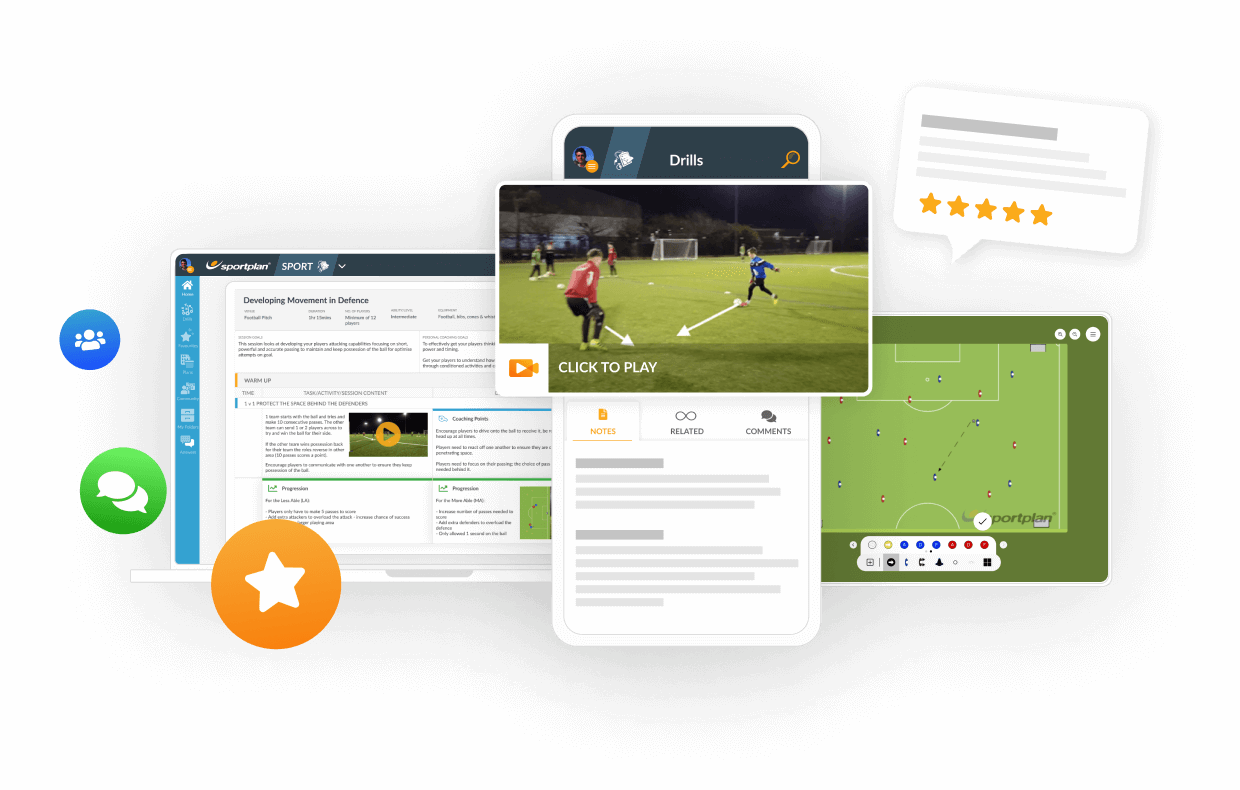
To make sure your team perform as a unit this week we look at ways for you to communicate the importance of movement off the ball. Play-makers, like Barcelona's Xavi, Real Madrid's Kaka and Liverpool's Gerrard, are a nightmare for defenders - they make attacking runs, create passing options for on the ball players and draw defenders out of position - opening space for strikers to run into.
So who is your Play Maker? Well it's the player in the middle of your team, the one who pulls the strings, links the defence to attack, possesses vision, confidence and excellent passing ability!
Starting in pairs your players will need to be on their toes, running around cones before being able to pass to their partner. We then work on the pass and move, getting players to call for the ball before finishing with a conditioned game where the ball must go via the play maker before a team can have a shot on goal!
Liked this session? If so tell a friend - use the social links to share it with a friend!
in more ways than one
 sportplan_netball


in more ways than one
sportplan_football

Deliberate heading is now out of U11 grassroots matches. Here is how to coach chest, thigh and foot control so your players still win the ball in the air.

Long-range goals doubled at the 2026 World Cup as teams sat deep. Here is how to coach when to shoot from distance, the technique, and the follow-up.

Under FutureFit, your Under-9s stay at 5v5, your Under-11s stay at 7v7 and your Under-13s stay at 9v9. Same pitch, same numbers, one more year. Here is how to make sure that year feels like a step forward rather than a repeat.