

The Problem with Traditional Drill-Based Coaching
Picture a typical grassroots training session. Players line up in queues, wait their turn, pass to a cone, run to the back of the line. The coach is happy because it looks organised. But are the players actually learning?
The honest answer is: not as much as they could be. Isolated drills teach technique in a vacuum. Players can pass perfectly to a static target but freeze when a defender closes them down on Saturday morning.
What Is Play-Practice-Play?
Play-Practice-Play (PPP) is a session structure that flips traditional coaching on its head. Instead of starting with a drill and finishing with a game, you start with a game, identify what needs work, practise that specific thing, then return to the game to apply it.
It has three clear phases, and understanding each one is the key to making it work at your club.
The Three Phases Explained
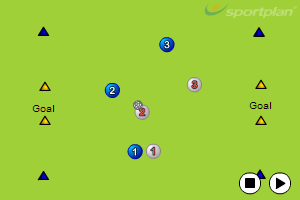
Phase 1: Play (The Initial Game)
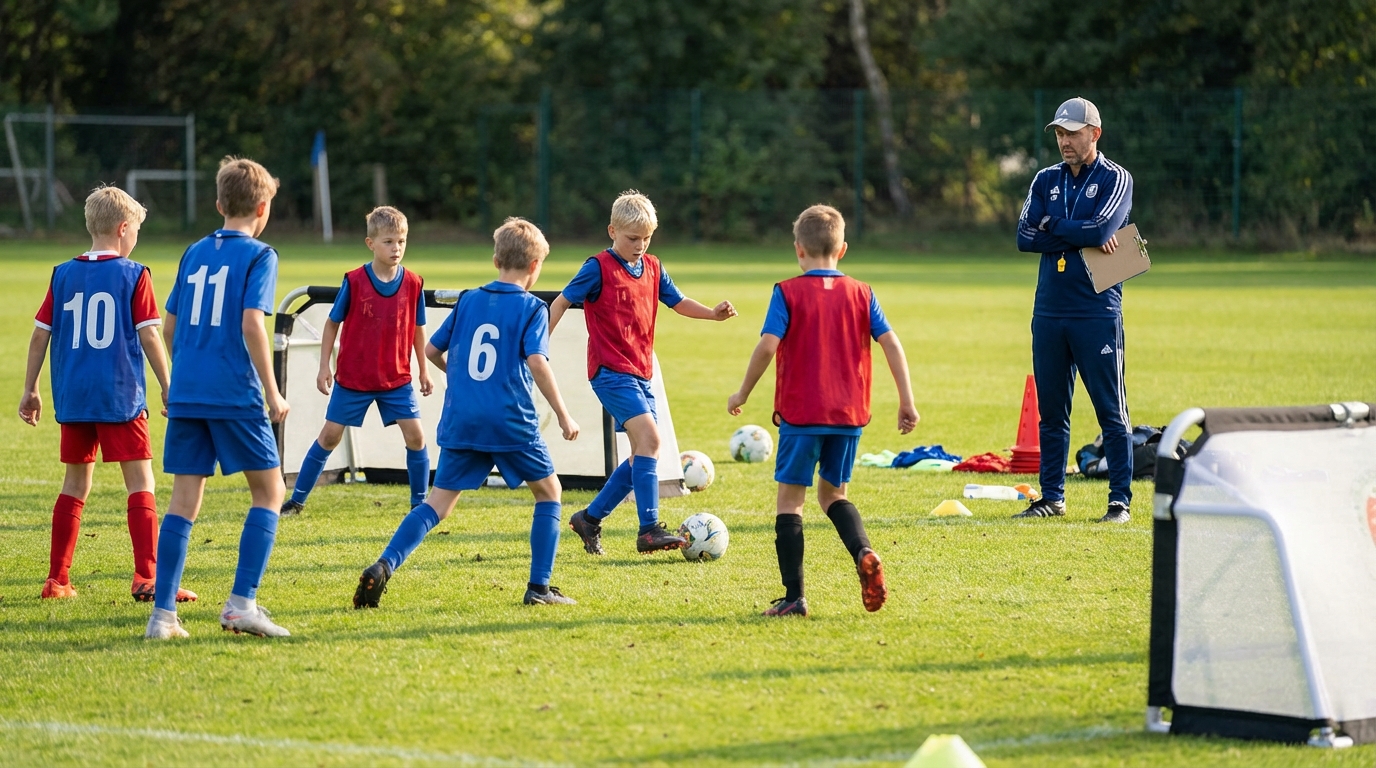
Start your session with a small-sided game. No long instructions, no complicated rules. Just let them play. This serves two purposes: it gives players immediate ball time, and it gives you a chance to observe.
Watch carefully. What are they struggling with? Is it keeping possession under pressure? Poor first touches? Not finding the spare player? This observation shapes the entire session.
Phase 2: Practice (The Focused Work)
Now you coach. Based on what you saw in the opening game, design a focused activity that addresses the specific problem. If players were losing the ball because they couldn't find the spare player, run a possession exercise that rewards switching play.
This is where traditional drills can still have a place - but only in service of a game problem the players have actually experienced. The context makes the practice meaningful.
Phase 3: Play (Return to the Game)
Put the players back into a game - ideally similar to the opening one, perhaps with a small condition that encourages the behaviour you just practised. Now watch for improvement. Are they applying what they worked on?
This final phase is where the magic happens. Players connect the practice to a real game scenario. The learning sticks because it has purpose.
Why Game-Based Learning Develops Decision-Makers
Traditional drills create players who can execute technique on command. Game-based learning creates players who can read a situation and choose the right technique at the right moment. The difference on matchday is enormous.
When a player practises passing in a line, they learn to pass. When they practise passing inside a 3v3 with defenders pressing, they learn when to pass, where to pass, and whether to pass at all. That decision-making ability is what separates good players from great ones.
How to Structure a PPP Session (60 Minutes)
- Arrival activity (5 mins): Free play or a simple ball mastery challenge while players arrive
- Play 1 (12 mins): Small-sided game (3v3 or 4v4) - observe and identify the coaching focus
- Practice (15 mins): Focused activity addressing what you observed - keep it game-realistic with decisions and opposition
- Play 2 (15 mins): Return to a game, possibly with a condition that encourages the trained behaviour
- Free play (10 mins): Unstructured game to finish - let players experiment
- Cool-down (3 mins): Light stretching and a brief chat about what they learned
Common Mistakes When Transitioning to PPP
1. Talking Too Much in the First Game
The opening game is for observation, not instruction. Resist the urge to coach every touch. Let players make mistakes - those mistakes tell you what to focus on next.
2. Making the Practice Phase Too Isolated
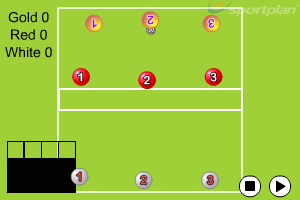
If your practice phase looks like a traditional drill with no opposition or decisions, you've missed the point. Even in the focused phase, keep some element of game realism.
3. Changing the Topic Mid-Session
Pick one coaching focus and stick with it. If you spotted three problems in the opening game, choose the most important one. You can address the others next week.
4. Skipping the Second Game
Some coaches run out of time and drop the final play phase. This is the most important part. Without it, players never connect the practice to the game. Plan your time carefully.
What the Research Says
Studies in skill acquisition consistently show that players who train in game-like environments transfer skills to matches more effectively than those who practise in isolated drills. The concept is called "representative learning design" - the training must represent the demands of the real game.
FAs across Europe are now embedding PPP into their coaching curricula. The English FA, Scottish FA, and Football Australia have all moved towards game-based frameworks in their grassroots coach education programmes.
Making the Switch at Your Club
You don't need to overhaul everything overnight. Start by flipping one session per week to PPP format. Begin with the opening game - even that small change of letting players play first will shift the energy of your sessions.
As you get comfortable, you'll find session planning becomes easier, not harder. You don't need to script every minute. You observe, respond, and coach in the moment. It's more rewarding for you and more engaging for your players.
Frequently Asked Questions
Does Play-Practice-Play work with very young players (U7/U8)?
Absolutely - in fact it works best with young players. Children learn through play naturally. Keep games simple, use small numbers (2v2 or 3v3), and let the game be the teacher. Your practice phase can be as short as 5 minutes at this age.
What if I've already planned my session before training starts?
Have a loose plan with a theme (e.g. "passing under pressure") but stay flexible. Your opening game might reveal something unexpected. The best PPP coaches adapt their practice phase based on what they see, not what they wrote down two days ago.
Won't parents think I'm just letting them play and not coaching?
This is a common concern. Educated silence during the game phases is deliberate coaching. You might briefly explain your approach to parents at the start of the season - most will quickly see that their children are more engaged and improving faster.
How do I handle mixed ability groups in a PPP session?
Small-sided games naturally differentiate. Weaker players get more touches in 3v3 than in 11v11. During the practice phase, you can adjust the challenge for different groups while keeping the same theme. The final game brings everyone back together.