

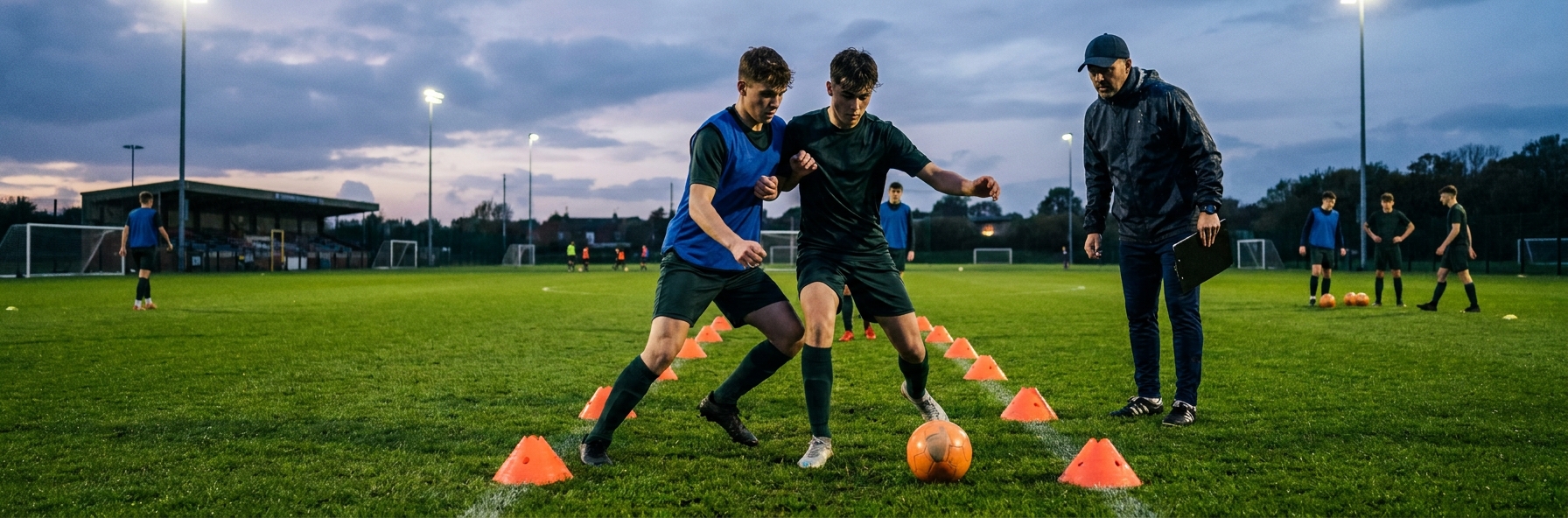
Watch any grassroots game and you will see the same moment again and again. An attacker runs at a defender, the defender charges in and sticks a leg out, and the attacker is gone. It is not a lack of effort. It is a lack of patience, and patience in defending can be coached.
Good 1v1 defending follows a simple order: delay the attacker, deny them the dangerous option, then win the ball when the moment is right. Get the order wrong, by trying to win it first, and you lose far more duels than you should.
Why Defenders Get Beaten
There are three common reasons. The defender closes down too fast and arrives off balance, so one feint sends them the wrong way. They stand square-on with feet level, so the attacker can go either side. Or they dive in with a tackle when the ball is under the attacker's control, rather than waiting for a heavy touch.
All three come from the same belief: that a defender's job is to win the ball straight away. It is not. Their first job is to stop the attacker going forward quickly. Winning the ball comes later.
The Delay, Deny, Win Framework
Step One: Close down quickly, then slow down. Sprint while the ball is travelling to the attacker, then take short, quick steps as you get close so you arrive balanced. Stop roughly an arm's length or two away, close enough to pressure but not so close you can be knocked past.
Step Two: Get your body shape right. Stand side-on, knees bent, weight on the balls of your feet, one foot slightly in front of the other. Eyes on the ball, not the attacker's body or tricks. This stance lets you move backwards and sideways quickly without crossing your feet.
Step Three: Show them where you want them to go. Angle your body to show the attacker away from goal, towards the touchline, or onto their weaker foot. You are not blocking every route; you are making the safe route for you the obvious one for them.
Step Four: Jockey and stay patient. Move with the attacker in small steps, keeping the distance the same. If they speed up, drop off a little. If they slow down, squeeze in. Every second you hold them up gives teammates time to recover.
Step Five: Win the ball at the right moment. Tackle when the attacker takes a heavy touch, looks down at the ball, turns away from you, or when a teammate arrives to cover. Stay on your feet and use the front foot to poke or block. Going to ground is a last resort, not a first choice.
How to Train It
Start with shadow work in pairs. One player dribbles, the other defends without tackling, focusing only on distance, stance and showing the attacker one way. It is low pressure and lets players feel the right body shape before the duel gets competitive.
Then move to channel games where the attacker has to get past the defender to a line or small goal. Make the channel narrow at first to help the defender, then widen it as they improve. Reward the defender for delaying as well as winning the ball, for example a point for holding the attacker up for five seconds.
Finally, put it into small-sided games. Pause briefly when a defender gets it right, not only when they get it wrong, so the whole group sees what good patience looks like.
Key Coaching Points
- Sprint to close down while the ball travels, then shorten your steps to arrive balanced.
- Stand side-on with knees bent and eyes on the ball, never square with feet level.
- Show the attacker away from goal or onto their weaker foot using your body angle.
- Keep a steady distance when jockeying so the attacker cannot knock it past and run.
- Tackle on a trigger: a heavy touch, a head down, a turn away, or a covering teammate.
- Stay on your feet; a defender on the ground is out of the game.
Recommended Drills
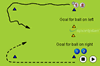
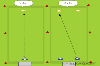
Frequently Asked Questions
How do I know which foot is the attacker's weaker one?
Watch which foot they use to control and dribble in the first few minutes, or simply ask your players to notice. If you cannot tell, show them away from goal instead. Pushing an attacker towards the touchline is always a safe default.
My defenders keep backing off all the way into our own box. What should I say?
Delaying is not the same as retreating forever. Give them a line, such as the edge of the penalty area, where they have to stop dropping and engage. Delay buys time for cover, but once that line is reached, it is time to step in and make a challenge.
Is a slide tackle ever the right choice?
Occasionally, when an attacker is through and there is no other way to stop them, but it should be rare. A defender who goes to ground and misses has taken themselves out of the game. Teach staying on your feet first, and treat going to ground as the exception.