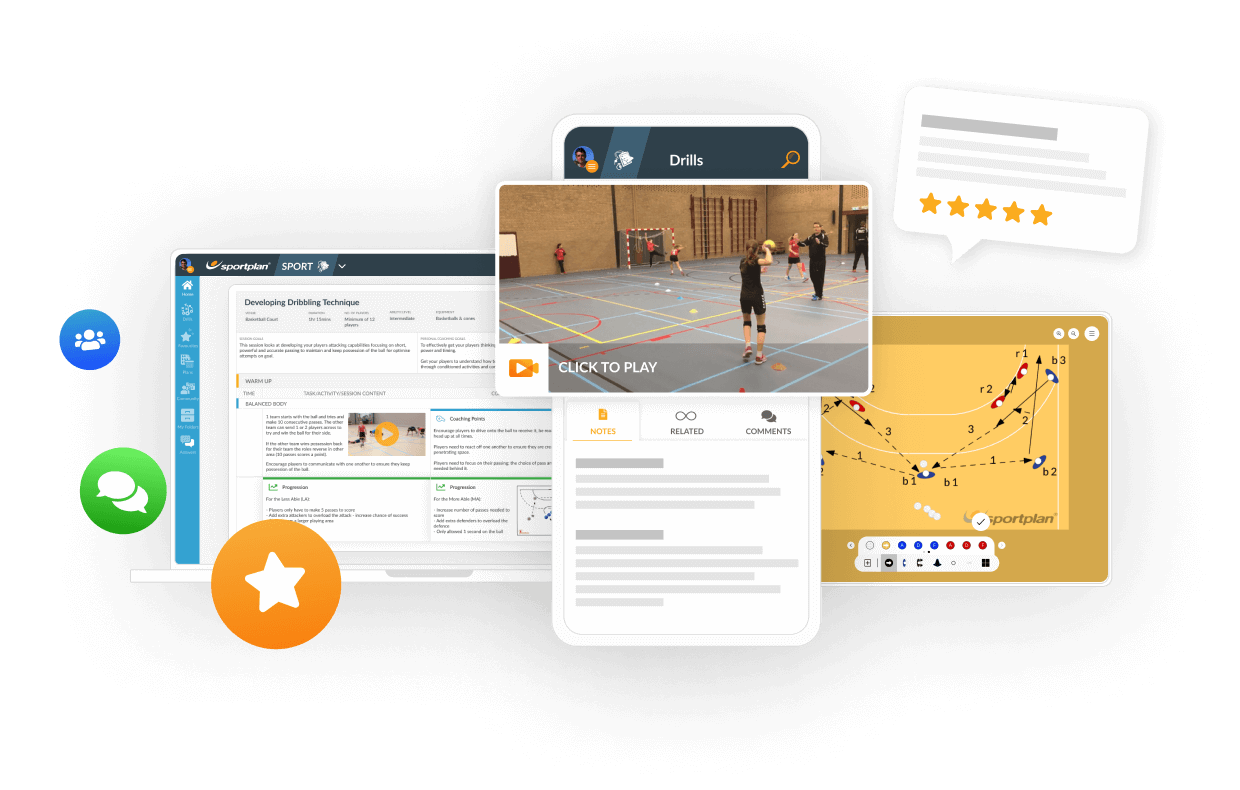
Pass B1-B2-B1 who throws at the goal.
variations in passing :
- (center shot with pressure into the direction of the goal), threatening to throw at the goal
- (center shot with pressure into the direction of the goal), threatening to throw at the pivot
- jump shot (3,2,1 step rythym, jump off with 'wrong' foot
- push pass
- bounce pass
- with both hands
- use 'wrong' hand
jump shot
- ball on shoulder height
- third step is explosive and large
- in the air the hip should go backward together with the throwing arm
- pull up other leg untill upper leg is horizontal
- the arm follows this movement explosively to the front
- land on the same leg as you jumped off
center shot
- lefthanders : right foot in front. righthanders : left foot in front
- fore-arm should have a 90 degree angle with upper-arm
- hand behind ball, fingers slightly spread
- foot into the direction of the goal
- hand,arm,shoulder,hips must move foreward explosively, with full force
- hand behind the ball, don't squeeze the ball
push pass
- catch the ball at shoulder height
- hands behind the ball, fingers up right
- move your trunk into the pass direction
- stretch arm forward
- (WITHOUT stretching it backward first like you do a center shot)
- push the ball into the right direction
Handball demands explosive power, repeated sprint ability, and the strength to compete physically for 60 minutes. Sport-specific conditioning develops the athletic qualities that underpin elite performance.
Handball matches are won and lost in critical moments. Mental toughness determines who executes under pressure, who recovers from setbacks, and who maintains concentration throughout 60 intense minutes.
Deception is the great equaliser in handball. Smaller, less powerful players can beat defenders through feints and misdirection. Mastering these skills creates breakthrough opportunities against even the most organised defences.