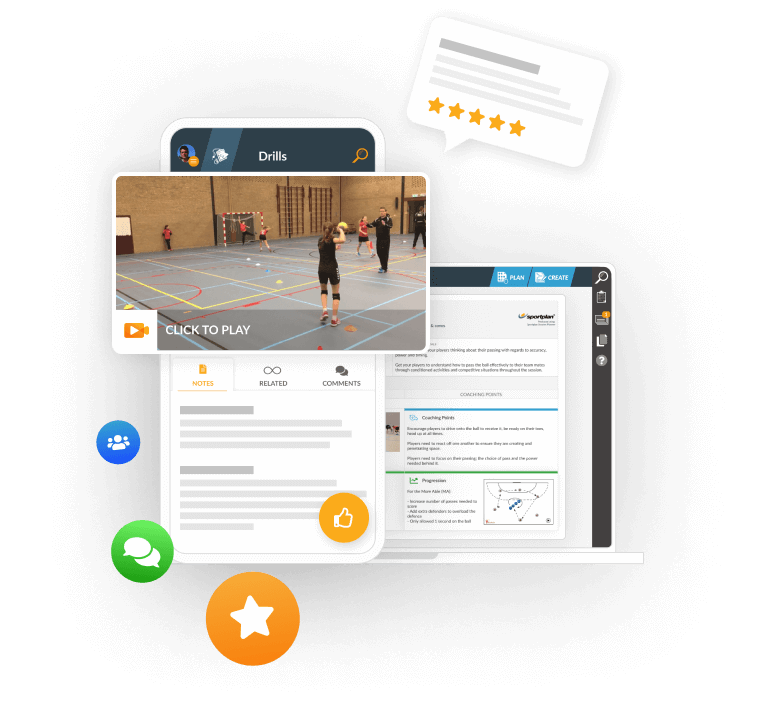
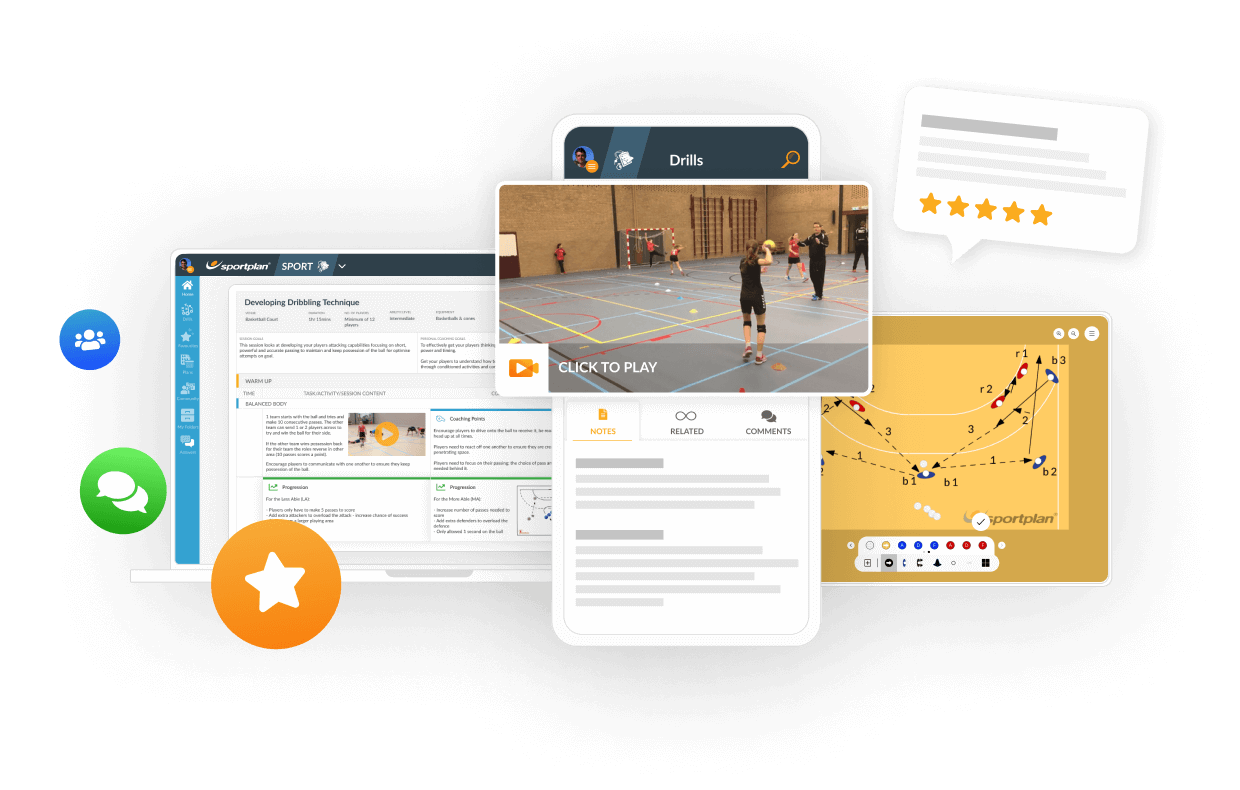
Setup:
- The children pretend to be small, fast motorcycles.
- The ball serves as the "handlebar." Players must navigate obstacles while moving through the play area.
- Actions include:
- Moving slowly, quickly, sideways, or backward.
- Changing direction or swapping balls during movement.
- Overcoming obstacles such as jumping, balancing, or tossing and catching the ball while in motion.
- Honking (making a noise) if another player gets too close.
Make it More Challenging:
- Players can **only walk on the lines** of the sports hall (representing roads).
- If two players meet on the same line, they must **turn around**.
- Dribble while following the lines.
Obstacle Variations:
1. Crossing rivers:
- Hoops are placed slightly apart, requiring players to step into them to "cross."
2. Wide river jumps:**
- Hoops placed farther apart; players must jump between them.
3. Hanging bridge:**
- Balance along a thick rope or on benches (using the wide or narrow edge).
4. Through the forest:**
- Cones and poles placed close together; players must avoid touching other players or obstacles.
5. Crawling under a tunnel:**
- Create tunnels using benches covered with gym mats; players must crawl or slide underneath.
Handball demands explosive power, repeated sprint ability, and the strength to compete physically for 60 minutes. Sport-specific conditioning develops the athletic qualities that underpin elite performance.
Handball matches are won and lost in critical moments. Mental toughness determines who executes under pressure, who recovers from setbacks, and who maintains concentration throughout 60 intense minutes.
Deception is the great equaliser in handball. Smaller, less powerful players can beat defenders through feints and misdirection. Mastering these skills creates breakthrough opportunities against even the most organised defences.