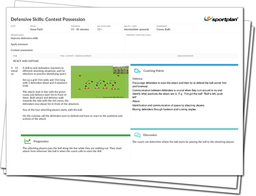
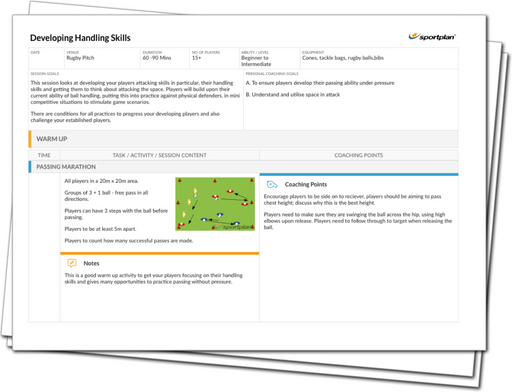
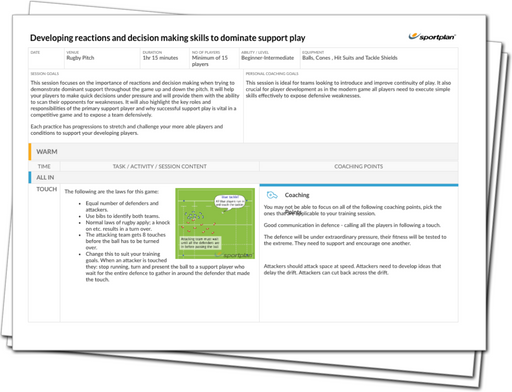
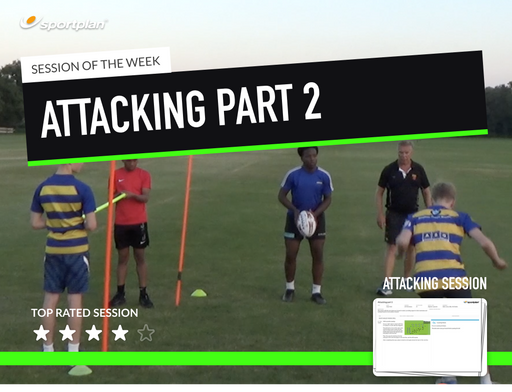
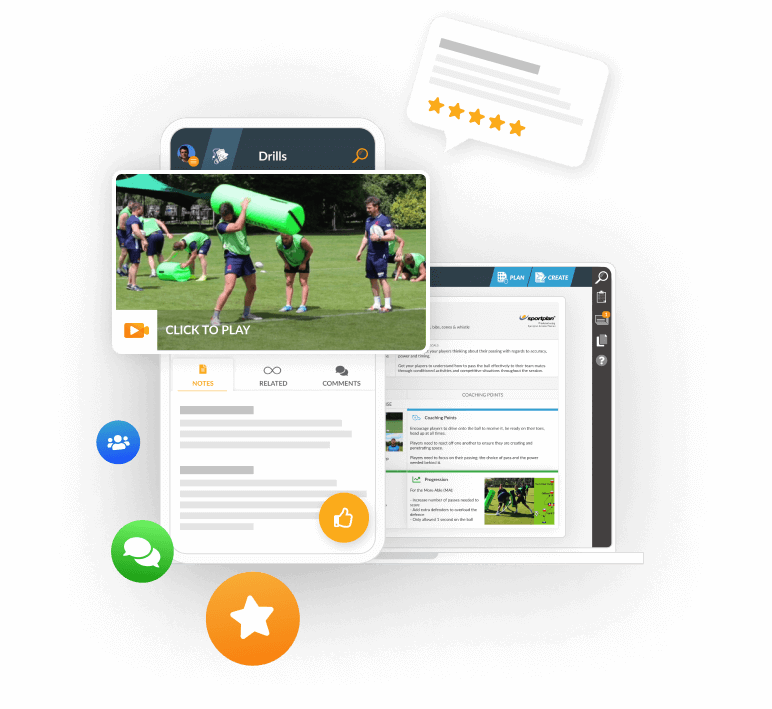
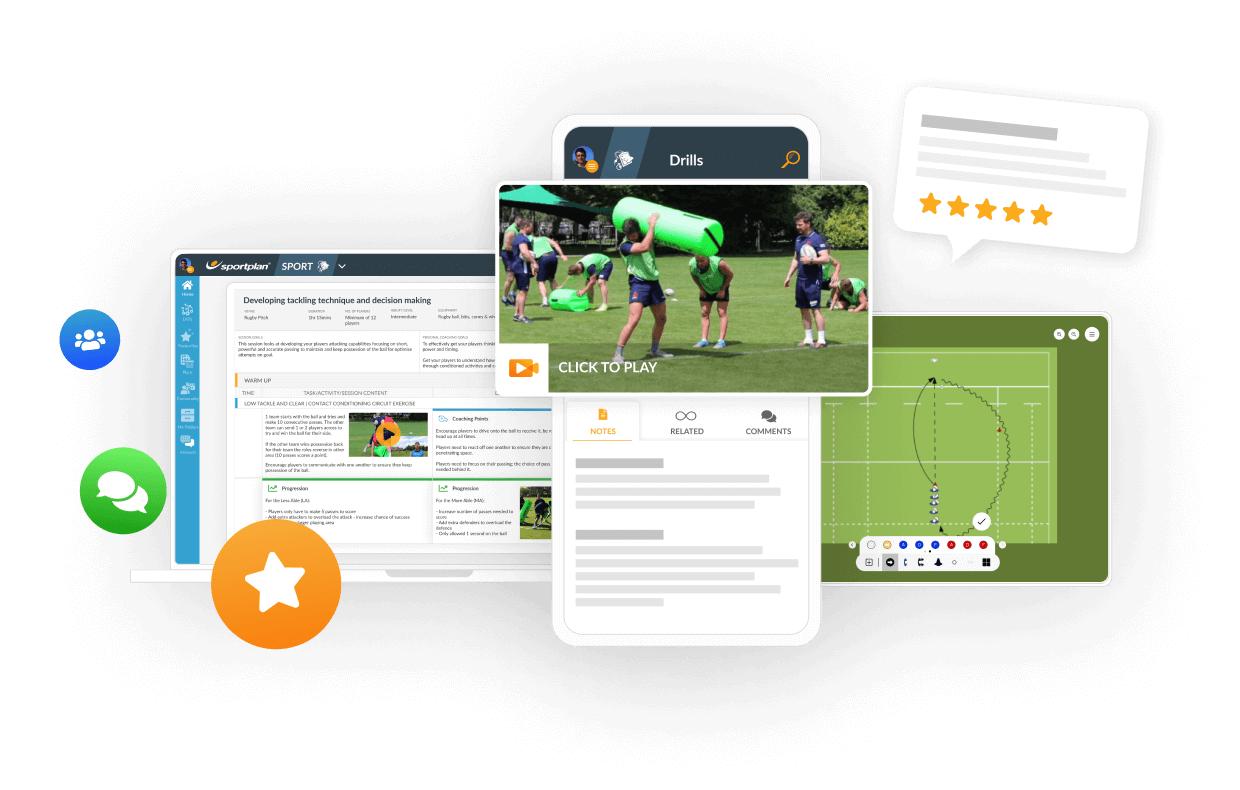
Outmanoeuvring your opponents to win a line-out is no easy feat but with good practice and a well co-ordinated team you can make sure your team will be the first to the ball, even if you don't have the biggest players.
To help keep your players one step ahead we've devised an extremely cunning session, focusing on awareness and maintaining the consistency and quality of this skill.
This session will give you the flexibility to focus on a number of different aspects of the lift - the accuracy of your hooker's throw, the dynamic starting jump, the muscular and technical ability of your lifters, the jumper's position in the air as well as the overall mobility of your pods - all while allowing you to see how your players compete in a competitive situation.
Depending on the level of your players you can choose to coach this session with or without a ball, starting off in small groups where you focus firstly on accuracy before gradually increasing the number of players involved and adding an element of competition. Later you can then move on to using the fast or lob throw over varying distances, swapping players to make sure that no matter what the situation might be in game, your players are always ready to lift, catch and feed the ball to the scrum half.
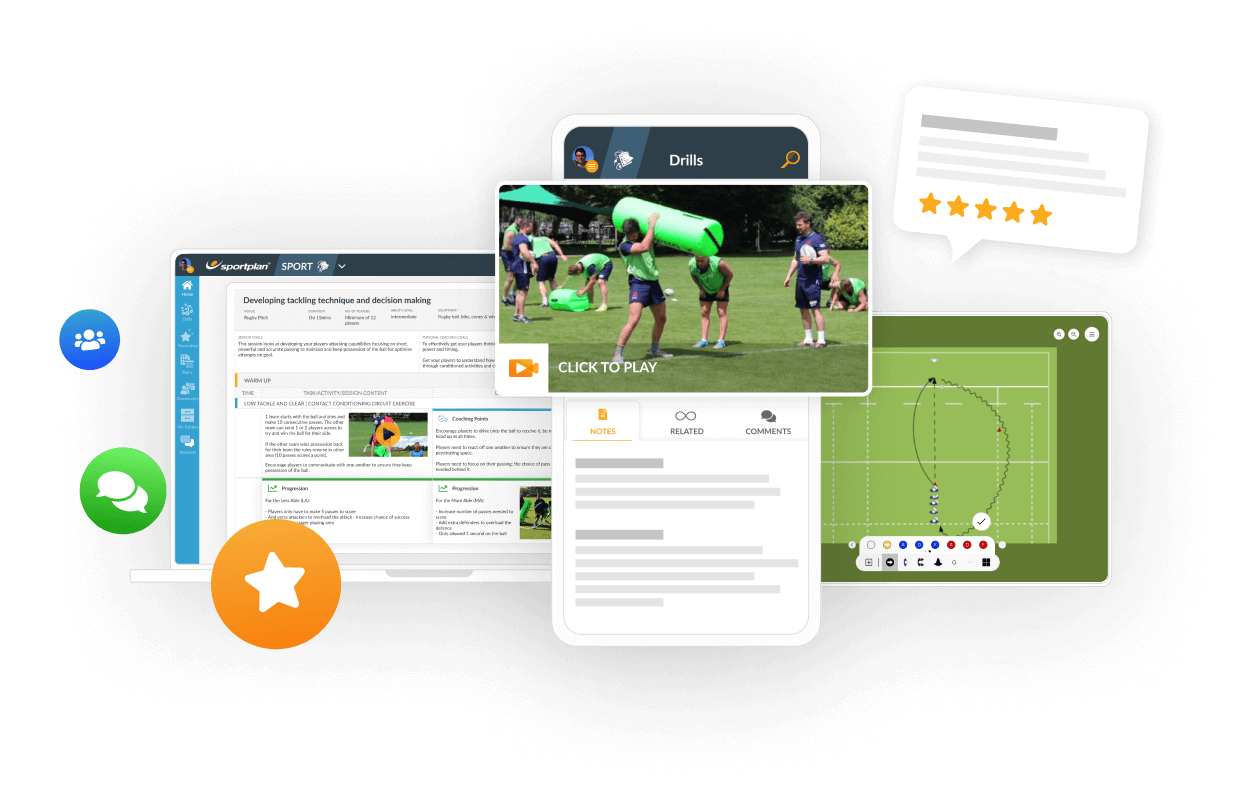
in more ways than one
 sportplan_netball
in more ways than one
sportplan_rugby
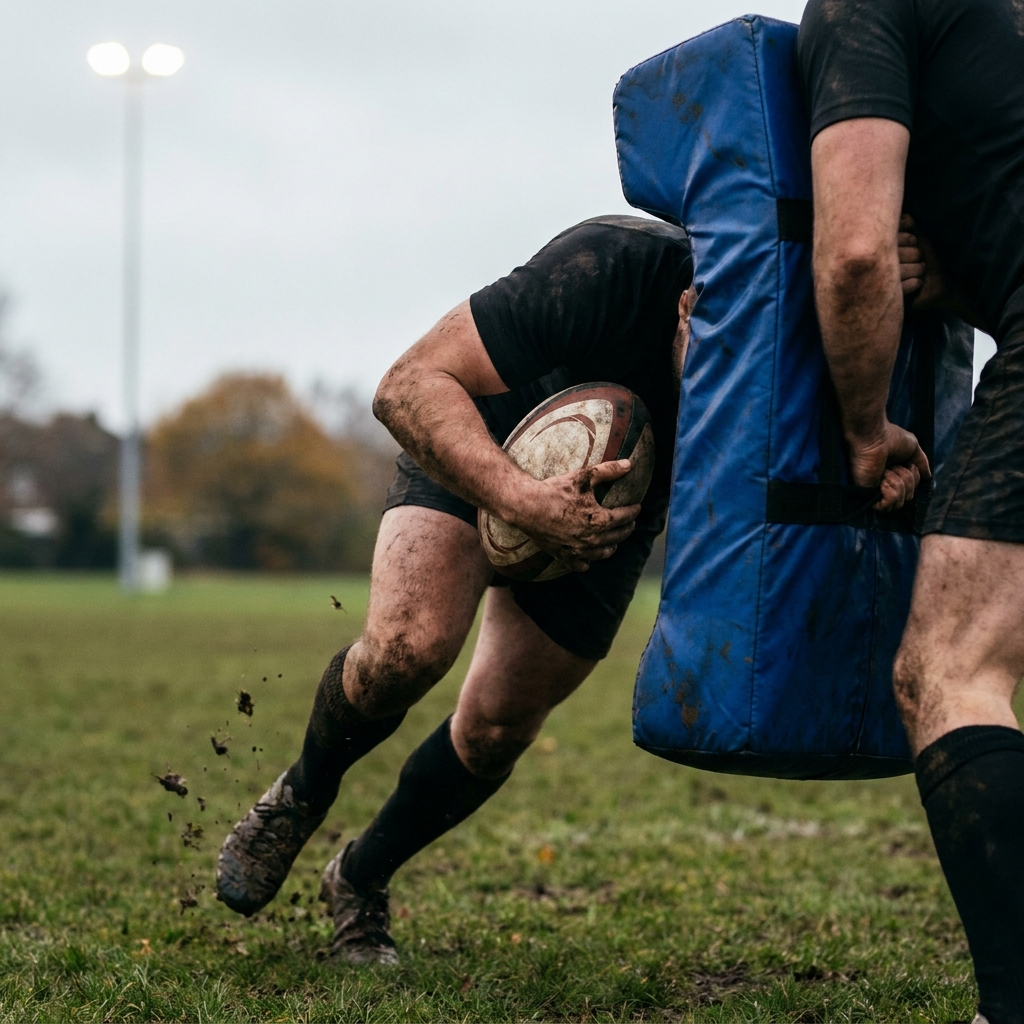
Tacklers are aiming lower, so carriers who dip late put heads at risk. Teach footwork, a strong early body height and leg drive to win the collision safely.

The hooker's brake foot moved from trial into full law in July 2026. Here is how to coach it so your front row stays stable, legal and safe.
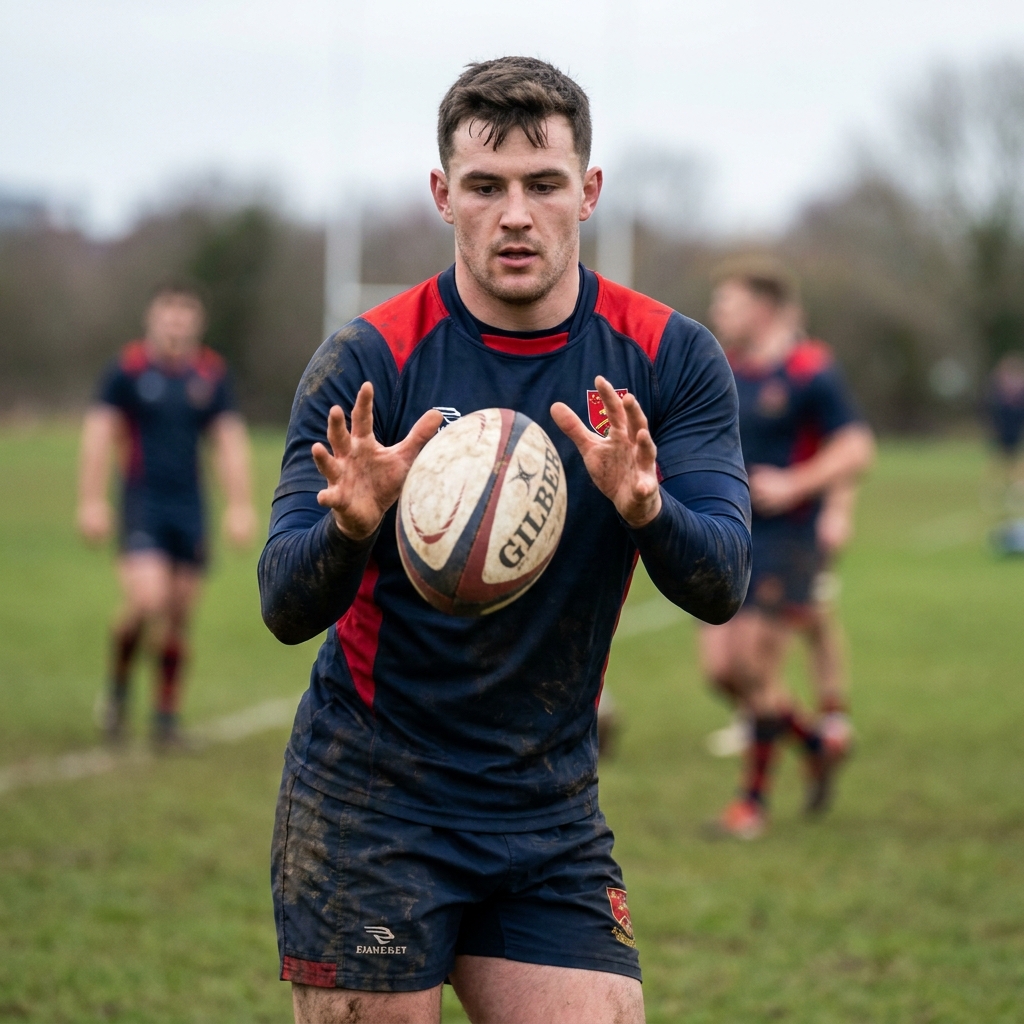
Your players can pass beautifully in a warm-up grid. Then a defender closes, their lungs are burning, and the ball goes to ground. Here is how to build catch-pass skills that hold up when it matters.