re The Art of Feeding
I received your email on 'The Art of Feeding' and like to read your suggestions of drills.
When looking at your suggested drills on this newsletter, I would like to ask for a bit of clarification on the coaching point 'as players move sideways they must take last step towards ball at contact'.
I thought that the player must have stopped before making contact with the ball. Do you mean that the player's balance takes him into another step at contact?
I'm really interested in your drills and plan to make a purchase in the near future.
Best wishes,
Nick
-submitted by email
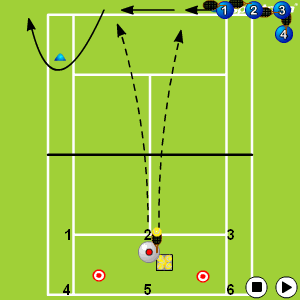
Lateral Forehands Drill
DESCRIPTION
Lateral Forehands Drill
DESCRIPTION

Given the appropriate amount of time the player should finish off with their weight traveling in the direction of their target. This not only benefits the generation of power, but helps the player maintain balance. In my teaching I would stress this to the beginning level player. The alternative, "cross over step" would result in a very narrow base to hit off of. If you could say that it would be akin to firing a cannon from a canoe. For my advance players I give them the option of closed stance (stepping in) on balls that they have time to stop on, open stance when time is limited, or playing the ball on the run (yet with focus on body controll) when they are pressed. Richard Katz, U.S.P.T.A / P.T.R