Set up a grid with a target zone in each of the four corners, two blue zones and two red zones. Split the group into two teams of red and blue, and have two players from each team start in the middle, with the remaining players standing in one of the two zones of their colour. Game: The players in the middle of the grid have to work together to try to pass the ball into the feet of one of their fellow team mates standing in one of the two target zones of their colour. E.g. the red players have to try to get the ball into one of the two red zones. If a pair successfully passes into one of their target zones, they win a point and stay on while the other pair is replaced with two new players from their team. The winning pair stays on until they are beaten. The first team to get to ten points is the winner. Progression: Instead of 2 v 2, coaches could create a 3 v 3, 4 v 4 or 5 v 5 scenario.
Coaches should be encouraging the players in the middle to use their team mate to try to score a point, so communication and team work are key. By creating a 2 v 2 scenario, the players have to practice their dribbling techniques and work on their ability to get past their opponent.
This practice has no coaching points
This practice has no progressions
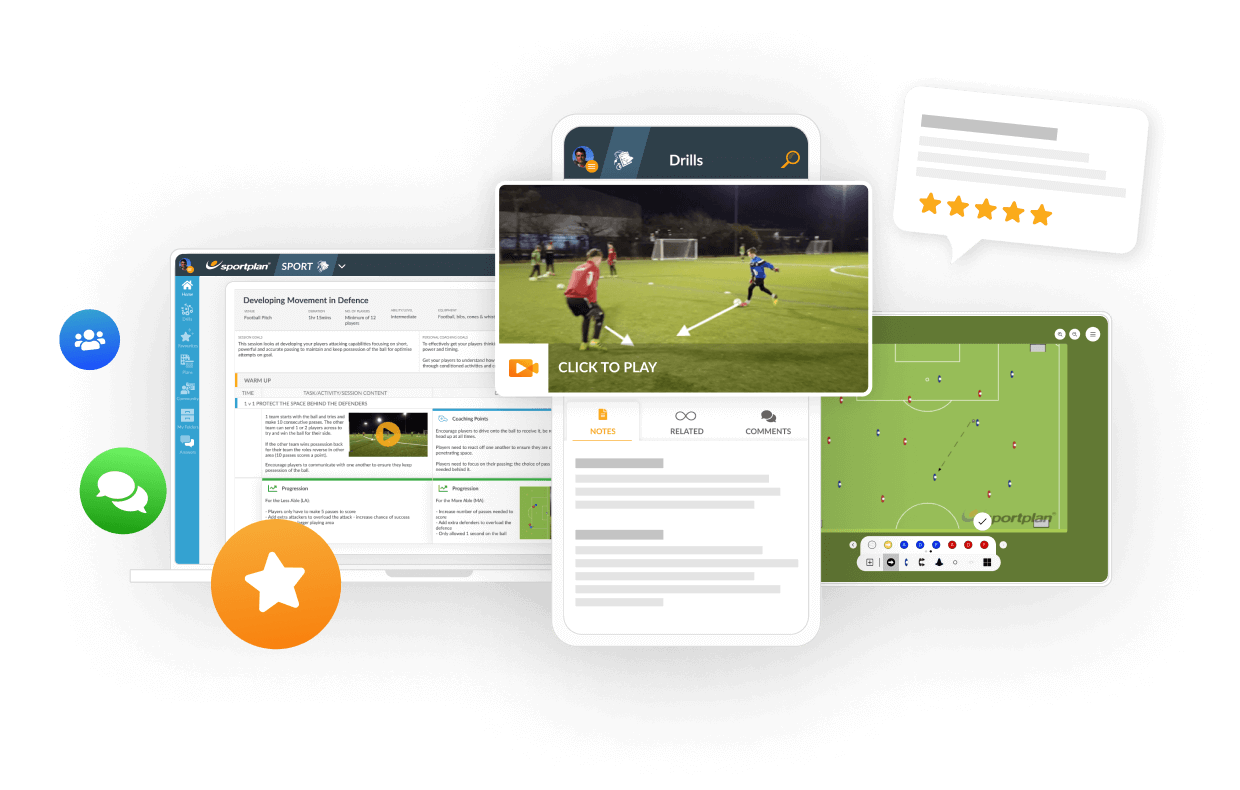
in more ways than one
 sportplan_football



Deliberate heading is now out of U11 grassroots matches. Here is how to coach chest, thigh and foot control so your players still win the ball in the air.

Long-range goals doubled at the 2026 World Cup as teams sat deep. Here is how to coach when to shoot from distance, the technique, and the follow-up.

Under FutureFit, your Under-9s stay at 5v5, your Under-11s stay at 7v7 and your Under-13s stay at 9v9. Same pitch, same numbers, one more year. Here is how to make sure that year feels like a step forward rather than a repeat.