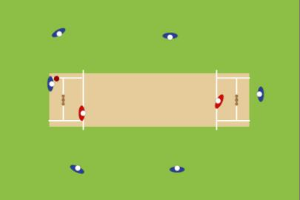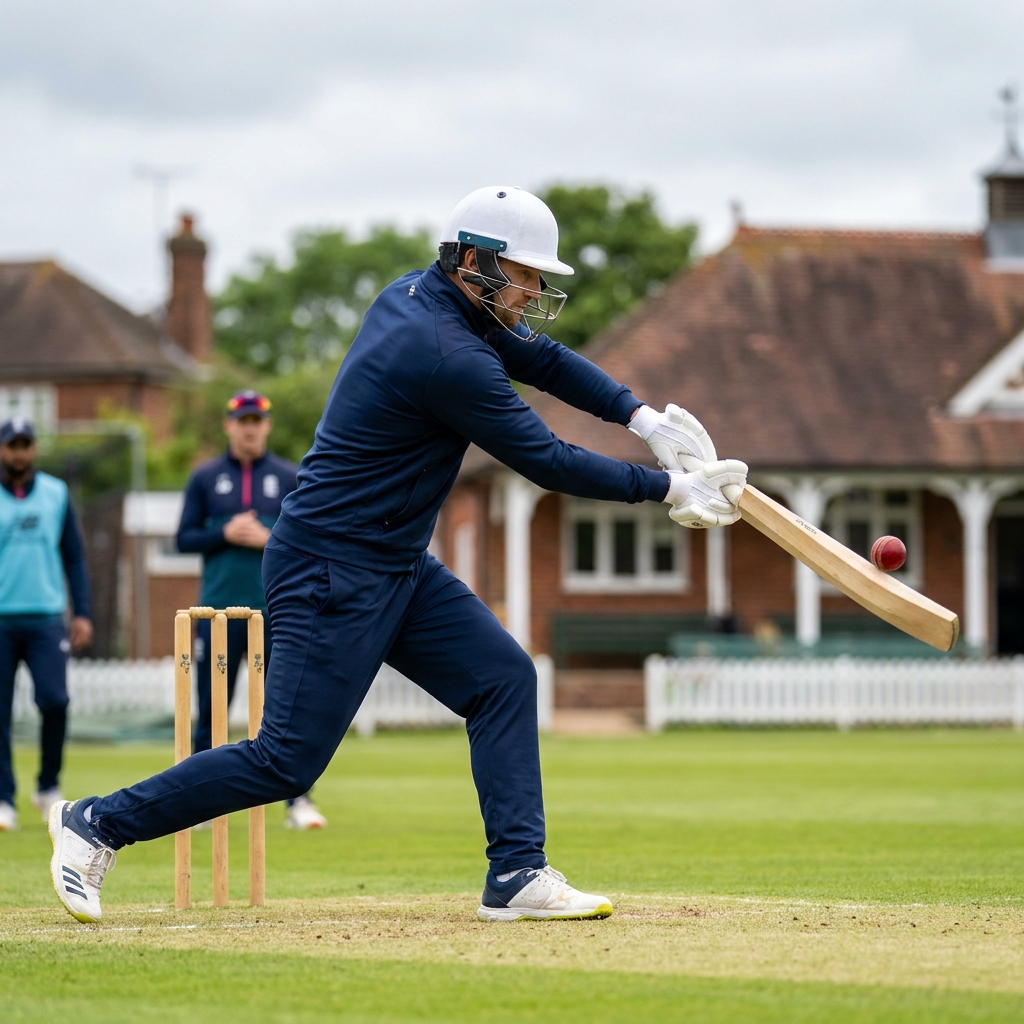


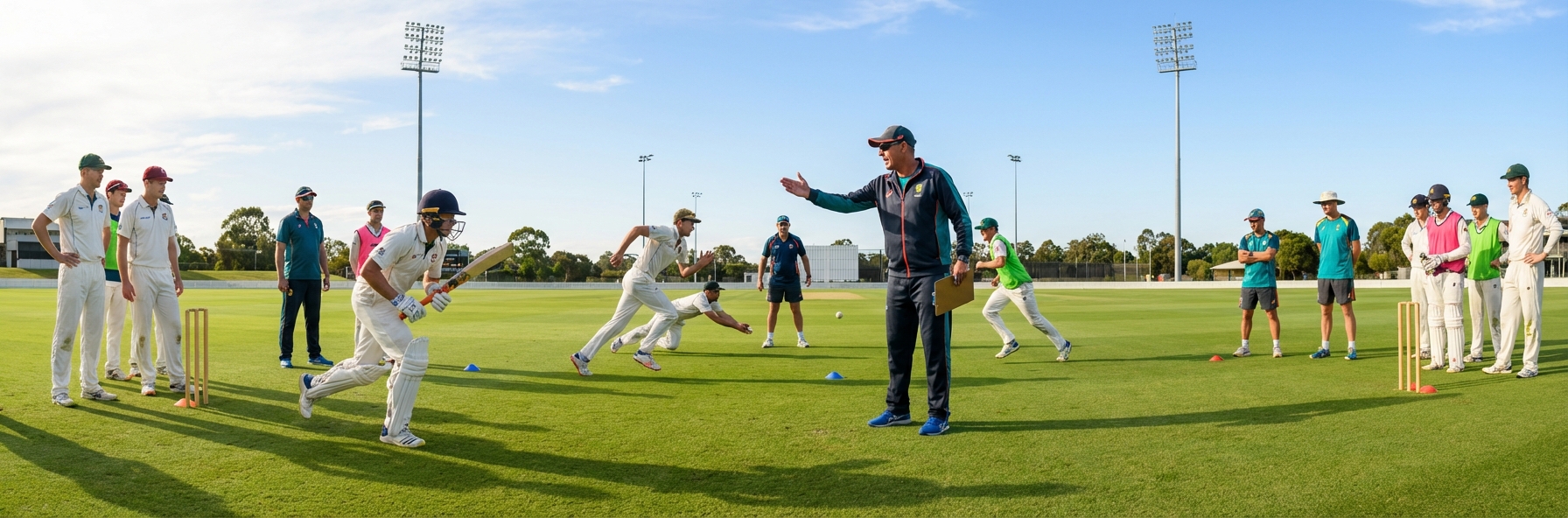
The gap between training and match performance narrows when practice replicates game conditions. Match simulation training combines technical work with tactical decision-making, pressure management, and competitive scenarios. This approach develops players who can transfer practice skills into match situations.
Creating Match Conditions
Replicating game pressure:
Scoreboard pressure: Setting targets and scenarios that demand specific performance.
Time constraints: Creating urgency through limited overs or time.
Consequences: Meaningful outcomes for success and failure in practice.
Crowd simulation: Adding noise and distraction to build concentration.
Scenario-Based Practice
Chasing targets: Required run rates and wickets in hand scenarios.
Defending totals: Death bowling practice with specific runs to defend.
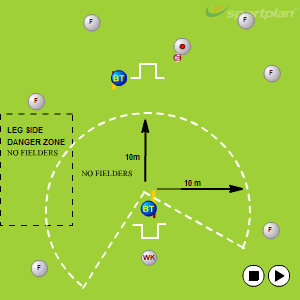
Powerplay practice: Batting and bowling in field restriction periods.
Partnership building: Batting together under various match situations.
Modified Games
Pairs cricket: All players bat and bowl with cumulative scoring.
Continuous cricket: Fast-paced games with immediate transitions.
Last man stands: Pressure finishing with the tail.
Diamond cricket: Adapted format for smaller groups and spaces.
Decision-Making Development
Reading situations: Assessing match state and choosing appropriate tactics.
Shot selection: Matching stroke play to game requirements.
Bowling variations: Choosing deliveries based on match context.
Captain's choices: Field settings and bowling changes under pressure.
Key Coaching Points
- Practice should feel like matches as often as possible
- Scenarios create purpose and focus in training
- Modified games maintain engagement while developing skills
- Decision-making improves through repeated game situations
- Competitive training builds mental toughness