



Why the Powerplay Decides Matches
The first six overs of a white-ball innings are the most pressurised phase for any bowling attack. With only two fielders permitted outside the 30-yard circle, batters have licence to attack, and the margin for error is razor-thin. A loose powerplay can concede 60-70 runs and put the fielding side on the back foot for the remaining innings.
Yet the best bowling units in world cricket view the powerplay as an opportunity, not a threat. With the new ball offering swing and seam, with the pitch at its freshest, and with batters under pressure to score quickly, there are wickets on offer for sides that execute their plans.
As IPL 2026 gets underway this month, coaches at every level can learn from how franchise teams approach this critical phase. The principles of line, length and field placement apply whether you are coaching international professionals or under-13s on a Saturday morning.

The 4th and 5th Stump Line
Ask any international bowling coach what the most important line is in the powerplay and the answer is almost unanimous: fourth and fifth stump. This channel forces the batter into a dilemma. Leave it and risk being bowled or caught behind. Drive at it and risk edging to the cordon or gully.
With fielding restrictions limiting options, the slip cordon becomes your most valuable asset. Most teams now station two slips and a gully during the powerplay rather than spreading the field. The logic is simple: if your bowlers can hit the corridor consistently, edges will come.
Length matters just as much as line. A good length on a fresh pitch is the hardest ball to score off. Too short and the batter can pull or cut. Too full and they can drive through the gaps. The ideal length forces the batter to play with uncertain footwork - neither fully forward nor fully back.
Field Placement Strategies
With only two fielders allowed outside the circle, every position matters. The best powerplay captains think in terms of cutting off scoring areas rather than protecting boundaries.
The Aggressive Field
Two slips and a gully: This is the default for the first two or three overs when the ball is at its newest. Back your bowlers to hit the channel and let the catching positions do the work. A fine leg and mid-on round out the inner ring.
The Containment Field
One slip, point, cover, mid-off: If the pitch is flat or the batters have got in, shift to cutting off the drive. Keep one slip for the mistake and flood the off side. The two fielders outside the circle go to fine leg and deep square leg to protect the boundary on the leg side.
The Variation Field
Short leg, leg gully: When using the bouncer or bowling a leg-stump line, set catching positions on the leg side. This works particularly well against batters who favour the pull shot early in their innings.

Variations That Win Powerplays
The stock ball wins most powerplay battles, but smart variations keep batters guessing. The key is not overusing them. One surprise delivery per over is enough to plant doubt.
The slower ball: Devastating when a batter is set for pace. A well-disguised slower ball in the powerplay often produces a miscued catch to mid-on or mid-off. The secret is maintaining the same arm speed while gripping the ball deeper in the hand.
The wide yorker: Almost impossible to hit for six. Aimed at the crease outside off stump, it forces the batter to reach and generates edges or toe-end hits. Use it when a batter is looking to slog through the off side.
The bouncer: Short-pitched bowling remains one of the most effective weapons in the powerplay. With limited boundary fielders, a well-directed bouncer can produce top edges to fine leg or force batters into uncomfortable positions.

How IPL 2026 Teams Are Approaching the Powerplay
The trend in franchise cricket this season is toward greater aggression with the new ball. Teams are backing their pace bowlers to attack the stumps rather than bowl wide of off stump. The thinking has shifted: conceding an occasional boundary through the covers is acceptable if it produces early wickets.
Data from recent tournaments shows that sides taking wickets in the powerplay go on to win roughly 65% of matches. That statistic alone explains why teams are willing to risk conceding boundaries in exchange for breakthroughs. The best bowling attacks combine aggression with accuracy - attacking the stumps but hitting their lengths consistently.
Another emerging trend is the use of left-arm pace bowlers in the powerplay. The angle they create across right-handed batters is particularly effective with the new ball, and several franchises have invested heavily in left-arm quicks for this reason.
A Session Plan for Powerplay Bowling
This 45-minute session focuses on executing plans under fielding restrictions. Run it with your full bowling group and set up fielding positions to replicate match conditions.
Warm-up (10 minutes)
Target bowling at a single stump from 18 yards. Each bowler gets 12 deliveries. Count hits to build accuracy under low pressure before progressing to full run-ups.
Channel Bowling (15 minutes)
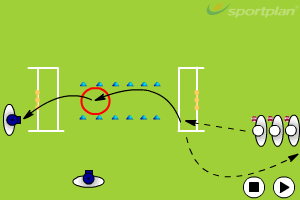
Mark a corridor between fourth and fifth stump using cones. Bowlers aim to land every delivery in the channel from their full run-up. A batter stands at the crease to add realism but does not play shots. Score one point for every ball in the channel.
Variation Sets (10 minutes)
Each bowler delivers sets of six balls: four stock deliveries and two variations of their choice. The coach calls out which delivery to bowl by number (1-6) so the bowler must switch between stock and variation on demand.
Match Simulation (10 minutes)
A batter faces a full six-over powerplay. Set the field as you would in a match. The bowler must execute plans while the batter tries to score freely. Track runs conceded and wickets taken.

Key Coaching Points
- Consistency beats aggression: A bowler who hits a good length six balls out of six is more valuable than one who bowls four great balls and two bad ones.
- Back the plan: If the plan is to bowl fourth stump, stick with it even if the first ball goes for four. Plans work over the course of a spell, not delivery by delivery.
- Communicate field changes: The captain and bowler must agree on field placements before every over. Confusion in the field leads to leaked runs.
- Use the crease: Encourage bowlers to vary their position on the crease. Going wide creates different angles without changing the delivery itself.
- Review and adapt: After each powerplay in training, discuss what worked and what did not. Build a library of plans for different situations and conditions.
Frequently Asked Questions
Should I always bowl with two slips in the powerplay?
For the first two or three overs with the new ball, yes. If the ball is not swinging or the pitch is flat, drop to one slip and add a fielder in the covers. The key is matching your field to what the ball is doing.
When should I bring on spin in the powerplay?
If the pitch offers turn or the batter struggles against spin, overs three to five can be effective for a spinner. Many franchise teams now use a spin over in the powerplay to break the batter's rhythm against pace.
How do I coach young bowlers to handle powerplay pressure?
Start with accuracy drills before adding pressure. Once bowlers can hit their areas consistently, introduce match simulations where runs are tracked. Build confidence gradually rather than throwing them into high-pressure situations unprepared.
What is the ideal economy rate during the powerplay?
In T20 cricket, conceding under 7.5 runs per over in the powerplay is considered excellent. In 50-over cricket, under 5.5 is the target. But economy rate means less than wickets - sides that take early wickets almost always win the powerplay battle.