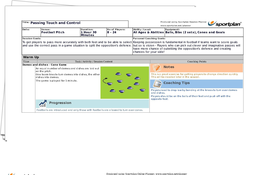
All players should aim to be ambidextrous, in footballing terms that means comfortable accurately playing the ball using both feet. Being able to do so will give them better balance, more passing options and more time on the ball when it comes to a game situation.
Being able to pass accurately using both feet not only enables your players to progress the ball up the pitch but it also means they can keep possession for longer - If you're not always passing with the same foot you're making life tougher for your opponent by constantly keeping them guessing!
To get your players passing more accurately we get your players passing in pairs - aiming to get the ball through a set of closely placed cones to one another. You can choose how easy or hard you make this by changing the width between the cones! From this point onwards things start to get competitive - as a result you might find some of your players starting to overweight some of their passes as they learn how to improve their passing (with both feet) when placed under pressure!

The 2026 World Cup is nearly upon us. Here is Sportplan's preview for the tournament on who we think is going to do well and which teams to look out for.

Discover our new Coaching Trends section - in-depth articles covering the latest tactics, techniques and innovations across Football, Hockey, Cricket, Rugby, Netball, Basketball, Tennis, Handball and Volleyball.
Save yourself a scare this Halloween and ensure your session runs smoothly. No chaos, no fright, just structure.


Register for FREE and get coaching tips, top drills, session and more every week!