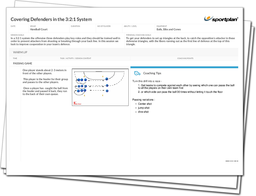
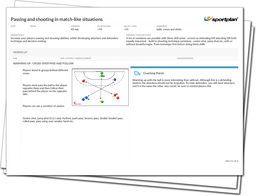
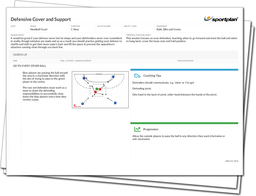
This session makes sure there's always an extra man behind the ball to prevent the opposition breaking through your back line.
Building defending confidence
When using the 3:2:1 system the offensive three defenders play key-roles, so it's important you have your players regularly practice defending to improve cooperation across your back-line.
Use this session to ensure players are assertive by running out to stop the attacker, safe in the knowledge that a team-mate is supporting them in case they get beaten.
To reinforce the team-defending ethos, it is vital to boost your players' defending ability by working on their agility, speed and technique.
Defending technique
The drills in this session look at developing your players' footwork and defence stance - side-on with arm slightly out-stretched and always stand between your attacker and the goal. The session kicks things off with a relay passing race before then working on shuffling defence and moving as a unit to close down the attacking angle.
Don't leave defending to chance, get your back-line working like a well-oiled machine with this team defence session.
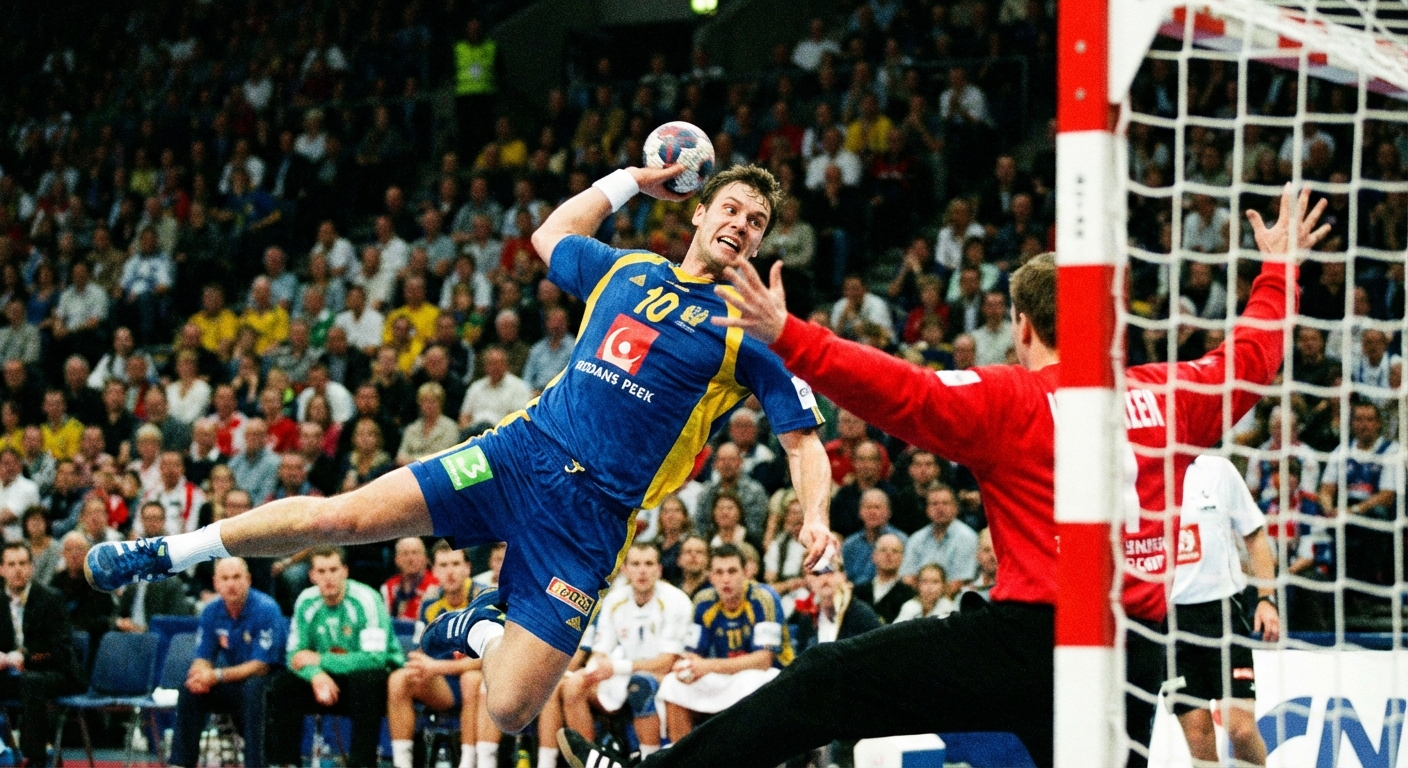
Wing players operate in the most demanding shooting position on a handball court, where acute angles and a close goalkeeper make finishing a specialist skill. This article breaks down the technique, decision-making, and training progressions that coaches need to develop elite wing finishing.
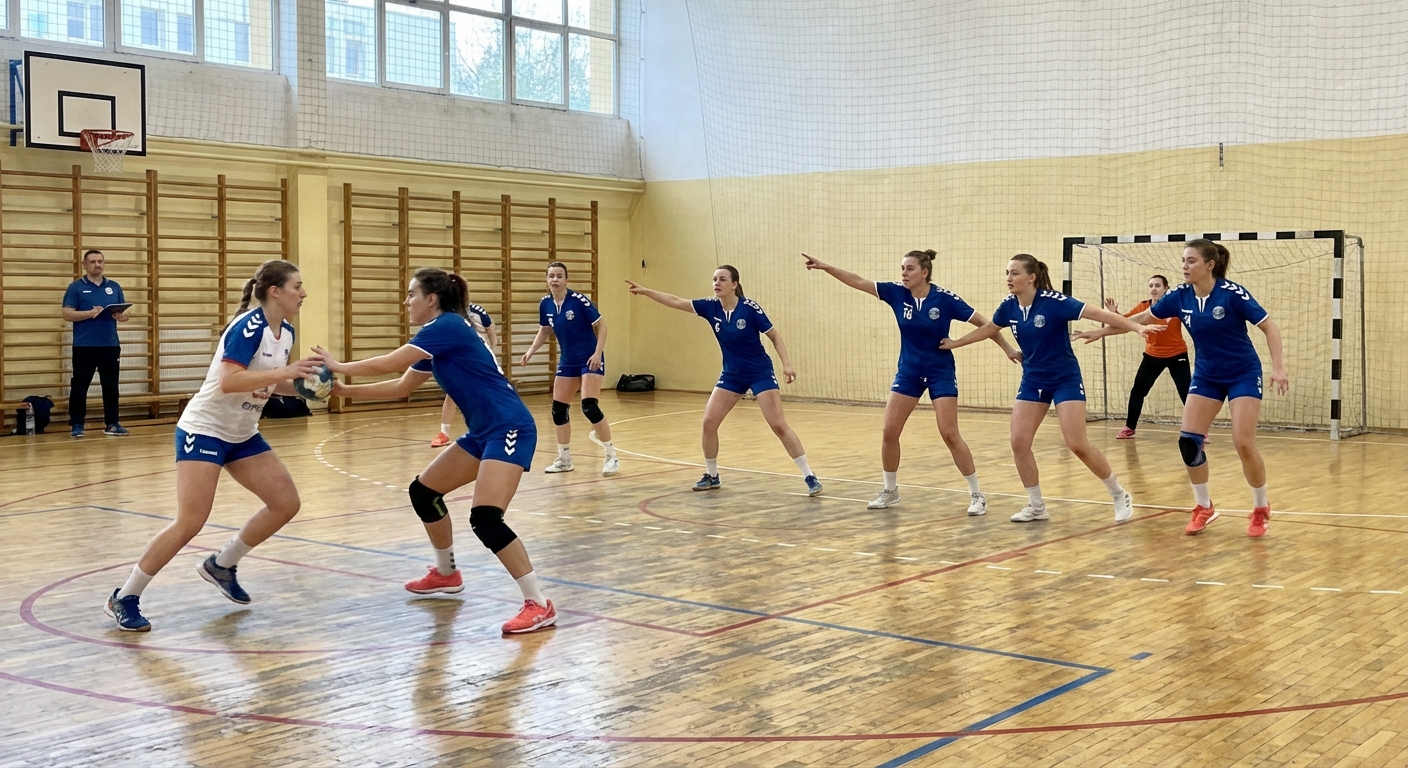
The transition from attack to defence is the most vulnerable moment in handball. This article examines the 3-second recovery principle, the specific roles players must adopt during transition, and the training scenarios that build a team's ability to recover defensive shape under pressure.
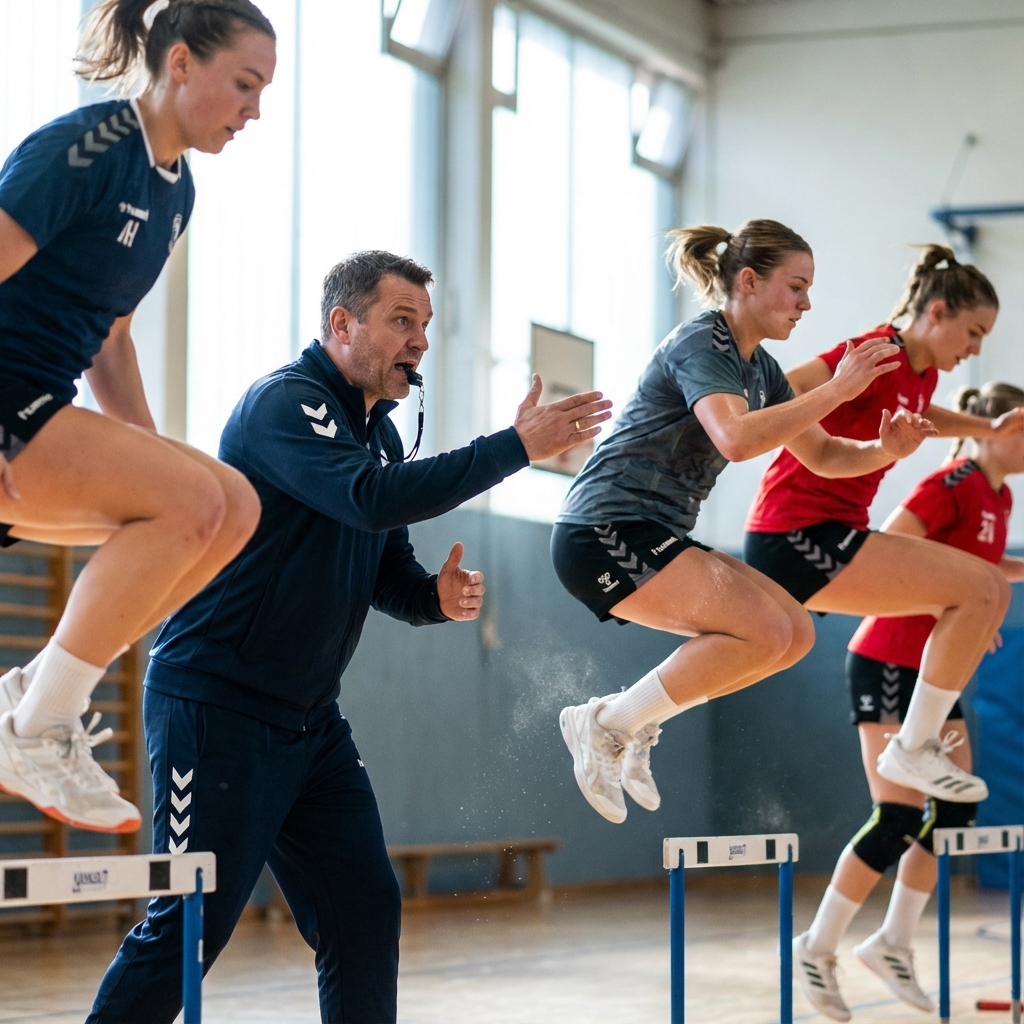
Handball demands explosive power, repeated sprint ability, and the strength to compete physically for 60 minutes. Sport-specific conditioning develops the athletic qualities that underpin elite performance.


Register for FREE and get coaching tips, top drills, session and more every week!