Half-term week is a nightmare for attendance and focus. Players are tired from the holidays, minds are on trick-or-treating, and a straight repeat of last week's technical session is a hard sell to a hall full of nine-year-olds in face paint. The skills still need coaching, but the wrapper has to earn their attention first.
The fix is not to cancel training or water it down. It is to put a Halloween costume on the same fundamentals you would coach anyway: running and dodging, throwing and catching, attacking a defender with a decision to make, and finishing in a game. Rename the games, keep the content real, and you get a session juniors remember long after the sweets are gone.
Why a Spooky Theme Works This Week
Young players learn skills through repetition, but repetition is what they resist when they are already distracted. A theme does not change the coaching content, it changes how the brain receives it. "Run away from the tagger" becomes "escape the zombie", and the same sprint-and-dodge pattern suddenly feels like play rather than a drill.
This matters most in the weeks either side of a school holiday, when numbers dip and the players who do turn up are often the least focused of the term. A themed session is a low-cost way to protect attendance and intensity without compromising on what you are actually coaching.
Building the Session: A Step-by-Step Framework
Step One: Pick a theme that is light, not scary. Zombies, ghosts, pumpkins and monsters work well for juniors. Avoid anything genuinely frightening, loud jump-scares, or props that could trip players on the court.
Step Two: Map every game to a real skill first. Choose your four phases (warm-up, technical, decision-making, game) and pick a verified drill for each before you rename anything. The theme is decoration, not the plan.
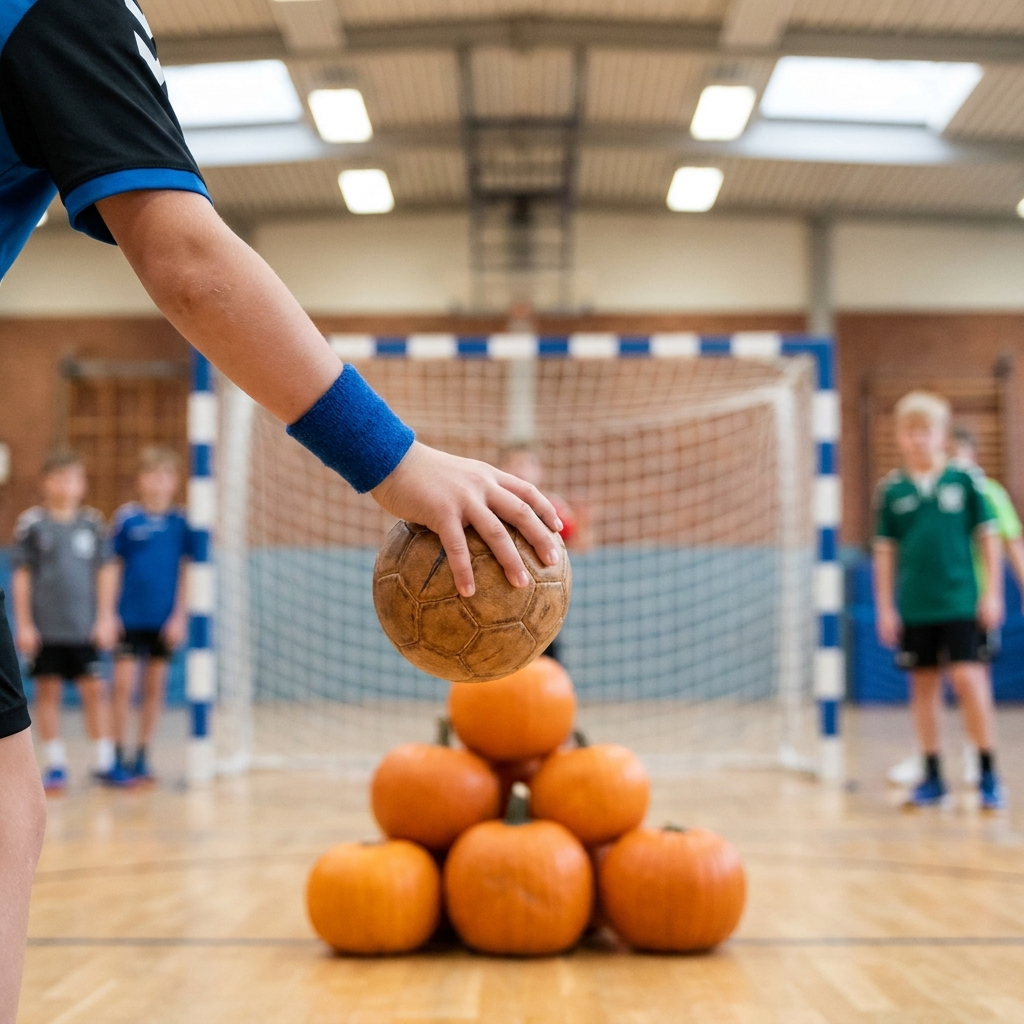
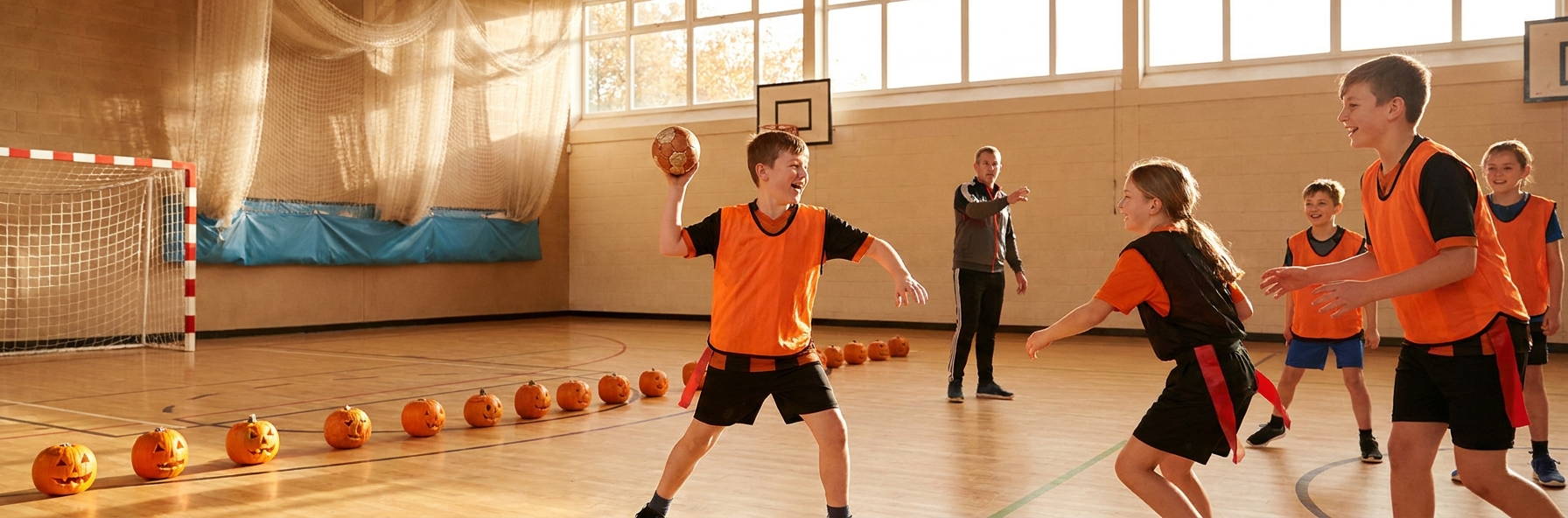
Step Three: Keep kit simple. A handful of small pumpkins, orange cones and bibs are enough. You do not need a full set dressing, and nothing should be a trip or slip hazard on the court.
Step Four: Brief the coaching point before the theme. Tell players what you want them to get better at, then introduce the spooky name. They should know they are training a real skill, not just playing a party game.
Step Five: Finish with a game. Whatever the theme, close with a small-sided game so players use everything they have just practised under realistic pressure.
The Session: Warm-Up to Game
Warm-Up: Zombie Tag (10 minutes)
Set-up: Scatter a few benches or mats around a third of the court as "safe graveyards". One or two players start as the zombies.
Rules: Zombies try to tag the survivors. A survivor standing on a safe spot cannot be tagged, but only three or four survivors are allowed on each one at a time, so players have to keep moving rather than camp out.
Coaching points: Low athletic stance, quick changes of direction, scanning for space and for the nearest zombie before committing to a run.
Progression: Add a second zombie, or make tagged survivors freeze until a teammate "unfreezes" them, so players have to combine movement with helping each other.
Technical: Pumpkin Patch Passing (12 minutes)
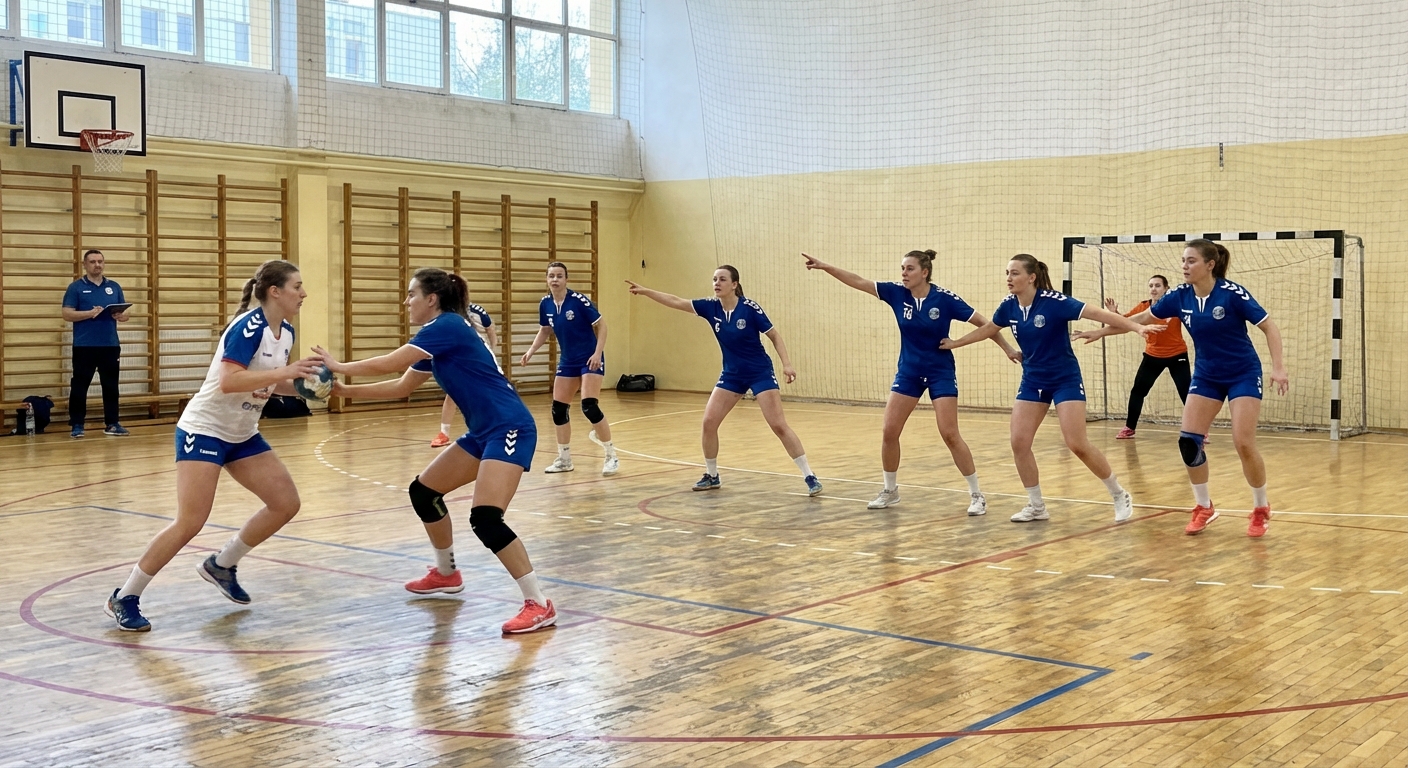
Set-up: Four defenders link arms or hold shoulders in a line to form a "pumpkin chain", with the end player as the glowing pumpkin. Attackers spread around them with a ball.
Rules: Attackers pass the ball around the outside of the chain, looking for the angle to throw and hit the pumpkin at the back end without the ball being blocked by the chain in between.
Coaching points: Quick, accurate passing, moving the ball fast enough that the chain cannot turn to protect the pumpkin, footwork to open a clean throwing lane.
Progression: Start with the chain static, then let it rotate to track the ball once players are comfortable with the passing pattern.
Decision-Making: Haunted House Breakout (12 minutes)
Set-up: Pairs of attackers line up at the halfway line against one defender guarding the "haunted house" (the goal). Each pair starts with a ball.
Rules: The two attackers advance using a give-and-go, reading the guard's position to decide which of them should receive the final pass and finish past them.
Coaching points: Timing the pass before the defender can cover both attackers, communicating who is in support, finishing quickly once the gap appears.
Progression: Add a second defender once pairs are confident, turning it into a 2v2 decision for older juniors.
Game: Monster Mash Match (15 minutes)
Set-up: A mini match played across roughly a third of the court, with two small teams of "monsters".
Rules: Normal small-sided handball rules, scoring by throwing into the target area or goal, played as a quick tournament of short matches so everyone plays and rests in turn.
Coaching points: Encourage players to use the tag-game movement, the passing patterns and the breakout decisions from earlier in the session inside the game itself.
Progression: Shrink the playing area as the game goes on to reward quick decisions and discourage players bunching around the ball.
Key Coaching Points
- The theme is the costume, not the content; every game must still train a real handball skill
- Keep decorations minimal and check the court for trip hazards before players arrive
- Tell players the coaching purpose before the spooky name, so they know what they are improving
- Build the session in the usual order: warm-up, technical, decision-making, then a game
- Use safe-zone and freeze variations to keep tag games inclusive for less confident movers
- Finish with a game so every themed drill gets applied under match-like pressure
Recommended Drills
 Zombie Tag (Chicken Hunt)
 Pumpkin Patch Passing (Hit the Dragon's Tail)
 Haunted House Breakout (2 v 1 Fast Break)
 Monster Mash Match (Bench Ball Mini-Match)
Frequently Asked Questions
How long should a Halloween-themed handball session last for juniors?
Roughly 45 to 60 minutes works well: around 10 minutes of warm-up, 12 minutes each for the technical and decision-making phases, and 15 minutes for the small-sided game at the end. Shorten each phase slightly for younger or newer groups.
Do I need costumes or decorations for this to work?
No. A few small pumpkins, some orange cones or bibs, and enthusiastic renaming of the games is enough. Keep anything you do bring in away from running lines and check the court is free of trip hazards before the session starts.
What age group is this Halloween handball session suitable for?
It is built for mini and junior players, roughly ages six to eleven. The tag warm-up and passing game work as described for the youngest groups, while the 2 v 1 decision-making game and the progressions suit the upper end of that range or slightly older beginners.