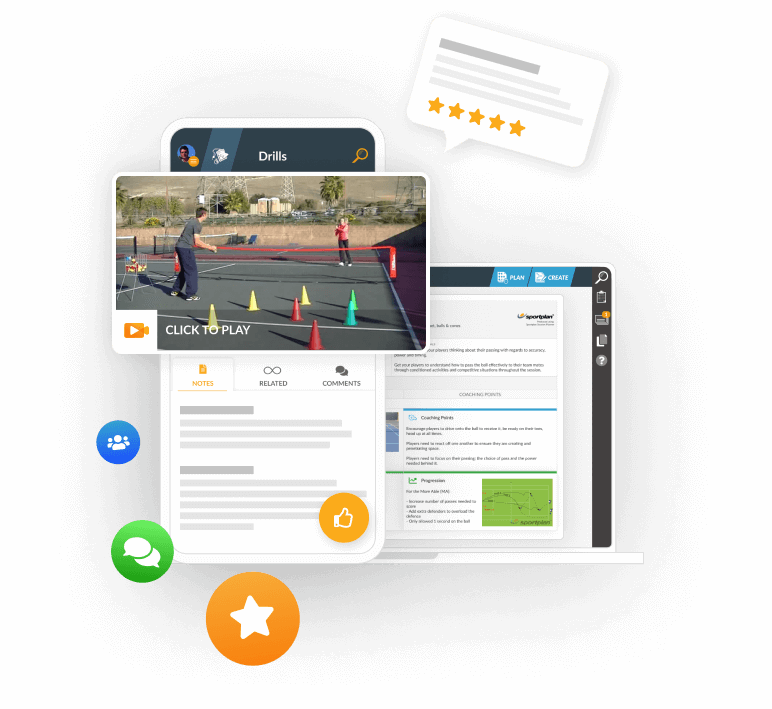
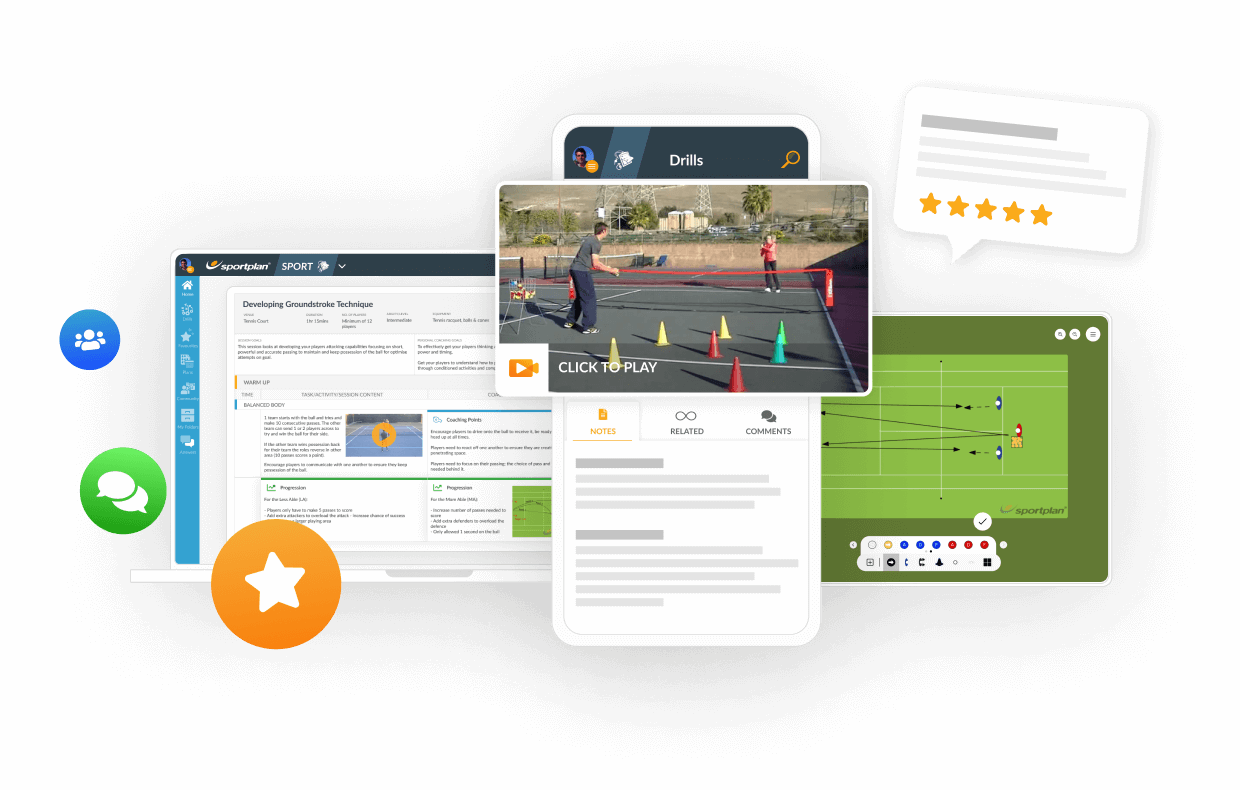
Players are working in threes with player 1 working in the whole court against players 2 and 3.
Players are rallying co-operatively but with players 2 and 3 moving player 1 around the court a little. Player 1 can hit to either side in any order.
If player 1 hits a ball that lands long they get 2 points, beyond the service line but before the longline they get 1 point, in the service box they get no points.
Should they miss a ball long or wide they get minus 1 point, and in the net minus 2 points.
Players 2 and 3 must count out loud, and player 1 is trying to get to 25 points as quickly as possible. The length of time it takes is timed and players can compete within themselves in the 3 or combined against other courts if the group is larger.
Players are looking for height to give them the depth they need but should still be able to hit through the ball to achieve this.
The closer to 25 and the more frustrated player 1 gets doing this, the harder it will be to hit the depth they need so players should be encouraged to relax and not get too tight!
On-court coaching is now fully legal, technology continues to advance, and the ATP calendar evolves. Here's what tennis coaches need to know for 2026.
Tennis demands a unique combination of endurance, power, agility, and flexibility. Physical preparation determines how long careers last and how players perform when it matters most.
Ecological dynamics is transforming tennis coaching. This constraints-led approach develops adaptable, creative players who can solve problems in competition, not just execute drilled patterns.