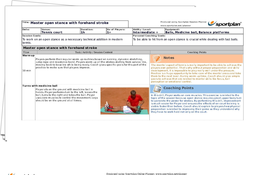
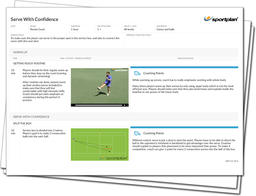
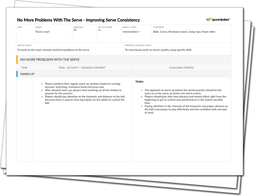
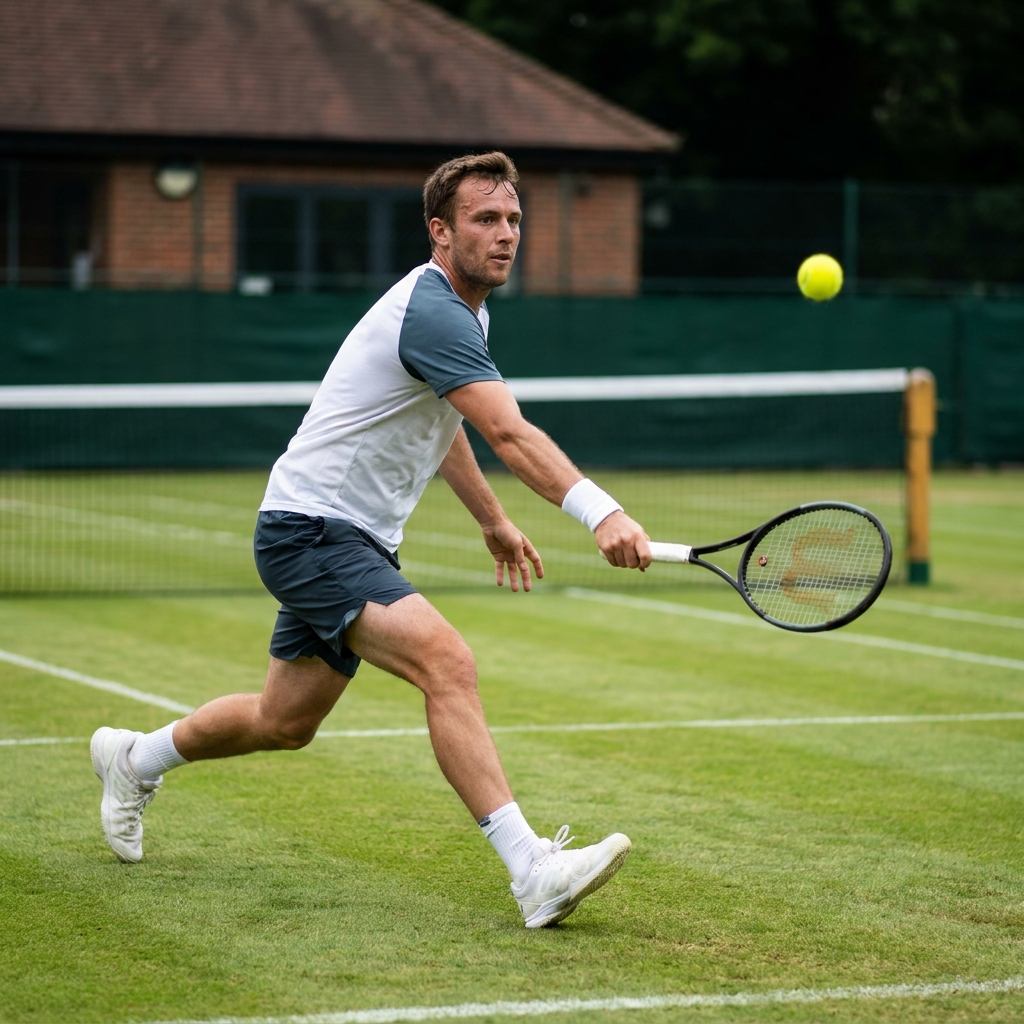
By running forwards and taking the ball at the highest point of its bounce your players will be able to dictate the play in the game and not the other way around.
To make sure your players think carefully, thinking "should I stay or should I go?" we use a points scoring system, so you'll be able to reward effective attacking play, but equally you will be able to penalise reckless play when players choose the wrong moment to run forwards to get up the court.
Knowing when to stay or when to go is not an easy skill for players to learn which is why we use a clear progression in this session - starting slowly and gradually building up to a competitive full court game with a tiered scoring structure.
Starting with a simple co-operative rally where one player must try to move up the court wherever possible, you will be able to gradually increase the intensity, getting your players to look for the winning shot and close down the angle for their opponent.
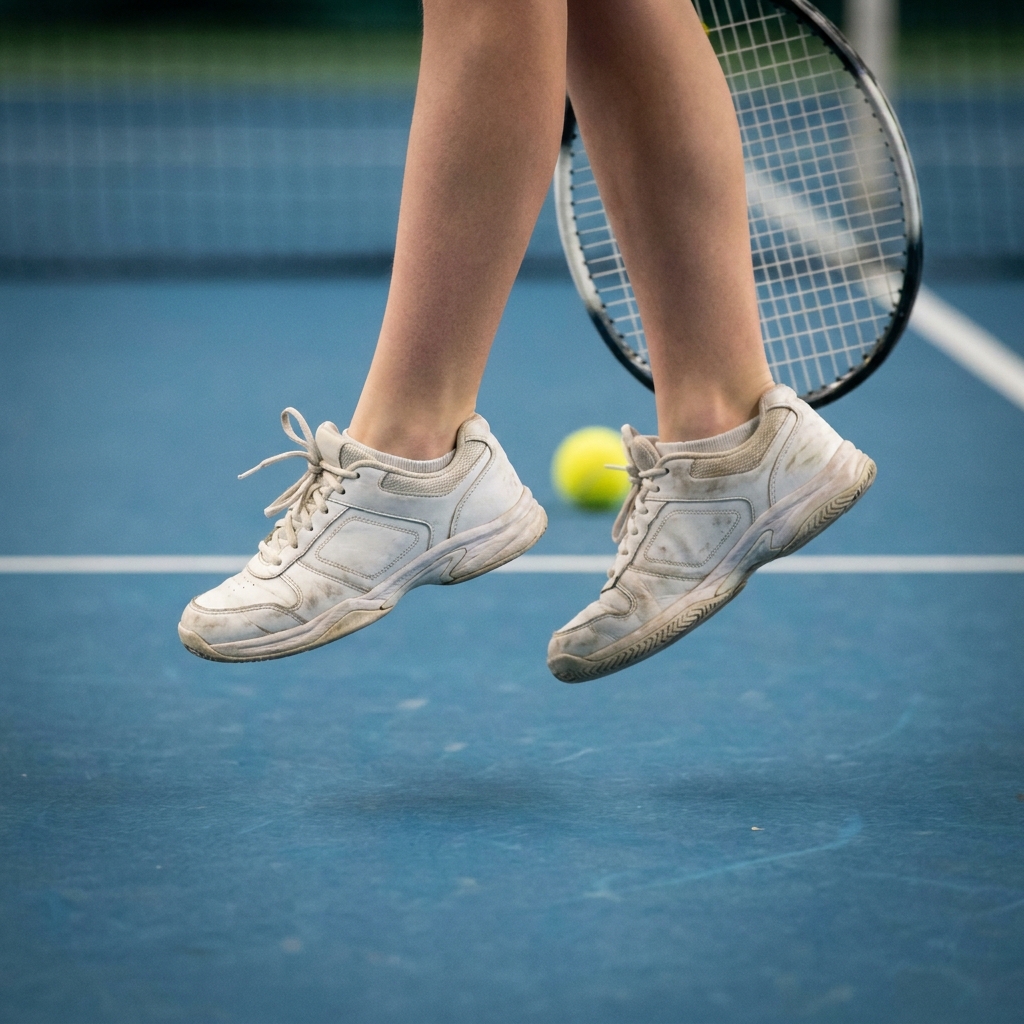
Indoor courts give players less time and less room. Help them sharpen their split step, shorten their swing and stay calm, and winter becomes a season of real progress.

A tiebreak is a short sprint where every point is worth the same as a break of serve. The players who win them are rarely the ones who hit hardest. Here is how to coach the patterns, habits and scoreboard thinking that win the big points.
Most club players practise the serve on its own and then have no idea what to do with the ball that comes back. Serve plus one is the pattern that turns a good serve into a won point.


Register for FREE and get coaching tips, top drills, session and more every week!