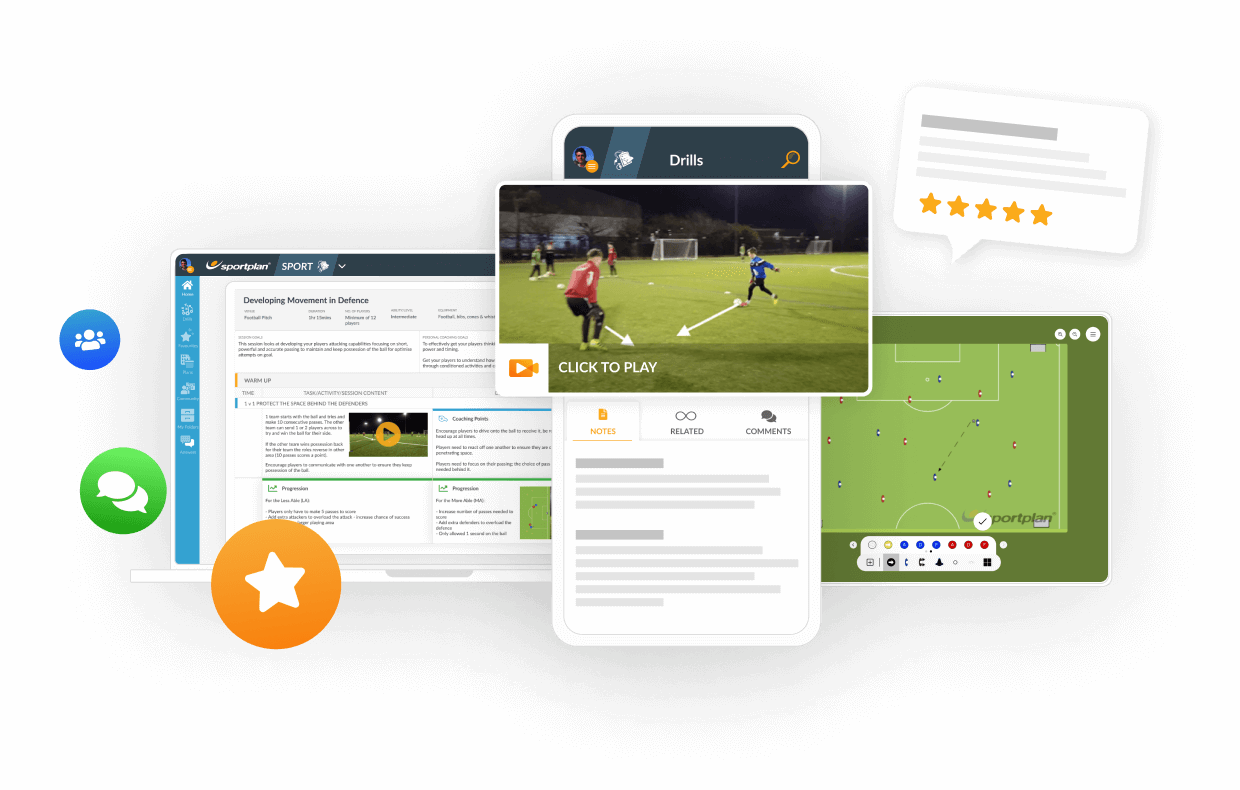
defending 1v1, size of area: 10x30 yards. Split the group up into pairs with one of the pairs wearing a bib. One will be an attacker the other will be a defender. Players start at opposite ends of the area with the defender starting with the ball. the defender will then pass the ball to the attacker, when the attacker has the ball under control the defender will then proceed to close the attacker down and try and prevent them from getting past and scoring a goal. To do this the defender will first close the attacker down to delay and deny space. They will do this by not standing to far or to close. Next their body position should be side on, with defenders on the balls of there feet, not straight on and flat footed. This will help the defender to turn quickly should the attacker, play the ball past them or try and run round them. This also helps the defender try and dictate the play and force the attacker outside of the area or send them into a cul de sac when playing with more defenders. When the defender has the correct distance and the right body position, the defender can then try and win the ball. However they should only do this when they feel confident they can win the ball for example when the attacker has a bad touch or when the attacker doesnt have control of the ball. Coaching points deny the attacker time and space on the ball body position side on and on balls of their feet dictate the play send the attacker where you want them too tackle the attacker when able to do so, bad touch, lost control. try a fake tackle to worry the attacker.
This practice has no coaching points
This practice has no progressions
in more ways than one
 sportplan_football


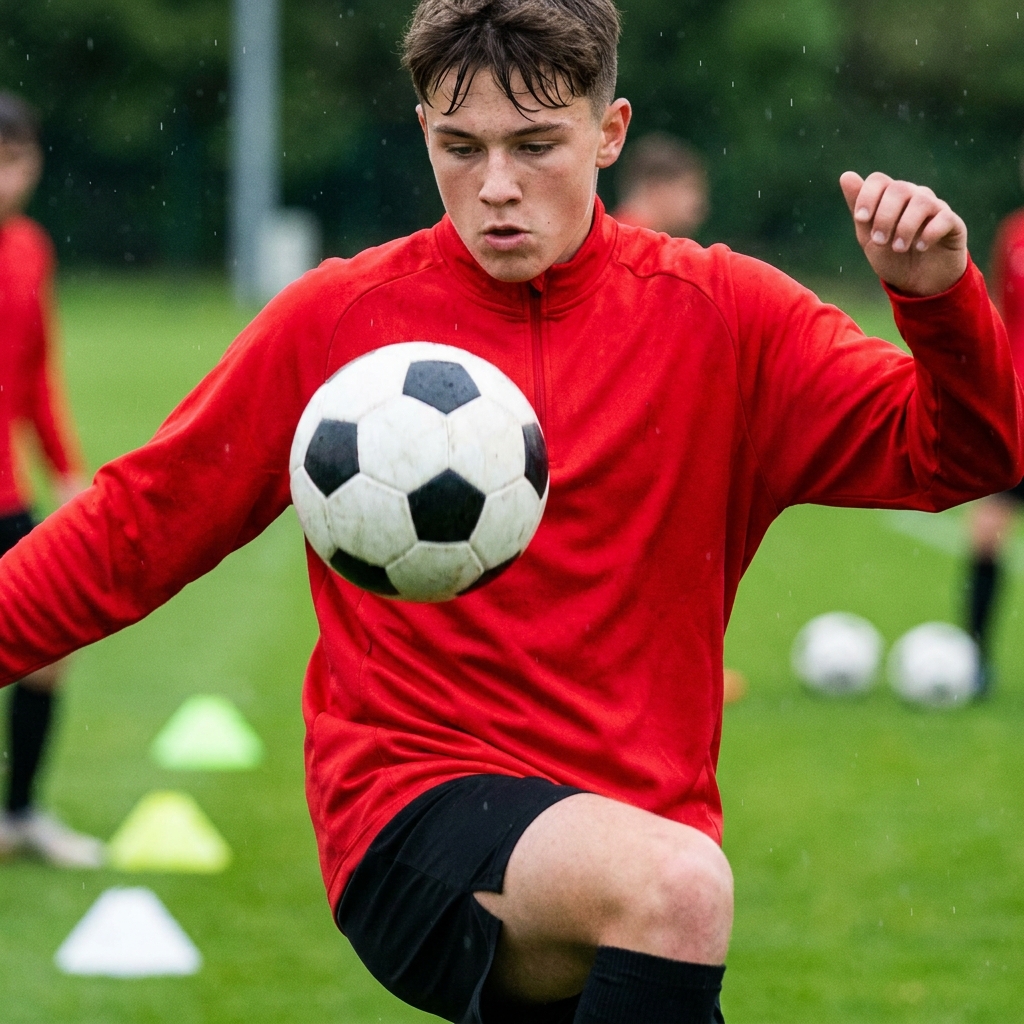
Deliberate heading is now out of U11 grassroots matches. Here is how to coach chest, thigh and foot control so your players still win the ball in the air.
Long-range goals doubled at the 2026 World Cup as teams sat deep. Here is how to coach when to shoot from distance, the technique, and the follow-up.
Under FutureFit, your Under-9s stay at 5v5, your Under-11s stay at 7v7 and your Under-13s stay at 9v9. Same pitch, same numbers, one more year. Here is how to make sure that year feels like a step forward rather than a repeat.