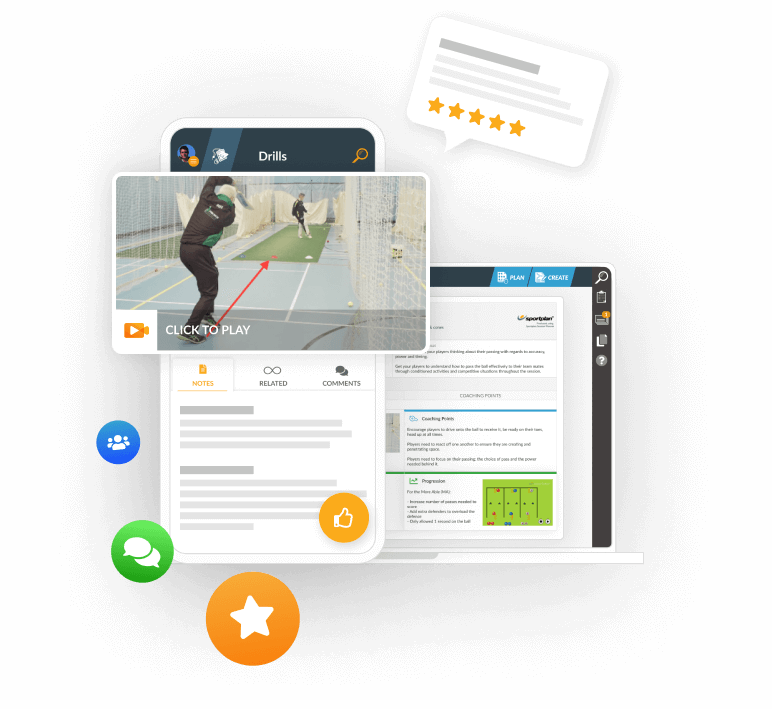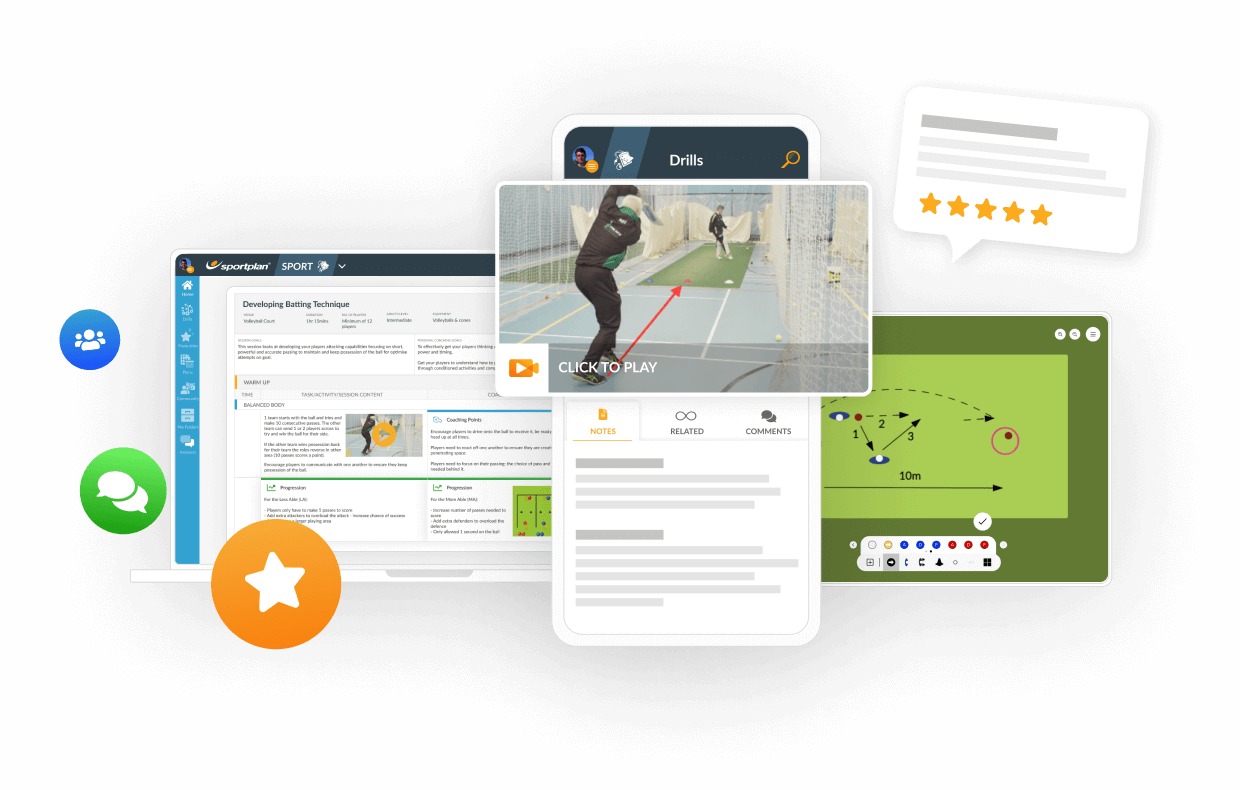
Can be done in pairs/ groups of three.
Feeder drops ball in front of batter (with arm out horizontally, standing on the off side of the batsman for safety purposes).
Batter steps towards the ball, and aim to drive the ball on the second bounce/half volley, driving the ball on the ground through the target zones.
Each group needs 6 tennis balls. 6 feeds per batter rotate clockwise.
Drill is best done in nets (2 grounds per net in opposite directions) .Encourage players to wear at least batting gloves when doing this drill.
Focus needs to be on getting ball between cones along the ground.
This is achieved by a strong top had on the bat, shoulder dipping into the ball, playing the ball late, and getting a big stride towards the ball, encouraging player's weight to be over the ball on contact
PROGRESSION: Player can hit ball by already being in the finished drive position, just moving hands upon impact. This helps if struggling with stepping into shot.
Increase speed of drops to make player work harder, with less recovery between shots.
Make target zones smaller, and/or alternate sequence/ introduce points system.
Game-based training and match simulation prepare players for real competition more effectively than isolated drills. Modern coaching integrates pressure scenarios, decision-making, and competitive situations into every training session.
Catches win matches remains cricket's truest saying. From high balls under lights to sharp slip catches, the ability to hold chances consistently separates winning teams from those that let matches slip away.
Elite running between wickets adds significant runs without risk. Quick singles, converted twos, and intelligent strike rotation separate the best batting partnerships from average ones across all formats.