
The season is only a few rounds old and already the same three horror stories are doing the rounds at club nets. A regulation chance goes down at second slip. A quick bowler who looked fine in the garden all winter suddenly cannot land a ball behind the crease. Two batters send each other the wrong way and a straightforward single turns into a run out.
None of this means your players have forgotten how to play cricket. It means the skills that switch off over the off-season, soft hands, a repeatable landing position, trust between batting partners, have not been switched back on yet. The good news is that every one of these nightmares has a clear, well-practised fix, and with the season still young there is time to bank it before it costs you a result that matters.
The Tricks: Three Nightmares Haunting Early-Season Nets
The first nightmare is the dropped sitter. Hands that have not caught a hard ball in months lose their reflex to give with the catch, so the ball bounces out instead of sticking. It is a confidence problem as much as a technical one, and it tends to cluster around the same one or two players until it is addressed directly.
The second is the no-ball blitz. Bowlers spend the off-season doing anything but bowling full tilt off their long run, so their landing foot drifts past the crease long before their radar catches up. A few early no-balls in a game can hand the batting side free runs and a free hit at the worst possible moment.
The third is the mixed call. Squads change shape over the off-season: new signings, promoted juniors, players back from time away. Batting pairs who have never run between the wickets together have no shared language for a quick single, and a split-second hesitation is all it takes to lose a wicket for nothing.
The Treats: A Five-Step Framework to Banish Them
Step One: Name the real fault. Watch closely before you fix anything. A dropped catch might be footwork, hand position or simply flinching at the last moment. A no-ball might be a run-up that has crept longer, or a front leg that collapses under full pace. Treat the symptom you actually see, not the one you assume.
Step Two: Rebuild at low intensity first. Take catching back to short, soft-hands reps before adding pace or height. Take bowlers back to a marked run-up at three-quarter pace until the landing foot is consistently behind the line, then build speed back in gradually.
Step Three: Add fatigue on purpose. Early-season legs tire faster than players expect. Practise catching and bowling discipline after a short sharp fielding shuttle or at the back end of a long bowling spell, because that is exactly when the nightmares show up in a real match.
Step Four: Fix partnerships deliberately. Do not leave new batting pairs to work it out mid-match. Put them together in training specifically, agree calling language out loud (yes, no, wait) and practise the ones that look easy, because those are the ones that get players run out.
Step Five: Reward the clean version. In small-sided games, score a bonus run for a clean take, a legal delivery under pressure or a confidently called single. Players repeat what gets praised, and a season built on small clean wins beats one built on fear of the next mistake.
How to Train It: A Session to Chase Away the Rust
Warm-up: two-handed and one-handed catching in pairs at close range, building from gentle underarm feeds to firmer throws once hands are warm.
Technical: split the group. Bowlers work on a marked run-up and crease discipline, hitting a target for line and length at a controlled pace. Fielders rotate through high catching and catching to both sides, with a coach or feeder controlling the difficulty.
Decision-making: pair up batters, including any new combinations, and run a calling drill where one caller has to make a instant yes or no decision on a struck ball, with the group reviewing out loud why each call was right or risky.
Game: a conditioned match situation where bowlers must execute under scoreboard pressure, fielders take their half-chances, and batting pairs run twos and quick singles. Keep score of nightmares avoided, not just runs and wickets.
Key Coaching Points
- Diagnose before you drill. A dropped catch and a dropped catch are not always the same fault.
- Rebuild bowling actions at reduced pace before asking for full intensity.
- Train catching and crease discipline when players are tired, not only when they are fresh.
- Give new batting pairs dedicated time together before trusting them in a match.
- Make calling language explicit and out loud, never assumed.
- Reward clean execution in training so good habits become the default under pressure.
Recommended Drills
 Catching to the Left and Right
 Grid High Catching
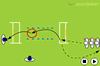 Hitting a Target
 Working in Pairs: Players Take Responsibility for Calls
Frequently Asked Questions
Why do my bowlers suddenly bowl more no-balls early in the season?
Most off-season training is done at reduced pace, so a bowler's landing position drifts without them noticing. Once they bowl at full intensity again in a match, the old crease discipline has not caught up yet. Fix it at three-quarter pace on a marked run-up before building speed back in.
How do I stop my fielders dropping easy catches?
Start close and soft. Short-range, two-handed catching at gentle pace rebuilds the habit of giving with the ball before you add height, distance or a harder throw. Confidence returns quickly once hands start sticking the easy ones again.
Why are we getting run out so often with our new-look batting line-up?
New or reshuffled batting pairs have not built a shared calling language yet. Give them dedicated time running between the wickets together in training, with calls said out loud, rather than trusting it to work itself out in a match.