Modern rugby is won and lost at the breakdown. The team that consistently delivers quick, clean ball creates attacking momentum. The team that slows opposition ball and creates turnovers builds scoreboard pressure.
Ruck technique has evolved significantly, with referees increasingly strict on entry angles and body position. Understanding the legal framework is as important as physical technique.
Ball Presentation: Where Rucks Are Won
The ruck doesn't start when the first cleaner arrives - it starts the moment the ball carrier goes to ground. Good ball presentation gives your team an immediate advantage.
Key presentation principles:
- Place the ball as far from the defender as possible
- Both hands on the ball, arms extended back toward support
- Body position between the ball and the opposition
- Immediate release - don't hold the ball waiting for support
The ball carrier's job is to survive the tackle and present cleanly. Fighting for extra yards while holding the ball invites turnovers. Win the gain line, then win the presentation.
First Arrival: The Critical Moment
The first support player to arrive has the biggest impact on ruck speed. Arriving a second earlier - or later - changes everything.
If the ball is available: Secure it. Pick and go, or present for the scrum-half. Don't wait for teammates to set a ruck if the ball is there to be taken.
If a defender is contesting: Clear them out. Low body position, wrap the defender, drive through the contact. The aim is to move them beyond the ball.
Entry technique:
- Enter through the gate (behind the hindmost foot of your teammate)
- Stay on your feet throughout
- Bind on a player before driving
- Don't dive over the ball or seal off
Clearing Out: The Hook and Handle
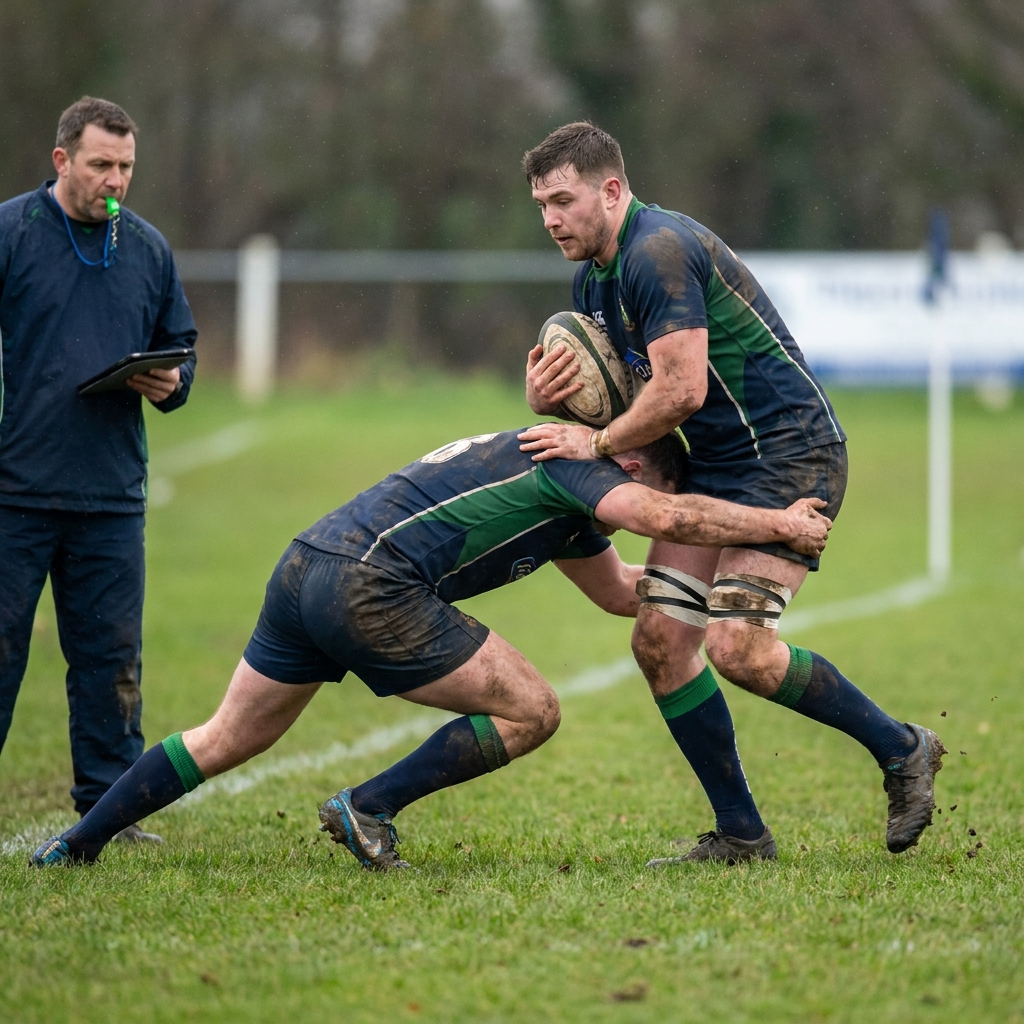
The "hook and handle" technique is the most effective legal clear-out. Rather than simply driving into defenders, you lift and remove them from the contest.
The technique:
- Arrive low with a strong body position
- Hook under the defender's legs with your arms
- Lift their weight as you drive forward
- Drive past the ball, taking the defender with you
This technique is more effective than straight driving because it removes the defender's base. They can't resist when their feet aren't on the ground.
Defensive Ruck: The Jackal
The jackal - contesting for the ball immediately after a tackle - is high-risk, high-reward. Get it right and you win a turnover. Get it wrong and you're taken out of the defensive line.
Jackal technique:
- As tackler, release and immediately get to your feet
- Attack the ball before the ruck forms
- Strong base, low body position, hands on the ball
- Rip back toward your goal line
When to jackal:
- Ball carrier isolated with slow support
- Poor ball presentation
- You made the tackle and can get to feet first
When to rejoin the line:
- Support arriving quickly
- Clean ball presentation
- You can't get hands on the ball legally
Counter-Rucking
If the jackal isn't on, the defensive option is counter-rucking - driving attackers off the ball after the ruck has formed. This requires numbers and timing.
Counter-rucking works when:
- Attack commits fewer players than defence
- Defence arrives with momentum from the tackle area
- Legal entry and body position are maintained
The danger is committing too many players and leaving gaps in the defensive line. Counter-ruck with purpose or get back in the line.
Ruck Speed: The Metric That Matters
Track ruck speed in training. From ball carrier going to ground to ball in scrum-half's hands should take 2-3 seconds for quick ball. Anything over 4 seconds is slow ball that allows the defence to reorganise.
What slows rucks:
- Poor ball presentation
- Late support arrivals
- Ineffective clearing out
- Scrum-half waiting for numbers
Film your training rucks. Time them. Set targets. Fast ruck speed is a trainable skill.
Key Coaching Points
- Ball presentation wins rucks before support arrives
- First arrival decides ruck quality
- Hook and handle is more effective than straight driving
- Jackal when the opportunity is genuine
- Track and target ruck speed

 sportplan_rugby