Rugby: touch

September 2026

Early season in community rugby has a familiar pattern. The first few matches are full of dropped balls, passes that arrive behind runners, and promising overlaps that die because someone could not catch and give in one movement. It is rarely a lack of effort. It is handling that was learned without pressure, being asked to work under pressure.

The fix is not more passing lines. It is a handful of simple technical habits, drilled until they are automatic, and then deliberately tested against defenders, time limits and tired legs. That applies to your props and second rows just as much as your centres.

Why Handling Breaks Down

Most handling errors come from the same few causes. Hands arrive late, so the ball is caught against the chest and has to be reloaded before it can be passed. The catch is taken beside or behind the body, so the carrier drifts and loses the shape of the line. And players have a strong side, so anything asked of the weaker hand becomes slow and loopy.

Pressure magnifies every one of these. A defender closing the space removes the extra half-second a player was using to tidy up. Fatigue does the same thing more slowly. If the technique needs time, pressure will expose it.

A Five-Step Framework

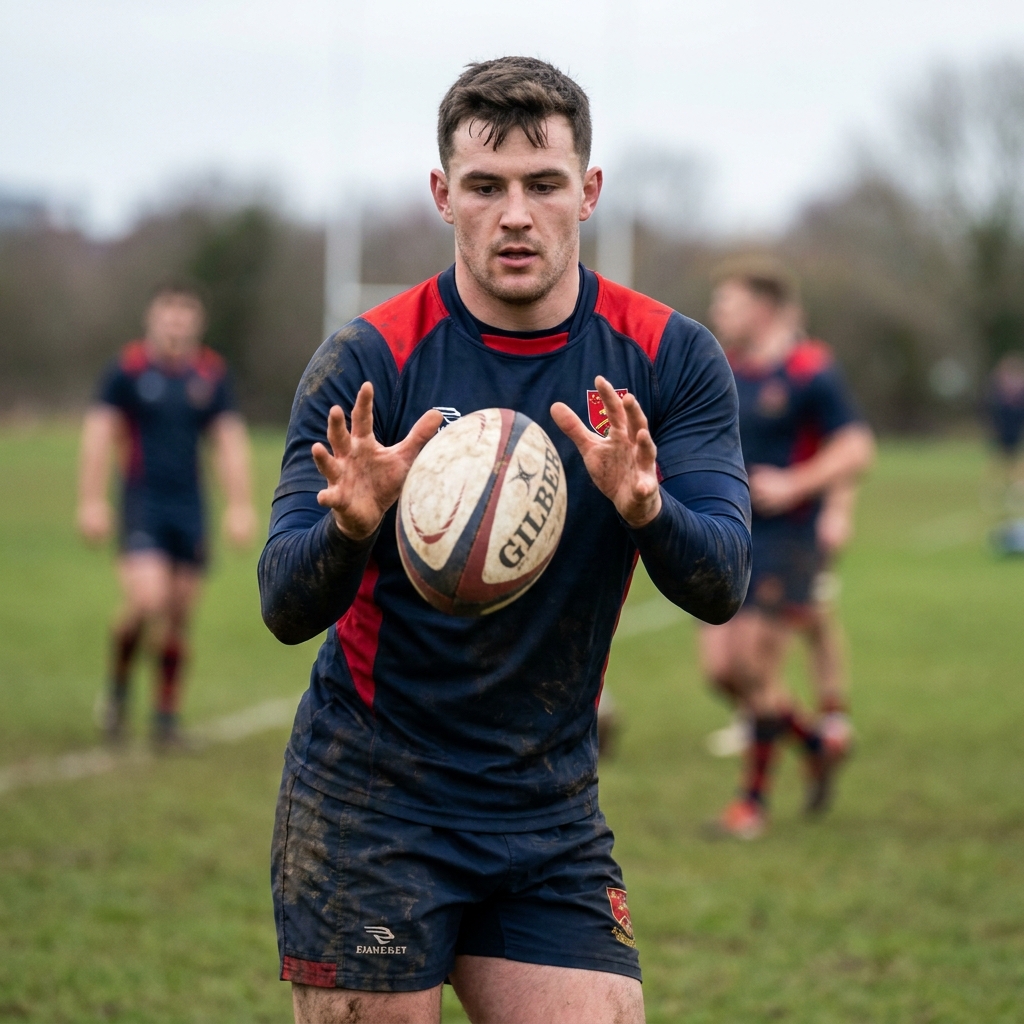
Step One: Hands early. Receivers show a target with both hands up and fingers spread before the ball is passed, not as it arrives. The passer has something to aim at and the catcher is ready to give straight away.

Step Two: Catch in front. Reach for the ball and take it early, away from the body. A catch in front keeps the player running straight and lets them move the ball on without reloading at the hip.

Step Three: Pass off both hands. Build the weaker side on purpose. In every handling block, make sure the ball travels both ways in equal amounts, and coach the same finish: hands following through towards the target.

Step Four: Choose short or long. A short, flat pass keeps a defender fixed and suits tight spaces. A longer pass moves the ball past a defender into space but gives the defence more time to drift. Teach players to look up before they catch so the decision is already made.

Step Five: Keep it simple when tired. Late in a phase or a match, the right pass is often the simpler one. Encourage players to pick a pass they can deliver accurately when their legs have gone, rather than the ambitious one that only works when they are fresh.

How to Train It

Start with a short technical block where the only focus is hands early and catching in front. Keep it moving and keep the reps high. Then add one form of pressure at a time: a defender who closes, a time limit, or a narrow channel.

Finish with handling under fatigue. Put the passing work straight after a short, sharp conditioning effort, or build it into a continuous game so players have to catch and pass while breathing hard. For forwards, make the passes short, flat and close to contact, because that is where they will need them.

Key Coaching Points

  • Show hands early as a target before the pass is thrown, not as the ball arrives.
  • Catch the ball in front of the body so there is no need to reload before passing.
  • Give the weaker hand equal work in every handling session, for backs and forwards.
  • Look up before the catch so the short or long decision is made in advance.
  • Add pressure one layer at a time: a defender, then time, then fatigue.
  • When players are tired, reward the accurate simple pass over the ambitious one.

Recommended Drills

VIEW ALL PASSING DRILLS

Frequently Asked Questions

My forwards say passing is a job for the backs. How do I get them to buy in?

Show them where the ball goes to ground in your matches. Most community sides lose possession close to the ruck, not out wide. Keep forwards' handling work short, flat and near contact so it feels like their game, and they will see the point quickly.

Should I teach the spin pass to everyone?

Not before the basics. A spin pass is useful for distance, but a player who cannot catch in front and give a flat pop pass off both hands will not benefit from it. Build accurate short passing first, then add the spin pass for players who need the range.

How much handling should we do in a session?

A little and often works better than one long block. A short technical focus in the warm-up, handling built into your games, and a pressured practice near the end when players are tired will do more than twenty minutes of static passing lines.

touch DRILLS
View All

Tabata Touch Tag Rugby - Rugby...

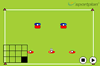
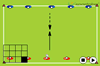
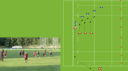
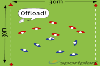
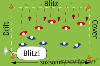
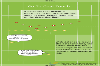
You can play any version of touch you like, I'm going to suggest One Touch Off-Load - but you can change this to suit your training goals for the session ahead. Mark out your training area for the game, but include one or more Tabata training zones for your players (these zones don't have to be very big). If you only have one other person helping you - you might have only one zone, but if you have more assistant coaches or helpers standing around, create more zones - you'll find they will be used. Split your players into two teams, giving them bibs if needed. Keep your law briefing, brief - telling the players the laws of the version of touch you have decided to play. Tell them that as an addition to the normal laws, we now have a sin binning for mistakes e.g. you may decide that all mistakes are sent to the sin bin (The Tabata Zone), you might just focus on forward passes, or penalties. My point is that you can tailor this to suit your coaching goals. Players sent to the sin bin will be there unit sent back by the supervising coach. Don't forget to swap the defense and the attack. Also you can focus the sin binning on the defence for not meeting your defensive goals. Using the Tabata Zones Small areas with one coach/helper. The Tatbata protocol is often 8 periods of intense 20 second activity - with 10 seconds of rest in between (sound simple - try it!). Tell the sin binned player they have 20 seconds to complete as many press-ups as they can, then give them 10 seconds to rest. Repeat 8 times, or reduce to a number of repetitions that work for you and your players. When the player has completed their reps - return them to the game. What you could do in the zones: Press ups, Lunges, Burpees, Sit ups, Etc.

General

Maul Touch Warm Up - Rugby Dri...

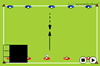
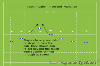
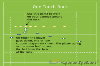
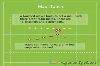
Be brief when telling the players the laws of this game, it's important to get them moving quickly. This is not a contact game, but there will be some light contact. Break your players into two teams, giving each team their own colour of bibs if necessary. One team goes to attack, and one to defence. Nominate a Scrum Half for each team, it will be their job to move the ball from the back of the maul and out to an attacking line. There is no kicking in this game. Normal laws of rugby apply e.g. a forward pass will result in the ball being turned over to the opposition. If an attacking player is touched: they must stop and turn, a maul is then built based on how you have trained your players to Maul. Only four players should be in the maul - but every player should be able to maul - including the backs! When you start playing this game make sure that the defence is employing your defensive pattern around the maul. They will commit 4 players, but will not do anything more than provide light resistance. Once formed the maul can take four steps before moving the ball. If there is a delay in creating the maul, or the quality of the maul is poor - the ball can be turned over. Depending on your goals decide on the number of touches you wish to allow e.g. unlimited is not a bad option as mistakes will be made! If a team has been in possession for a long time, don't forget to turn the ball over to give the opposition a run. Don't hesitate to shape the game to focus on your session goals, and let us and other coaches know what worked for you.
General

3 Touch Kick Warm Up - Rugby D...
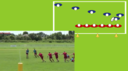
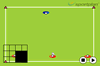
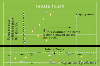
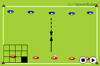
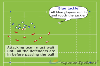
Split your players into two teams, giving one group of players a set of coloured bibs to set them apart, and quickly tell your players the following laws: We will be playing a rugby league style touch. When touched: set the ball down, stand over the ball, allow the scum-half to move the ball away from the point of contact. The defenders should stay on side following a touch, and should not compete for the ball. Any infringements in defence should result in the defending team conceding 10 Meters or possibly giving 1 or more extra touches to the attacking team. I'll leave this to your judgement depending on your team's age, skill level, and your session target/s. The attacking team can sustain three touches before they have to kick. Their kick should be as it would be in the game: a kick to touch, a kick for territory, or a kick that can be regained e.g. a grubber kick. The defenders should behave as they would in a real game. Quick put in's from the touchlines replace lineouts. Defenders who take the ball from an attacking kick should counter attack. A forth touch results in a turn over. The Scrum Half has a maxium of 5 seconds to move the ball from the point of touch. A ball kicked directly to touch from outside the attacking teams 22, or where the ball has been taken into the 22 by the attacking team and then kicked into touch - will result in a turn over with play starting on the five meter line closest to where the kick was made. The defence should be 10 meters back. A ball kicked from inside the attacking teams 22 can go directly to touch, as long as the attacking team did not carry the ball into their own 22 before the kick. The resulting put in will be to the opposition from where the ball has went into touch. Quick put-in's are enoucraged, if not possible the ball is played from the 5 meter line with the defence 10 meters back. Give points for quick put ins that work. Feel free to play with any of noted laws, let us know the law variations that work for you!
General

Unfortunately there were no results for your search! Please try again
touch SESSIONS
View All
touch ANSWERS
View All

what are simple drills for touch rugby...to get ready?

what are simple drills for touch rugby...to get ready for the season?

Archived User Coach

ELV's 22m rule, kicking clear from your 22.

With the new 22m ruling in the ELV's the ball cannot be carried or passed into the 22 and kicked directly into touch. Does this rule apply if a ball carrier is tackled and forced into their 22 or if the ball is carried into the 22 and then the ball carrier is tackled inside their 22? In either of these situations is the team in possession allowed to kick directly to touch without a lineout being awarded to the opposition from the position where the ball was kicked?

kevin croke Coach, Ireland

My U18s were refused a quick lineout?

My under 18 team tried to take a quick lineout with one attacker in the lineout and 2 defenders in the lineout. When he threw the ball to another attacker who was about 10metres behind the lineout he was told by the referee that the lineout had formed and could not take a quick penalty. What is the clarification of this as I always thought you had to have at least 2 players from each team in the lineout to say that the lineout had formed?

Archived User Coach

When the ball is kicked directly over the touch line?

When the ball is kicked directly over the touch line but does not hit the ground and bends back in field before landing in play, is this in or out?

Archived User Coach

On the kickoff, the ball bounces over the touchline?

On the kickoff, the ball bounces over the touchline before it goes 10m. What is the following action or possible choices of action?

Archived User Coach

Scoring tries - habit?

Why is it important to get players to score the try when completing a handling/running drill?

Archived User Coach

Drill to help to teach backs how to check their line?

Drill to help to teach backs how to check their line up from defensive to attacking

Archived User Coach

I am coaching the U11 this season. There are some significant?

U11 Rugby I am coaching the U11's this season. There are some significant rule changes from U10. Please can I get some advice on what lessons were learned from coaches who have been through a similar experience.

William OBrien Coach, England

What are some simple drills for touch rugby?

Hi I am a new 19 year old coach, it is my first time coaching and currently am looking after a year 3/4 team for touch rugby. I was wondering if anyone could give me some simple drills to help build the students passing and spreading out skills for touch rugby

Zac Coach, New Zealand

what are the rules of touch rugby

what are the rules of touch rugby

Archived User Coach

I have just started coaching touch at my school and?

I have just started coaching touch at my school and have been trying to find out about field positions. can anyone help me? i have only been doing drils at practice and now want to start having mini matches.

Archived User Coach

Can I and should I coach basic tackle skills to U8s?

Does anyone have a definitive answer to this question%3A can I coach basic tackling skills to U8s now, in preparation for next season, without falling foul of any RFU rules or regulations? Hugo

Hugo Norton-Taylor Coach, England

Blindside position - I'm new to the game and I'm not sure what to do?

This is my first year playing on a rugby team for my school, grade 9, im much smaller than everyone else but i run fast and can be strong. my position is the blind side wing, and i dont understand what im supposed to do. it seems like i just jog and stay far away, but i dont know what im supposed to do if someone from the opposite team comes near me and noone else is one them, am i supposed to tackle? i also have trouble tackling cause my arms dont rap fast enough when they run into me, any advice?

Archived User Coach

Looking for drills to improve my U10's defending skills?

We have recently formed a new under 10s team. Out of the team , roughly half have played before, and the other half are new to the game. We played Sunday and were well beaten , although the side we played has a very good reputation for being a good side. I do see promise though in our team, it's just the organisational side that needs attention. Example, keeping our players from bunching, realigning in defence, etc. after doing the coaching course, I am we'll aware of trying not to pigeonhole players into positions, but I think they need this to help them organise themselves easier. Are there any drills to help with the above? Cheers, Chris.

christopher jenkins Coach, Wales

Looking for day 0 skills to teach children?

I am looking for a Day 0 type of session for American children who may have never held a rugby ball. If I move forward with a rugby exhibition/team creation in the neighborhood, I want to make sure I know how/what to teach Day 0. I'm hoping that interest is growing for touch and flag rugby due to the recent in Philadelphia between the USA Eagles and the Maori All Blacks. I was there. It was fantastic. Tickets sold out so fast, I think there will be more of these in the area. Thanks.

Doug Jones Coach, United States of America

Tackling progression plan to improve confidence in tackles

I need to put together a progressive tackling session for an U16 girls 10-a-side team, who are tackling at an U14s boys level. They have done a tonne of basic technique but cant deliver the agression come game time. I need to help them building confidence and technique.Thanks, Coach from Australia.

Raphael Wood Coach, Australia

JOIN SPORTPLAN FOR FREE

  • search our library of 1100+ rugby drills
  • create your own professional coaching plans
  • or access our tried and tested plans

Sportplan App

Give it a try - it's better in the app

YOUR SESSION IS STARTING SOON... Join the growing community of rugby coaches plus 1100+ drills and pro tools to make coaching easy.
LET'S DO IT