The Technology Explosion
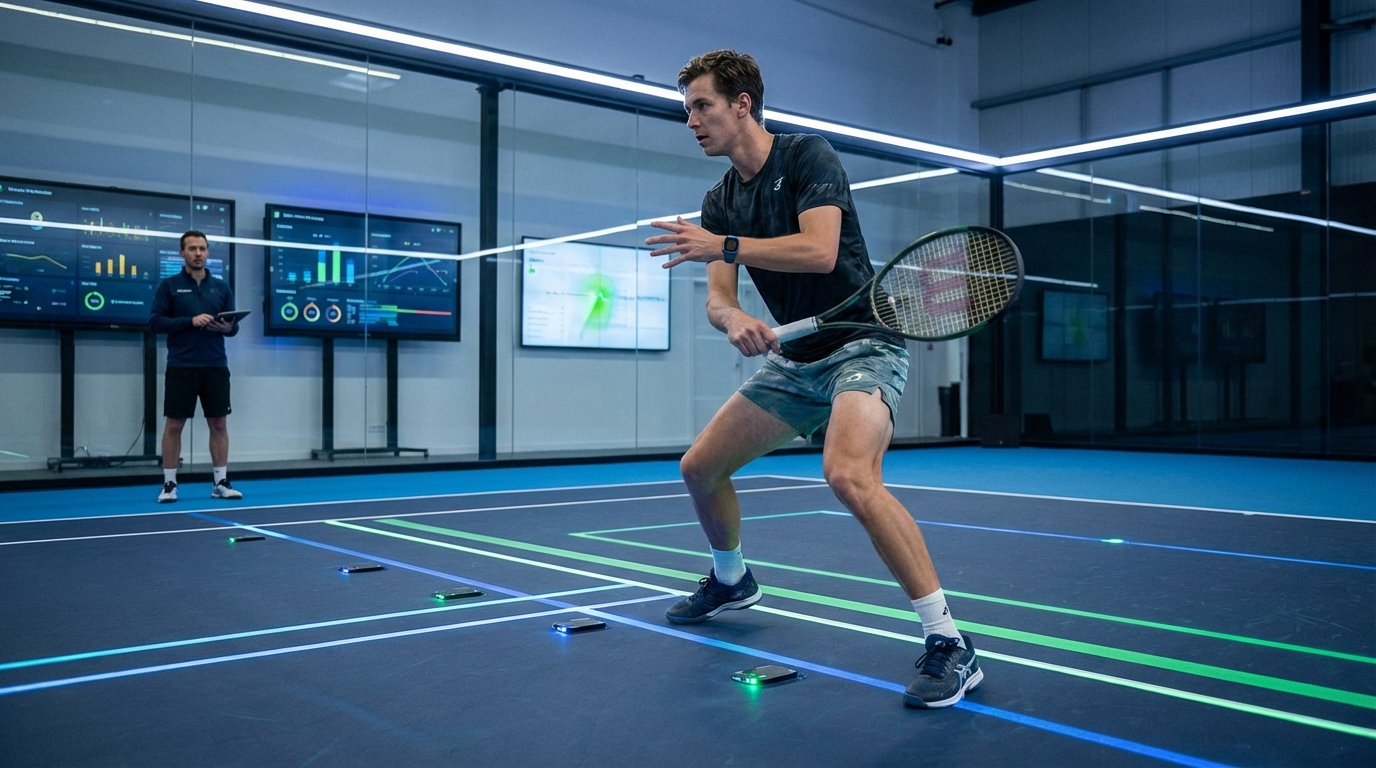
Walk into any well-funded tennis academy today and you'll see cameras tracking every ball, sensors embedded in racket handles, and coaches reviewing data dashboards between sets. Technology has arrived in tennis coaching, and it's not going away.
But here's the question every club coach needs to ask: what actually helps players improve, and what's just expensive noise? Not all tech is created equal, and the gap between what elite programmes use and what's practical at club level is significant.
The good news is that useful technology is becoming more affordable and accessible. The key is knowing what to invest in and how to integrate it with traditional coaching rather than replacing it.
What Smart Courts Actually Measure
Smart court systems use cameras and sensors to capture data that the human eye simply cannot process in real time. The best systems track ball speed, spin rate, landing position, and trajectory for every single shot.
For coaches, this means objective feedback. Instead of saying "your forehand is landing short," you can show a player that 68% of their forehands land in the back third of the court compared to 45% last month. Numbers cut through disagreement and make progress visible.
Key Metrics Worth Tracking
- Ball speed: Serve speed is obvious, but groundstroke speed reveals effort and technique changes
- Spin rate: Topspin RPM on forehands and backhands - are players generating enough rotation?
- Placement accuracy: Heat maps showing where shots land, broken down by shot type
- Consistency percentage: How many shots of each type land in the target zone?
- Rally length patterns: Do players win or lose as rallies get longer?
Wearable Technology That Works
Sensor Rackets and Attachments
Racket-mounted sensors have matured significantly. Modern devices clip to the butt cap or are built into the handle, tracking swing speed, swing path, impact point, and spin generation. The data syncs to a phone app and can be reviewed immediately.
The practical value for coaches is identifying technical issues that are hard to spot visually. A player whose impact point is consistently 2cm too low on the string bed will generate less power and more vibration. You might sense something is off, but the sensor confirms exactly what and where.
Smart Clothing and Wearables
GPS watches and fitness trackers have been common for years, but tennis-specific wearables now track court coverage, distance run, sprint frequency, and recovery time between points. Some smart clothing systems monitor muscle activation and fatigue levels in real time.
For coaches managing player workload, this data is invaluable. You can see when a player's movement drops off during a session, indicating fatigue that might not be visible yet. This helps prevent overtraining and optimise session intensity.
Video Analysis Systems
AI-powered video analysis has become remarkably accessible. Smartphone apps can now perform basic biomechanical analysis - measuring joint angles, racket path, and contact point from standard video footage. More advanced systems use multiple cameras to create 3D models of a player's stroke.
The coaching application is clear: show a player their actual technique alongside the model you're working towards. Visual learners especially benefit from seeing the gap between current and target form.
VR and Match Preparation
Virtual reality is the newest frontier in tennis training technology. Players can face simulated opponents, practice reading serve patterns, and experience match pressure without the physical toll of actual play.
Current VR systems allow players to face serves at realistic speeds, with the ball trajectory matching specific opponents. Before a competitive match, a player can "face" their opponent's serve pattern dozens of times, building familiarity that would otherwise require hours of match footage review.
The technology is still developing, and cost remains a barrier for most clubs. However, as headset prices continue to fall and tennis-specific software improves, VR will become a standard part of match preparation within the next few years.
What Actually Helps at Club Level
Not every club needs a six-figure smart court installation. Here's a realistic assessment of what's worth investing in at different levels:
Essential (Under £200)
- A smartphone with slow-motion video capability - nearly every coach already has this
- A basic racket sensor attachment for serve and groundstroke data
- A free or low-cost video analysis app for basic stroke comparison
Valuable (£200-£1,000)
- A ball machine with programmable patterns for consistent repetition
- A GPS watch for tracking session intensity and court coverage
- A tablet-based video delay system for immediate visual feedback on court
Premium (£1,000+)
- Multi-camera video analysis with AI-powered biomechanical feedback
- Smart court systems with ball tracking and placement heat maps
- VR match preparation systems
The Coach's Role in Interpreting Data
Technology generates data. Coaches generate understanding. This distinction matters enormously. A sensor can tell you a player's average forehand topspin is 1,800 RPM. Only a coach can determine whether that's appropriate for the player's level, style, and the tactical situation.
The best coaches use technology to confirm what they suspect, discover what they've missed, and track progress over time. They don't let data dictate coaching decisions - they let it inform them.
Avoiding Common Pitfalls
- Data overload: More data is not automatically better. Focus on 3-5 key metrics per player
- Chasing numbers: Don't optimise for metrics at the expense of match play effectiveness
- Ignoring the player: If the data says one thing and the player feels another, investigate rather than dismiss either
- Replacing observation: Technology supplements coaching eyes; it doesn't replace them
- Gadget distraction: New tech is exciting but shouldn't disrupt productive training routines
Combining Tech with Traditional Coaching
The most effective approach is blending technology with established coaching methods. Use video analysis during the technical phase of a session, then put the devices away and let players feel the changes through repetition. Review data between sessions to plan the next one, not during live coaching.
Players respond differently to technology. Some are motivated by numbers and data; others find it distracting. Adapt your use of tech to the individual, not the other way around.
Frequently Asked Questions
Do I need expensive technology to be a good coach?
Absolutely not. Great coaching is about observation, communication, and understanding your players. Technology is a tool that can enhance these skills, but it's no substitute for coaching experience and rapport.
What's the single best tech investment for a club coach?
A smartphone with slow-motion video. It's free (you already have it), immediately useful, and players respond well to visual feedback. Start there before investing in anything else.
How do I avoid overwhelming players with data?
Share one or two key insights per session, not everything the technology captures. Choose metrics that directly relate to what you're working on. Save the deep data review for your own session planning.
Are smart courts worth it for smaller clubs?
Full smart court installations are difficult to justify for most small clubs. However, portable camera-based systems that provide basic ball tracking are becoming affordable and can offer meaningful data for coaching programmes.