TRANSFORM YOUR TEAM'S SEASON WITH PROFESSIONALLY PLANNED SESSIONS
Use our expert plans or build your own using our library of over 700+ drills, and easy-to-use tools.
JOIN NOWhow do i coach the miss pass in rugby?


Andrew
If you look at the practice below you can use it to coach the miss pass.
The key points are:
I hope this helps you.
Simon
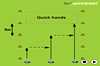
I have found that the above drill works well. What puts some people especially juniors off is the distance of the pass so set up the above drill and just remove the middle player getting the guys used to passing over that distance then add the dummy runner as the pass is improved
The most important thing to get across is why are they using a miss pass? and how do they expect to support once the pass has been made?
You then have to get them practicing both the miss in front and miss behind pass, because they both serve a different purpose. If we miss in front, we may look at the 'missed' man taking a circular pass i.e. an immediate pass just inside or behind as he makes a looping run. If we miss behind we have to pay attention to the 'missed' man making a run as decoy to convince his oppo that he's the receiver.
The miss behind may involve a bit of tweaking with running lines, with the missed man running a slight 'in' line and the receiver a slight 'out' line.
I agree with Ollie. Get the players used to accurate passing over longer distances ( I use a pass developer ball) and then run the 'missed man' scenarios.

In addition to what the other guys are saying, I find it necessary to coach the receiver as much as the passer. Longer passes are slower from hand to hand, and you must make sure the receiver is attacking the ball in the correct way so as not to over or under run his pass.

in more ways than one
 sportplan_rugby
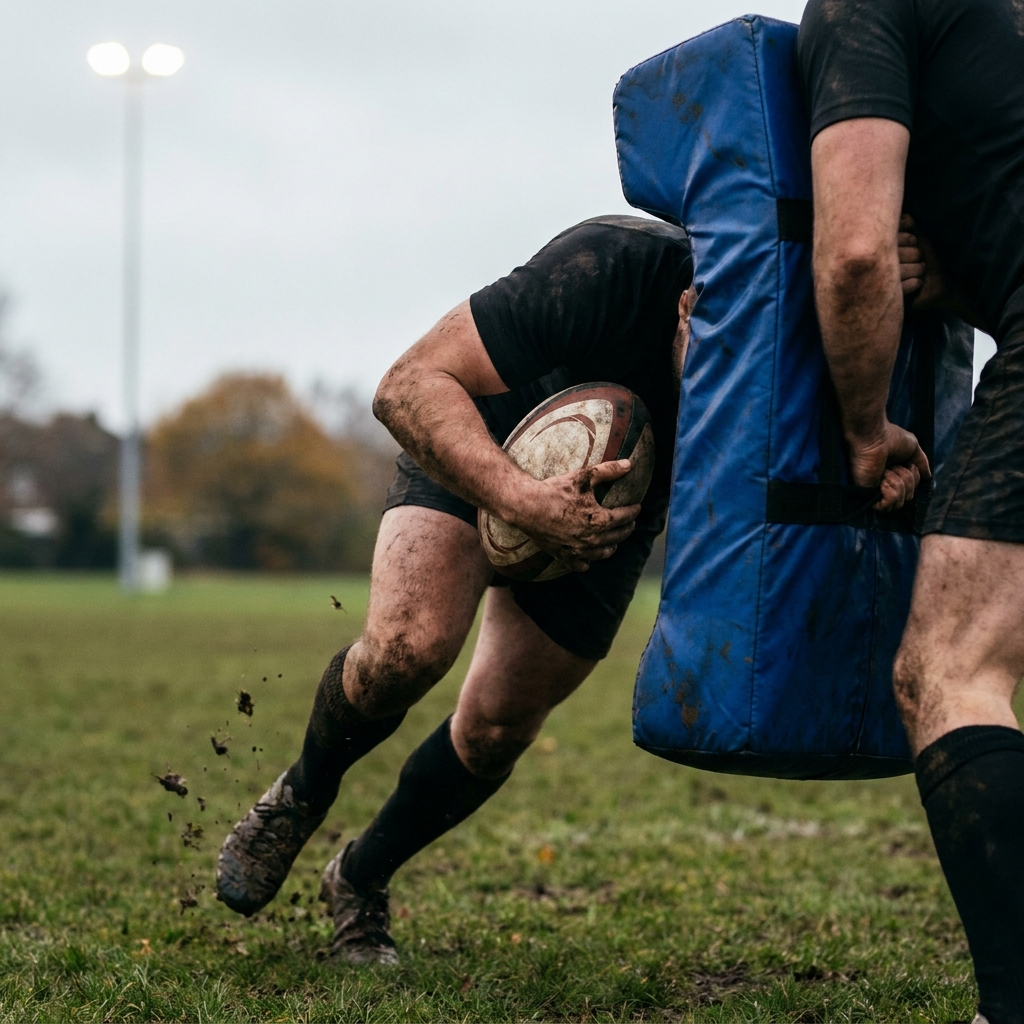
Tacklers are aiming lower, so carriers who dip late put heads at risk. Teach footwork, a strong early body height and leg drive to win the collision safely.
The hooker's brake foot moved from trial into full law in July 2026. Here is how to coach it so your front row stays stable, legal and safe.

Your players can pass beautifully in a warm-up grid. Then a defender closes, their lungs are burning, and the ball goes to ground. Here is how to build catch-pass skills that hold up when it matters.
Use our expert plans or build your own using our library of over 700+ drills, and easy-to-use tools.
JOIN NOW