TRANSFORM YOUR TEAM'S SEASON WITH PROFESSIONALLY PLANNED SESSIONS
Use our expert plans or build your own using our library of over 700+ drills, and easy-to-use tools.
JOIN NOWAsk a question and have it answered by Coaches from around the world and Sportplan's team of Expert
how do i coach the miss pass

A miss pass is just a long pass, pure and simple, the coaching really needs to be done with the lines of running of the "missed" player(s) and the receiver. That said, the pass still needs to be between waist and shoulder not looped up into the air as this type of pass leaves far too much time for the defenders to read it and to drift onto the receiver often tackling that player as the ball is caught. The intended receiver needs to see the ball carrier so needs to be slightly up from the "normal" straight line. The ball carrier obviously needs to see the receiver but also be able to see the closer player (first receiver) who is not just a âdummyâ receiver but an "option" receiver if the defence looks like reading the miss pass option. The missed player needs to keep a straight line of run to keep his or her defender fixed (honest) and not allow that defender to slip off and double team the actual receiver. If that defender does slip off early, there should be a call so that the miss pass is cancelled and a short pass to the first receiver is used, hitting the hole that defender has left. Keeping the first defender honest also allows the second receiver more space to cut back in when receiving the pass should that be an option. Think about using a strike attacker as the receiver on a miss pass option such as using the full back to come in between 1st and 2nd centres who must keep their defenders honest even running slightly away from each other to open up the gap more. This takes more practice as the initial ball carrier will not be able to see the full back coming in at pace and needs to pass into the space the full back will run into. The full back needs to practice the timing of his or her run working off the Fly Half. Donât forget the limitations on the passer when passing a âdoubleâ distance, especially off the weaker hand, most commonly passing to the right for a right handed player.

in more ways than one
 sportplan_rugby
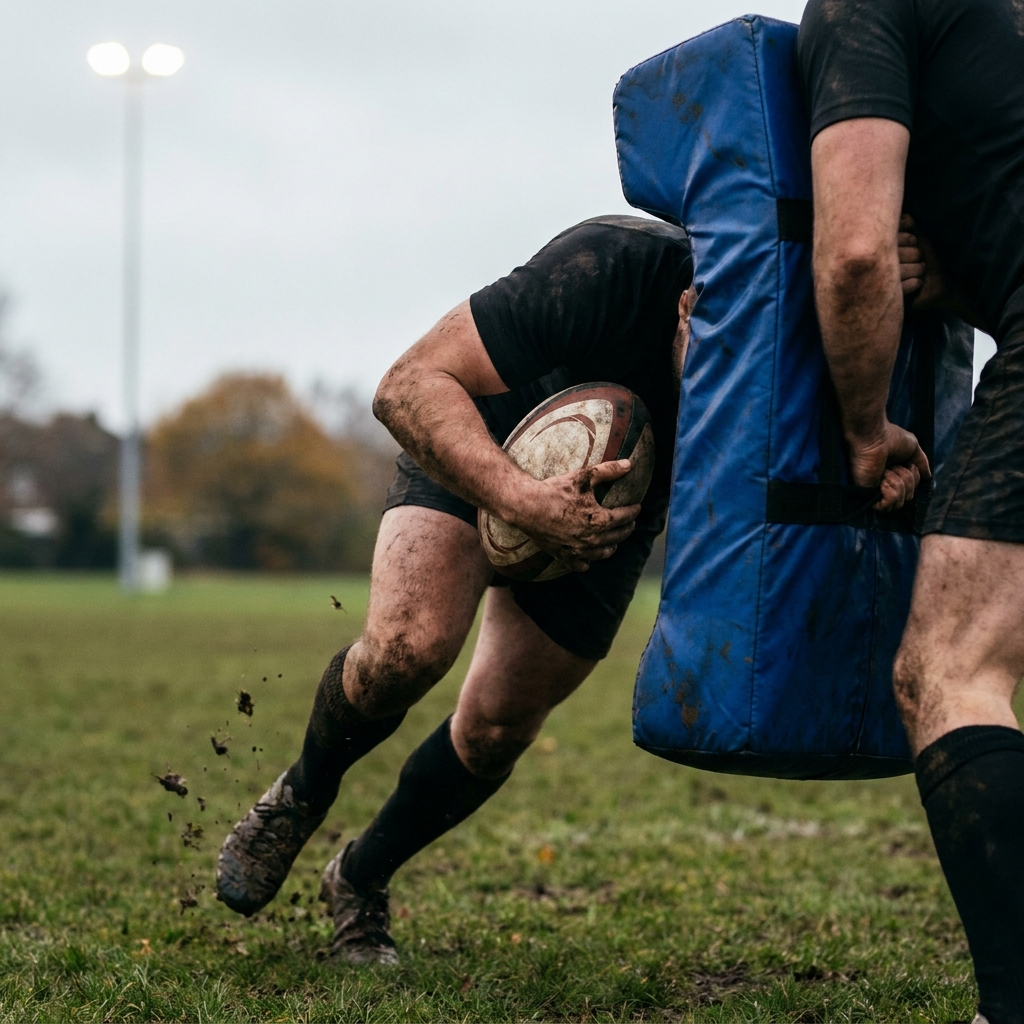
Tacklers are aiming lower, so carriers who dip late put heads at risk. Teach footwork, a strong early body height and leg drive to win the collision safely.
The hooker's brake foot moved from trial into full law in July 2026. Here is how to coach it so your front row stays stable, legal and safe.
Your players can pass beautifully in a warm-up grid. Then a defender closes, their lungs are burning, and the ball goes to ground. Here is how to build catch-pass skills that hold up when it matters.
Use our expert plans or build your own using our library of over 700+ drills, and easy-to-use tools.
JOIN NOW