Rugby: breaking the game line

August 2026

New rule guidance lands every season and most of it never touches a Saturday. This year is a little different. England Hockey's guidance for 2026/27, following the latest revisions to the FIH Rules of Hockey, includes a change that has been running as a trial and is now permanent, plus a handful of clarifications that will catch out any squad that has not been told about them.

The changes apply from 1 September and cover both adult and junior competitions. Some leagues and clubs choose to adopt them early in pre-season friendlies, which is a sensible way to get everyone familiar before the points start counting.

The Aerial Ball Rule Becomes Permanent

The headline change is that the aerial ball rule has been permanently adopted across all England Hockey competitions. Under it, a defender may approach once the receiver has touched the ball, rather than having to wait until the receiver has controlled it and brought it to the ground, provided the initial five metres of safe space were respected.

That sounds like a small distinction and it is not. The window in which a receiver is protected is now shorter, and the moment the contest becomes live is earlier and easier for umpires to see. Receivers who were used to taking a comfortable extra second to settle the ball will find an opponent arriving sooner than they expect.

Penalty Corner Equipment and the Yellow Card

There is revised guidance on the disposal of penalty corner protective equipment. If a person is hit on or above the knee in a normal stance by discarded equipment, the player who threw it receives a yellow card.

This is worth ten minutes of your pre-season time, because it is a purely behavioural change. Defenders coming out of a corner have historically flung masks and gloves aside without much thought. Teach the squad to place equipment down and to the side rather than throwing it, and you will never have to think about the rule again.

Goalkeeper Equipment and Other Clarifications

The maximum permitted size of a goalkeeper's left-hand protector has increased to 365mm, which allows manufacturers to produce larger gloves that remain legal under FIH regulations. If your keeper is due new kit, this is useful to know before they buy.

Alongside these, the guidance includes clearer sanctions for having too many players on the pitch, and further clarifications for goalkeepers and umpires. None of these should change how you play, but a squad that knows about them is a squad that does not argue with the umpire in week one.

How to Brief Your Squad

Step One: Cover it once, properly, in a pre-season session rather than drip-feeding it. Ten focused minutes with everyone present beats five separate conversations.

Step Two: Coach the aerial change with the ball, not the whiteboard. Set up receipts under a falling ball with an approaching defender and let players feel how much less time they have.

Step Three: Rehearse the equipment habit at your first penalty corner practice, so placing kit down becomes automatic before anyone is under pressure.

Step Four: Tell your umpires and your captains what you have briefed. A captain who understands the change is far more useful than one who reacts to it.

Step Five: Use any early-adopting pre-season fixtures as live rehearsal, and review what actually happened rather than what you expected.

Key Coaching Points

  • The aerial rule is now permanent: defenders may approach once the receiver has touched the ball.
  • The five metres of initial safe space still has to be respected before any approach.
  • Receivers have less settling time, so first touch under a falling ball matters more than ever.
  • Place penalty corner equipment down and to the side; throwing it can now earn a yellow card.
  • Goalkeeper left-hand protectors may now be up to 365mm, useful before buying new kit.
  • Brief the whole squad once in pre-season rather than correcting individuals in September.

Recommended Drills

VIEW ALL PASSING DRILLS

Frequently Asked Questions

When exactly do the 2026/27 rules apply?

From 1 September 2026, across both adult and junior competitions. Leagues, clubs and organisers may adopt them earlier in pre-season or summer competitions, which many do specifically to help everyone get familiar before the league campaign starts.

Does the aerial change mean the five metre rule has gone?

No. The initial five metres of safe space still has to be respected. What has changed is when a defender may approach after that: once the receiver has touched the ball, rather than once they have controlled it and brought it to the ground.

Do I need to change how we train aerials?

Only in emphasis. Spend more time on a clean, decisive first touch under a falling ball and on what the receiver does immediately afterwards, because the contest now arrives sooner. The receiving technique itself is unchanged.

breaking the game line DRILLS
View All

Flip It Warm Up - Rugby Drills...

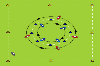
<div class=&quot;&quot;&quot;MsoNormal&quot;&quot;&quot;>Be brief when telling the players the laws of this game, it's important to get them moving quickly. </div> <li class=&quot;&quot;&quot;MsoNormal&quot;&quot;&quot;>This is not a contact game. <li class=&quot;&quot;&quot;MsoNormal&quot;&quot;&quot;>Break your players into two teams, giving each team their own colour of bibs if necessary. <li class=&quot;&quot;&quot;MsoNormal&quot;&quot;&quot;>One team goes to attack, and one to defence. <li class=&quot;&quot;&quot;MsoNormal&quot;&quot;&quot;>Nominate a Scrum Half for each team. <li class=&quot;&quot;&quot;MsoNormal&quot;&quot;&quot;>There is no kicking in this game. <li class=&quot;&quot;&quot;MsoNormal&quot;&quot;&quot;>Normal laws of rugby apply e.g. a forward pass will result in the ball being turned over to the opposition. <li class=&quot;&quot;&quot;MsoNormal&quot;&quot;&quot;>If an attacking player is touched: they must go to ground, present the ball, two of their teammates ruck over (staying over the ball), and the Scrum Half moves the ball for the next phase of attack. <li class=&quot;&quot;&quot;MsoNormal&quot;&quot;&quot;>When you start playing this game make sure that the defence is employing your defensive pattern around the ruck. As the game develops consider telling the defenders that they must have one or more players at the back of the ruck, if they are not fast enough to do this - push them back 10 meters. <li class=&quot;&quot;&quot;MsoNormal&quot;&quot;&quot;>It’s important that defenders are employing their defensive pattern behind the primary defensive line. <li class=&quot;&quot;&quot;MsoNormal&quot;&quot;&quot;>Have attacking players do what they normally would at the ruck. <li class=&quot;&quot;&quot;MsoNormal&quot;&quot;&quot;>Depending on your goals decide on the number of touches you wish to allow e.g. unlimited is not a bad option as mistakes will be made! <li class=&quot;&quot;&quot;MsoNormal&quot;&quot;&quot;>When you feel the time is appropriate, usually during a ruck, blow you whistle and should FLIP IT – kicking in or throwing in a second ball to the back 3/2 defenders on the team currently in defence OR just kick it behind the defenders. The defensive team goes, without hesitation, into attack. The team that was attacking goes into defence and you or an assistant coach remove the other ball from play when you can. Ideally you might have two balls with different markings. <li class=&quot;&quot;&quot;MsoNormal&quot;&quot;&quot;>Don't hesitate to shape the game to focus on your session goals, and let us and other coaches know what worked for you!

General

Maul Touch Warm Up - Rugby Dri...

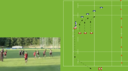
Be brief when telling the players the laws of this game, it's important to get them moving quickly. This is not a contact game, but there will be some light contact. Break your players into two teams, giving each team their own colour of bibs if necessary. One team goes to attack, and one to defence. Nominate a Scrum Half for each team, it will be their job to move the ball from the back of the maul and out to an attacking line. There is no kicking in this game. Normal laws of rugby apply e.g. a forward pass will result in the ball being turned over to the opposition. If an attacking player is touched: they must stop and turn, a maul is then built based on how you have trained your players to Maul. Only four players should be in the maul - but every player should be able to maul - including the backs! When you start playing this game make sure that the defence is employing your defensive pattern around the maul. They will commit 4 players, but will not do anything more than provide light resistance. Once formed the maul can take four steps before moving the ball. If there is a delay in creating the maul, or the quality of the maul is poor - the ball can be turned over. Depending on your goals decide on the number of touches you wish to allow e.g. unlimited is not a bad option as mistakes will be made! If a team has been in possession for a long time, don't forget to turn the ball over to give the opposition a run. Don't hesitate to shape the game to focus on your session goals, and let us and other coaches know what worked for you.

General

Unfortunately there were no results for your search! Please try again
breaking the game line ANSWERS
View All

my youth teams are seriously creative in attack but they lack ability to penetrate. how do i help them?

I coach both males and females. In training they seem to get it however in games they tend to pass the ball from side to side but they seldom go forward. They play pretty rugby with switches, loops and miss ones.

Archived User Coach

Flanker protecting the Scrum Half?How can a Flanker?

Flanker protecting the Scrum Half? How can a Flanker protect the Scrum-Half at a scrum without holding on to the oppositions Scrum Half? Also any advice for an Openside flanker on tackling the fly-half from scrums?

Archived User Coach

any one know drills for defending a attack from scrum?

any one know drills for defending a attack from scrum in midfield?

Archived User Coach

Template for Stats??? - Sportp...

I want to start taking stats and analysis for my team. Does anyone use or know where I can find a Stats templte sheet for quick notes during  game. From 1st phase play to detailed stats for phases. For example. Who took ball inruck? Won or lost? number of players commited to ruck.what happened aft? How quick the ball came out...ext ext. Hope someone can help or advise. Shaun

Archived User Coach

Openside flanker position afte...

My coach has put me at openside flanker and I'm confused of where i should be after the scrum. Should I be attacking the opposing scrum half or just trailing behind the backs waiting to clean up/ form a ruck? It would be great to know what I'm doing !

Archived User Coach

Getting 9-10 year olds to spre...

Getting quite frustrated that my u10's are not using the space on the pitch and tend to bunch up. Despite various drills and game scenarios to force them to spread out and pass to someone in space they revert in any game to bunching up around the ball and taking it back into the thick of the opposition rather than looking left or right! Any ideas how to change their ways?

Ian G Coach, England

U10s organisation in defence. ...

I have started an under 10s team up, and I would say about 8 from the 13 children I have , did not play rugby until about 6 months ago. Of these players, there seems to be a lot of potential, as we are scoring tries against teams, that very rarely concede tries.the problem I got with them, is that we are very poor at organising our selves in defense when the opposition has the ball, which does result in us conceding quite a few tries. We have some very good tacklers in the team. Can anyone offer some ideas on how I can get them to organise themselves? Thanks . Chris.

christopher jenkins Coach, Wales

what psychological traits do y...

what psychological traits do you need to be a flanker?

Archived User Coach

My U11's are a mixed bunch whe...

My U11's are a mixed bunch when it comes to tackling. Some very good, most OK, some ...hmmmm... enough said. Been through all the drills and when we break things down, go back to basics, everything appears OK, but it doesn't always transfer into the game. Any ideas on small group games that will allow me to combine technique with confidence?

Archived User Coach

First time coaching the U13s n...

I have just started helping our head coach with under12's team. He wants to retire and has put me forward to be head coach next season. I am a little worried on how i should aproach training with the boys, going to a full 15 a side team on a full pitch. Any ideas would be greatly appreciated.

Archived User Coach

(U11 Rugby) - How to referee t...

I'm coaching and reffing U11 rugby and one of my players is the definitive 'big lad'. His 'strength' is his size and his power, but last weekend he didn't seem to get reffed fairly. The opposition couldn't tackle him down, one on one and when another two joined in to make a mini maul, that didn't slow him down much either. The ref then let other people join in the (one sided) struggle to tackle him down, which seemed very unfair as A) it's outside the laws of U11 rugby,, B) it makes it nigh on impossible for him to offload, C) when he is brought to ground, he has 4-5 players all over him and he got pinged for 'holding on'. He is a recent arrival to rugby and it was our first game for a couple of months, so the situation hadn't reared his head before. We are keen that he learns all of the core skills of rugby and doesn't get used as a battering ram, but after seeing a pack of hyenas trying to pull down the big fella, something just didn't seem right to me.I'd be grateful for any thoughts and opinions.

Archived User Coach

devise a four man line out gam...

Ask a question and have it answered by Coaches from around the world and Sportplan's team of Experts.

Archived User Coach

JOIN SPORTPLAN FOR FREE

  • search our library of 1000+ hockey drills
  • create your own professional coaching plans
  • or access our tried and tested plans

Sportplan App

Give it a try - it's better in the app

YOUR SESSION IS STARTING SOON... Join the worlds largest hockey coaching resource for 1000+ drills and pro tools to make coaching easy.
LET'S DO IT