Rugby: forward position

September 2026

Early season in community rugby has a familiar pattern. The first few matches are full of dropped balls, passes that arrive behind runners, and promising overlaps that die because someone could not catch and give in one movement. It is rarely a lack of effort. It is handling that was learned without pressure, being asked to work under pressure.

The fix is not more passing lines. It is a handful of simple technical habits, drilled until they are automatic, and then deliberately tested against defenders, time limits and tired legs. That applies to your props and second rows just as much as your centres.

Why Handling Breaks Down

Most handling errors come from the same few causes. Hands arrive late, so the ball is caught against the chest and has to be reloaded before it can be passed. The catch is taken beside or behind the body, so the carrier drifts and loses the shape of the line. And players have a strong side, so anything asked of the weaker hand becomes slow and loopy.

Pressure magnifies every one of these. A defender closing the space removes the extra half-second a player was using to tidy up. Fatigue does the same thing more slowly. If the technique needs time, pressure will expose it.

A Five-Step Framework

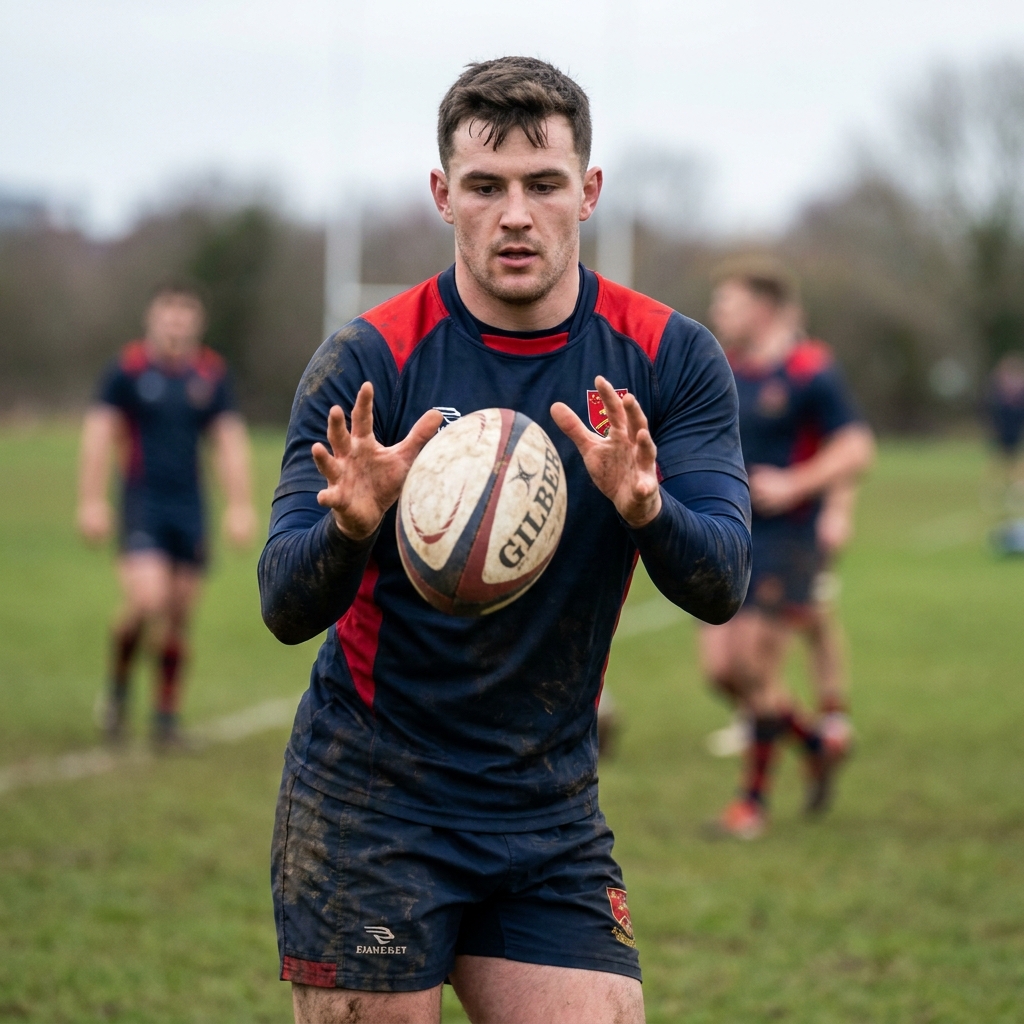
Step One: Hands early. Receivers show a target with both hands up and fingers spread before the ball is passed, not as it arrives. The passer has something to aim at and the catcher is ready to give straight away.

Step Two: Catch in front. Reach for the ball and take it early, away from the body. A catch in front keeps the player running straight and lets them move the ball on without reloading at the hip.

Step Three: Pass off both hands. Build the weaker side on purpose. In every handling block, make sure the ball travels both ways in equal amounts, and coach the same finish: hands following through towards the target.

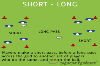
Step Four: Choose short or long. A short, flat pass keeps a defender fixed and suits tight spaces. A longer pass moves the ball past a defender into space but gives the defence more time to drift. Teach players to look up before they catch so the decision is already made.

Step Five: Keep it simple when tired. Late in a phase or a match, the right pass is often the simpler one. Encourage players to pick a pass they can deliver accurately when their legs have gone, rather than the ambitious one that only works when they are fresh.

How to Train It

Start with a short technical block where the only focus is hands early and catching in front. Keep it moving and keep the reps high. Then add one form of pressure at a time: a defender who closes, a time limit, or a narrow channel.

Finish with handling under fatigue. Put the passing work straight after a short, sharp conditioning effort, or build it into a continuous game so players have to catch and pass while breathing hard. For forwards, make the passes short, flat and close to contact, because that is where they will need them.

Key Coaching Points

  • Show hands early as a target before the pass is thrown, not as the ball arrives.
  • Catch the ball in front of the body so there is no need to reload before passing.
  • Give the weaker hand equal work in every handling session, for backs and forwards.
  • Look up before the catch so the short or long decision is made in advance.
  • Add pressure one layer at a time: a defender, then time, then fatigue.
  • When players are tired, reward the accurate simple pass over the ambitious one.

Recommended Drills

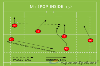
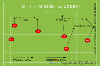
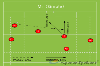
VIEW ALL PASSING DRILLS

Frequently Asked Questions

My forwards say passing is a job for the backs. How do I get them to buy in?

Show them where the ball goes to ground in your matches. Most community sides lose possession close to the ruck, not out wide. Keep forwards' handling work short, flat and near contact so it feels like their game, and they will see the point quickly.

Should I teach the spin pass to everyone?

Not before the basics. A spin pass is useful for distance, but a player who cannot catch in front and give a flat pop pass off both hands will not benefit from it. Build accurate short passing first, then add the spin pass for players who need the range.

How much handling should we do in a session?

A little and often works better than one long block. A short technical focus in the warm-up, handling built into your games, and a pressured practice near the end when players are tired will do more than twenty minutes of static passing lines.

forward position DRILLS
View All
Unfortunately there were no results for your search! Please try again
forward position ANSWERS
View All

what are simple drills for touch rugby...to get ready?

what are simple drills for touch rugby...to get ready for the season?

Archived User Coach

can anyoune suggest some line out moves for under 12s?

can anyoune suggest some line out moves for under 12s?

Spitfire Coach, England

Forward positions at kickoffs and what type of pods to run with and who does what

Hi there, I was wondering thoughts on forward positions at the kickoff. Do you have the catchers deep so the are coming forward to meet the ball or have one deep and one short? For the pods do you have a "quick" pod made up of all three loosies and a lock and a "slow" pod made up of the front row and the lock or do you split them in two pods made up of a prop, a lock and two loosies and the other pod of a prop, a lock, the hooker and a loosie? Who would you tell to be the ball carrier, body movers and bridger? All thoughts welcome. CheersDave

Archived User Coach

I have a quick question on the positioning of the hooker in the scrum primarily feet positioning, is there a guide or is it what ever the hooker feels comfortable with to get the job done. I´ve noticed a wide stance throws the props off.

Ask a question and have it answered by Coaches from around the world and IRB Educators.

Tony Meza Coach, Costa Rica

what is the correct position for the centre's feet?

what is the correct position for the centre's feet as he waits in attacking line for ball

Tony Bennett Coach, England

Where should the posts be postioned on a ruck?

Where should the posts be postioned on a ruck? also, what is the best way to teach this?

Archived User Coach

Our under tens when they go into a ruck situation often go straight over the ball leaving it in the open. A is this ball then available to be played by any player from both teams and B if this ball is out how can we teach them to secure the ball.

Ask a question and have it answered by Coaches from around the world and Sportplan's team of Experts.

Archived User Coach

Post lineout rules. Defending maul.

Hi, I have an enquiry about the post lineout rules. A lineout jumper successfully catches the ball, returns to the ground and precceds to maul. The defending team has three options to put (1)leverage against with defending maul, to (2) attack the main front men of the maul but also I heard on this weekends commentary there is a (3)dragging down. When the lineout jumper is returning to the ground it seems the defending team can hold the jumper as long as no pressure is excerted and when they hit the floor the defending team can tackle him (drag him to the ground) stopping the maul. Is this right and if so are there further rules governing this that i cannot yet find? I have read the IRB 2009 laws but still i have no answer. Many Thanks

Archived User Coach

any one know drills for defending a attack from scrum?

any one know drills for defending a attack from scrum in midfield?

Archived User Coach

I play women's tens. I am new to the position of five?

I play women's tens. I am new to the position of five eight. I am told I need to stop running the ball, as I am not a forward. Can you give me some tips to help focus on my role in the team?

Archived User Coach

offside in open play

is a player offfide if he is comimg back to his team from a previous ruck/maul and as he passes through the opponents backs happens to intercept a pass?

Archived User Coach

Law 12 - the forward pass or throw forward

The law says that a forward pass is one "thrown forward" "in the direction of the opponents' goal line" Does that mean that, if the ball is passed and the receiver catches it NEARER to the opponents goal line than from where the ball was passed that the pass was forward? (Leaving to one side any other touches of the ball that might have taken place.) Maybe an example is better. Player 1 passes the ball sideways - releasing it on the 22 metre line. Player 2 (with no other player having touched the ball), running from well behind the 22 metre line, catches the ball when it has travelled sideways but the ball is now 20 metres from the opponents goal line (2 metres further forward from the place that the ball was passed). Is that a forward pass or throw forward? And if not, why not?

Archived User Coach

I am training a back row forward in rugby union need?
I am training a back row forward in rugby union need to improve his speed off the mark any suggestions

francis11 Coach, Wales

Shortened lineup. Where should my forwards position themselves...?

Any advice as to where rest of forwards should line up without getting in way of fly half and other backs for example in a 3 man lineout?

Archived User Coach

What is 1v1 side defence-go forward?

Doing level two and have forgotten what the above means........

johnwrobertson Coach, England

U10s mini rugby small sided game variations

I did the level 1 and have bought into the philosophy - small sided, conditioned games rather than drills with boys standing in lines and being told where to run. I think it would be good to share ideas of variations that coaches use to focus on specific areas, and how to keep it fresh week in week out.Simply, I award points for good application of the skill we're focusing on. 3 points for good body position in the ruck or driving an opponent back. Only 3 points for a try motivates them to execute the skills.

Wayne Jeremiah Coach, England

Forward positions at kickoffs ...

Hi there, I was wondering thoughts on forward positions at the kickoff. Do you have the catchers deep so the are coming forward to meet the ball or have one deep and one short? For the pods do you have a "quick" pod made up of all three loosies and a lock and a "slow" pod made up of the front row and the lock or do you split them in two pods made up of a prop, a lock and two loosies and the other pod of a prop, a lock, the hooker and a loosie? Who would you tell to be the ball carrier, body movers and bridger? All thoughts welcome. CheersDave

Archived User Coach

First time coaching the U13s n...

I have just started helping our head coach with under12's team. He wants to retire and has put me forward to be head coach next season. I am a little worried on how i should aproach training with the boys, going to a full 15 a side team on a full pitch. Any ideas would be greatly appreciated.

Archived User Coach

forwards positions in open pla...

Hello, in open play i want to have my forwards split up across the field not just chasing the next ruck. im not sure exactly how to teach them where they should be standing. (positional play) (Dane coles always seems to be a wing in open play)

dan Coach, Germany

My son will not run with the b...

My sons plays for the U9 team, his position is number ten, he was put there due to his kicking power, drop kicking accuracy, etc - I have been teaching him over time to tackle this has helped him build his confidence - what I have been noticing is the fact that when he gets the ball, he wont run - he just refuses to do anything with it...I need to find a way to encourage him the move forward with it, but nothing ever happens, now his own team mates are starting to look down at him, since he has giving the game away far to many time. Help!

john mcqueen Coach, New Zealand

JOIN SPORTPLAN FOR FREE

  • search our library of 1100+ rugby drills
  • create your own professional coaching plans
  • or access our tried and tested plans

Sportplan App

Give it a try - it's better in the app

YOUR SESSION IS STARTING SOON... Join the growing community of rugby coaches plus 1100+ drills and pro tools to make coaching easy.
LET'S DO IT