Rugby: front

September 2026

Early season in community rugby has a familiar pattern. The first few matches are full of dropped balls, passes that arrive behind runners, and promising overlaps that die because someone could not catch and give in one movement. It is rarely a lack of effort. It is handling that was learned without pressure, being asked to work under pressure.

The fix is not more passing lines. It is a handful of simple technical habits, drilled until they are automatic, and then deliberately tested against defenders, time limits and tired legs. That applies to your props and second rows just as much as your centres.

Why Handling Breaks Down

Most handling errors come from the same few causes. Hands arrive late, so the ball is caught against the chest and has to be reloaded before it can be passed. The catch is taken beside or behind the body, so the carrier drifts and loses the shape of the line. And players have a strong side, so anything asked of the weaker hand becomes slow and loopy.

Pressure magnifies every one of these. A defender closing the space removes the extra half-second a player was using to tidy up. Fatigue does the same thing more slowly. If the technique needs time, pressure will expose it.

A Five-Step Framework

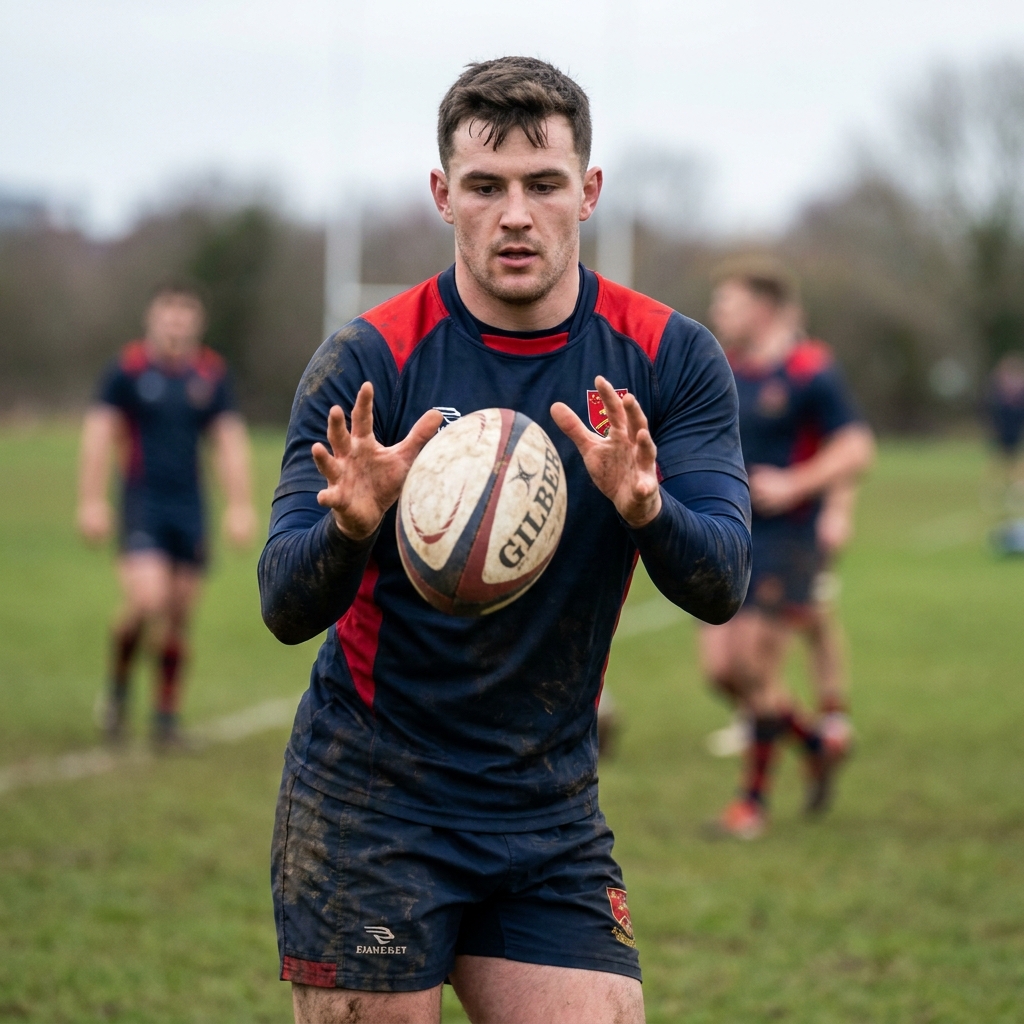
Step One: Hands early. Receivers show a target with both hands up and fingers spread before the ball is passed, not as it arrives. The passer has something to aim at and the catcher is ready to give straight away.

Step Two: Catch in front. Reach for the ball and take it early, away from the body. A catch in front keeps the player running straight and lets them move the ball on without reloading at the hip.

Step Three: Pass off both hands. Build the weaker side on purpose. In every handling block, make sure the ball travels both ways in equal amounts, and coach the same finish: hands following through towards the target.

Step Four: Choose short or long. A short, flat pass keeps a defender fixed and suits tight spaces. A longer pass moves the ball past a defender into space but gives the defence more time to drift. Teach players to look up before they catch so the decision is already made.

Step Five: Keep it simple when tired. Late in a phase or a match, the right pass is often the simpler one. Encourage players to pick a pass they can deliver accurately when their legs have gone, rather than the ambitious one that only works when they are fresh.

How to Train It

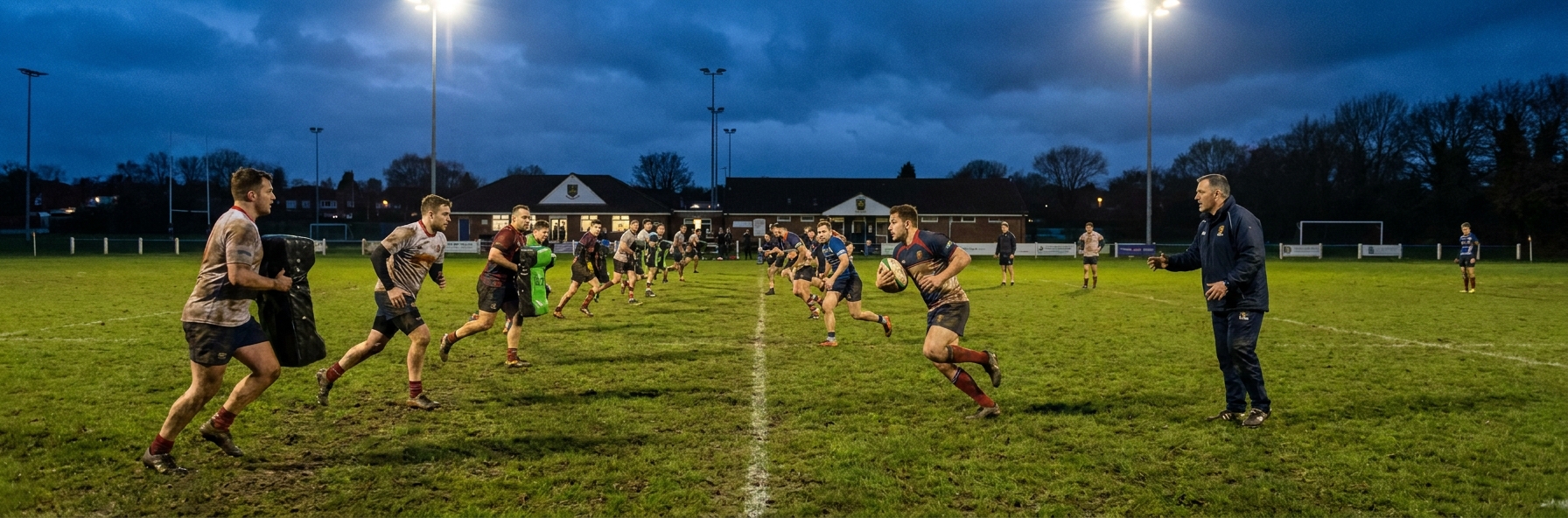
Start with a short technical block where the only focus is hands early and catching in front. Keep it moving and keep the reps high. Then add one form of pressure at a time: a defender who closes, a time limit, or a narrow channel.

Finish with handling under fatigue. Put the passing work straight after a short, sharp conditioning effort, or build it into a continuous game so players have to catch and pass while breathing hard. For forwards, make the passes short, flat and close to contact, because that is where they will need them.

Key Coaching Points

  • Show hands early as a target before the pass is thrown, not as the ball arrives.
  • Catch the ball in front of the body so there is no need to reload before passing.
  • Give the weaker hand equal work in every handling session, for backs and forwards.
  • Look up before the catch so the short or long decision is made in advance.
  • Add pressure one layer at a time: a defender, then time, then fatigue.
  • When players are tired, reward the accurate simple pass over the ambitious one.

Recommended Drills

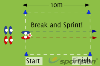
VIEW ALL PASSING DRILLS

Frequently Asked Questions

My forwards say passing is a job for the backs. How do I get them to buy in?

Show them where the ball goes to ground in your matches. Most community sides lose possession close to the ruck, not out wide. Keep forwards' handling work short, flat and near contact so it feels like their game, and they will see the point quickly.

Should I teach the spin pass to everyone?

Not before the basics. A spin pass is useful for distance, but a player who cannot catch in front and give a flat pop pass off both hands will not benefit from it. Build accurate short passing first, then add the spin pass for players who need the range.

How much handling should we do in a session?

A little and often works better than one long block. A short technical focus in the warm-up, handling built into your games, and a pressured practice near the end when players are tired will do more than twenty minutes of static passing lines.

front DRILLS
View All
Unfortunately there were no results for your search! Please try again
front DRILL CATEGORIES
View All
front SESSIONS
View All
front ANSWERS
View All

How to teach the front on tack...

How to teach the front on tackle to 10 year olds

Archived User Coach

switch pass in rugby union

switch pass in rugby union
maria Coach, England

What is the current thinking regarding kickoff receiving alignment?

What is the current thinking regarding kickoff receiving alignment?

Gary Kent Coach, United States of America

how does the hooker protect themselves from being bored?

how does the hooker protect themselves from being bored by the opposition hooker and prop?

Archived User Coach

Big Hit or Step Up tackle

Describe a 'step-up' or 'big hit' tackle. How would you coach it, what is the technique and what are the key factors technically?

Archived User Coach

I coach Under 11's I have two players that do all the right things in training but when the game starts they will not pass. They do score tries but I think we could score more if they passed. What can I do? Gary SWales

Ask a question and have it answered by Coaches from around the world and Sportplan's team of Experts.

Gary Grant Coach, Wales

Our under tens when they go into a ruck situation often go straight over the ball leaving it in the open. A is this ball then available to be played by any player from both teams and B if this ball is out how can we teach them to secure the ball.

Ask a question and have it answered by Coaches from around the world and Sportplan's team of Experts.

Archived User Coach

Post lineout rules. Defending maul.

Hi, I have an enquiry about the post lineout rules. A lineout jumper successfully catches the ball, returns to the ground and precceds to maul. The defending team has three options to put (1)leverage against with defending maul, to (2) attack the main front men of the maul but also I heard on this weekends commentary there is a (3)dragging down. When the lineout jumper is returning to the ground it seems the defending team can hold the jumper as long as no pressure is excerted and when they hit the floor the defending team can tackle him (drag him to the ground) stopping the maul. Is this right and if so are there further rules governing this that i cannot yet find? I have read the IRB 2009 laws but still i have no answer. Many Thanks

Archived User Coach

Improving game awareness. How can I improve players?

Improving game awareness. How can I improve players insight into "what happens next", besides by whatching (games)? Players tend to be fixed on the ball(situation) and seldom look at what is in front of them%3A how can I stimulated them to take time to quickly look around and assess the situation?

Yvonne Bouman Coach, Netherlands

where is the offside position for attacker during maul

where is the offside position for attacker during maul

Archived User Coach

What's a good methord when starting training a Scrum?

What's a good methord when starting training a Scrum?

Christopher Bower Coach, England

Law 12 - the forward pass or throw forward

The law says that a forward pass is one "thrown forward" "in the direction of the opponents' goal line" Does that mean that, if the ball is passed and the receiver catches it NEARER to the opponents goal line than from where the ball was passed that the pass was forward? (Leaving to one side any other touches of the ball that might have taken place.) Maybe an example is better. Player 1 passes the ball sideways - releasing it on the 22 metre line. Player 2 (with no other player having touched the ball), running from well behind the 22 metre line, catches the ball when it has travelled sideways but the ball is now 20 metres from the opponents goal line (2 metres further forward from the place that the ball was passed). Is that a forward pass or throw forward? And if not, why not?

Archived User Coach

At a recent u12's match, the home ref, who is also?

At a recent u12's match, the home ref, who is also a L2 coach penalized the hooker for foul play. At the end of the match at the debrief, the ref said to the hooker in front of his peers that he would have sent him off if there had been any subs. Is this against the guidelines of the child protection and did he dip out of his duties as a ref. What are your thoughts? Gary SWales

Gary Grant Coach, Wales

Hi, I'm required to coach the tight 5 to right wheel?

Hi, I'm required to coach the tight 5 to right wheel a scrum - yes, it's for an exam. I have researched it - including talking to forwards - and all of the sparse info out there describes unlawful techniques. I can make a stab at almost anything apart from this 'black art' as I have no references to use. Help!

Archived User Coach

Comments- Dear sir, I played for 35 yr.s mostly hooker,?

I was asked a question  by email recently and I thought it would be good to put it here as a question for anyone else to comment on%3A Dear sir, I played for 35 yr.s mostly hooker, some back line play. I was tutored in 1972 by former US Eagle hooker Jessie Lopez. We need to stabilize modern era scrums, specifically the front row. The way it's been done forever is wrong. Currently two pressure points come together head to head; and ofcourse the front rows twist amp; turn, left and right, up and down. Thus we are having more injuries with increased focus on scrum strength. FRONT ROWS SHOULD COME TOGETHER CONCAVE AS OPPOSED TO CONVEX. The hookers need to take the under bind on the props instead of the traditional over the top.This technique works much better by dispersing/spreading the impact.Also the hooker being set back about 6 inches is less at risk. If you don't think I know what I am talking about then ask some professionals who serve as the battering ram to try it. Their is a thin line separating safety from serious injury my friend. The way it's done now is time proven to be dangerous. You sir are probably not a hooker or tight head, so go inquire. It might not seem like a noticeable difference, but if it saves a couple people from getting thier necks broke next year - THEN IT BECOMES A BIG DIFFERENCE !! Thanks, Tim Nicodemus Fort Wayne Rugby Club
Simon Jones Coach, England

Spin pass for a 14-year old boy?

I need coaching points on how to spin passin a casual game how to quickly get it away

sarah milford Coach, England

Beep test - suggested levels o...

Beep test - suggested levels of achievement. I coach at level 7 in England am looking for any data on the average level in beep test that should be achieved by different positions (e.g front row, back row, backs). Does anyone have any data or suggestions?
Archived User Coach

what does catching the ball be...

Archived User Coach

Any examples of lineout calls ...

Any examples of lineout calls suitable for u14s

Archived User Coach

JOIN SPORTPLAN FOR FREE

  • search our library of 1100+ rugby drills
  • create your own professional coaching plans
  • or access our tried and tested plans

Sportplan App

Give it a try - it's better in the app

YOUR SESSION IS STARTING SOON... Join the growing community of rugby coaches plus 1100+ drills and pro tools to make coaching easy.
LET'S DO IT