Rugby: rugby warm up

May 2026

Kicking from hand is at record levels in elite rugby. Six Nations 2026 was the most kicked-from-hand championship since stats began, and the same trend is showing across the URC, Champions Cup and Super Rugby. Coaches have realised that good kicks force opponents into pressured returns - and pressured returns are the easiest scoring opportunities in the game.

The flip side is just as important. If your side is on the receiving end of all those kicks, your counter-attack is no longer a luxury skill - it is a core part of your attacking game plan. The most exciting tries in 2026 are not coming from set-piece strike moves. They are coming from broken-field returns.

Why the Counter-Attack Has Become Central

When a team kicks, three things happen at once. Their forwards are spread across the field as chasers rather than packed around the ball. Their defensive line is in motion, not set. And the receiving team has the ball with space in front of them. Combined, those three factors mean the defence is at its most vulnerable in the seconds immediately after a kick.

Modern attacking analysts call this the "transition window". It typically lasts six to eight seconds. If the receiving team can move the ball into space inside that window, they create a numerical or positional advantage that no structured attack could engineer in open play.

The Three Decisions Every Receiver Must Make

Catching the ball is the easy part. The decision that follows is what separates good counter-attacking teams from poor ones. Train your back three to run through three questions every time they collect a kick.

Decision 1 - Time and space: How close is the nearest chaser? If a chaser is within five metres and closing fast, the answer is almost always to return the kick. If the nearest chaser is ten metres away or more, the carry is on.

Decision 2 - Width on the field: Where are my support runners? A counter-attack needs at least two players in support. If the wingers are still on their wings and the full-back caught it, there is no point trying to run - the carrier will be isolated. Better to step infield to a phase, then launch the next play.

Decision 3 - The defensive picture: Which side is undermanned? Most chase lines come up flat and even, but there is almost always a weakness - usually on the far side of the field where the original kicker stayed back. Counter to that space, not into the strongest chase channel.

How to Build Counter-Attack Habits

Counter-attacking cannot be taught from a whiteboard. It is a reactive skill and must be trained in environments that look like the game. Here is a progression that works at every level from U16 upward.

Stage 1 - Catch and scan: Two minutes of high-ball drills where every catcher must shout the position of the nearest chaser before they hit the ground. This trains the pre-catch scan, which is the foundation of every good counter-attack.

Stage 2 - 3v2 from a kick: Coach kicks the ball into a back three. Two chasers come from 20 metres. The back three must keep the ball alive and beat the chasers using one of three responses: switch infield, hit a support runner on the outside, or counter-kick.

Stage 3 - Full-pitch transition game: Conditioned game where every kick must be returned. No mark allowed, no exit kick allowed. Forces players to find solutions and exposes which units have not learned to support the back three quickly.

The Forwards' Role in Counter-Attack

This is where most teams fail. The back three can be brilliant, but if the forwards are still standing where they were before the kick, the counter dies at the first ruck. Coach your forwards to react to opposition kicks like a fire alarm - the closest three drop into the back-field as immediate support, while the rest fan out across the pitch ready to play.

This habit takes weeks to embed. Start by freezing training every time a kick is fielded and asking each forward to show where they should be running. Repetition turns it from a thought into a reflex.

Key Coaching Points

  • The transition window is six to eight seconds - move the ball before it closes
  • Train the pre-catch scan: who is chasing, how close are they, where is the space?
  • Counter to the weak side of the chase, not into the strongest channel
  • Forwards must react to kicks as quickly as the back three
  • Avoid contact in your own 22 - if the counter is not on, return the kick

Recommended Drills

VIEW ALL DECISION-MAKING DRILLS

rugby warm up DRILLS
View All

Flip It Warm Up - Rugby Drills...

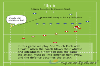
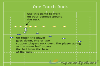
<div class=&quot;&quot;&quot;MsoNormal&quot;&quot;&quot;>Be brief when telling the players the laws of this game, it's important to get them moving quickly. </div> <li class=&quot;&quot;&quot;MsoNormal&quot;&quot;&quot;>This is not a contact game. <li class=&quot;&quot;&quot;MsoNormal&quot;&quot;&quot;>Break your players into two teams, giving each team their own colour of bibs if necessary. <li class=&quot;&quot;&quot;MsoNormal&quot;&quot;&quot;>One team goes to attack, and one to defence. <li class=&quot;&quot;&quot;MsoNormal&quot;&quot;&quot;>Nominate a Scrum Half for each team. <li class=&quot;&quot;&quot;MsoNormal&quot;&quot;&quot;>There is no kicking in this game. <li class=&quot;&quot;&quot;MsoNormal&quot;&quot;&quot;>Normal laws of rugby apply e.g. a forward pass will result in the ball being turned over to the opposition. <li class=&quot;&quot;&quot;MsoNormal&quot;&quot;&quot;>If an attacking player is touched: they must go to ground, present the ball, two of their teammates ruck over (staying over the ball), and the Scrum Half moves the ball for the next phase of attack. <li class=&quot;&quot;&quot;MsoNormal&quot;&quot;&quot;>When you start playing this game make sure that the defence is employing your defensive pattern around the ruck. As the game develops consider telling the defenders that they must have one or more players at the back of the ruck, if they are not fast enough to do this - push them back 10 meters. <li class=&quot;&quot;&quot;MsoNormal&quot;&quot;&quot;>It’s important that defenders are employing their defensive pattern behind the primary defensive line. <li class=&quot;&quot;&quot;MsoNormal&quot;&quot;&quot;>Have attacking players do what they normally would at the ruck. <li class=&quot;&quot;&quot;MsoNormal&quot;&quot;&quot;>Depending on your goals decide on the number of touches you wish to allow e.g. unlimited is not a bad option as mistakes will be made! <li class=&quot;&quot;&quot;MsoNormal&quot;&quot;&quot;>When you feel the time is appropriate, usually during a ruck, blow you whistle and should FLIP IT – kicking in or throwing in a second ball to the back 3/2 defenders on the team currently in defence OR just kick it behind the defenders. The defensive team goes, without hesitation, into attack. The team that was attacking goes into defence and you or an assistant coach remove the other ball from play when you can. Ideally you might have two balls with different markings. <li class=&quot;&quot;&quot;MsoNormal&quot;&quot;&quot;>Don't hesitate to shape the game to focus on your session goals, and let us and other coaches know what worked for you!

General

Maul Touch Warm Up - Rugby Dri...

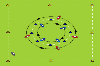
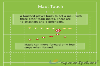
Be brief when telling the players the laws of this game, it's important to get them moving quickly. This is not a contact game, but there will be some light contact. Break your players into two teams, giving each team their own colour of bibs if necessary. One team goes to attack, and one to defence. Nominate a Scrum Half for each team, it will be their job to move the ball from the back of the maul and out to an attacking line. There is no kicking in this game. Normal laws of rugby apply e.g. a forward pass will result in the ball being turned over to the opposition. If an attacking player is touched: they must stop and turn, a maul is then built based on how you have trained your players to Maul. Only four players should be in the maul - but every player should be able to maul - including the backs! When you start playing this game make sure that the defence is employing your defensive pattern around the maul. They will commit 4 players, but will not do anything more than provide light resistance. Once formed the maul can take four steps before moving the ball. If there is a delay in creating the maul, or the quality of the maul is poor - the ball can be turned over. Depending on your goals decide on the number of touches you wish to allow e.g. unlimited is not a bad option as mistakes will be made! If a team has been in possession for a long time, don't forget to turn the ball over to give the opposition a run. Don't hesitate to shape the game to focus on your session goals, and let us and other coaches know what worked for you.

General

Unfortunately there were no results for your search! Please try again
rugby warm up ANSWERS
View All

Under 9`s rugby, fear of tackling!

I coach under 9`s rugby and a lot of the kids have a bad fear of tackling, they lack the confidence to get stuck in. What is the best thing to help them overcome this?

Archived User Coach

Getting the team ready / fired up before kick off.

Does anyone have any good hints / tips / suggestions for getting a team (Under 18's Male Rugby team) fired up before the game? The problem we are having is the boys don't switch on to the game 10 / 15 / 20minutes into it. We start 1 hour before kick off with a dynamic warm up, drills, moves for the day then back in 10mins before kick off to put shirts on and captains words, then out for kick off.

Archived User Coach

HOW CAN I IMPROVE PLAYERS ABILITY TO PERFORM THE LATERAL?

HOW CAN I IMPROVE PLAYERS ABILITY TO PERFORM THE LATERAL PASS ?

dean Coach, England

Catching a high ball. Any ideas for games/drills?

I assume the key factors to be looking at the ball, get in line with the trajectory, reach for the ball and cradle, sideways stance. Is that right?

Archived User Coach

Dennis%3A The boys will be starting at under 11 next?

Dennis%3A The boys will be starting at under 11 next season this will become the first season they are able to actively kick during games. By kicking I mean all types of kicking. all advice, literature, web sites etc... welcome

iain Coach, England

any one know drills for defending a attack from scrum?

any one know drills for defending a attack from scrum in midfield?

Archived User Coach

I want a coaching session for an u/8 rugby team with?

I want a coaching session for an u/8 rugby team with drills, skills and warm up please

Archived User Coach

Under 10 - Pre Match Preparation

If you have 30 min before the start of a match how should you prepare a team of under 10 players. How do you get them suitably motivated to hit the ground runnung with a high level of intensity.

William OBrien Coach, England

problem- slow start at 7s games

I coach a womans 7s team. Every two weeks we have a two game tournament. The problem is that for the whole first game the girls play like they haven't woken up yet, and only in the second game their real rugby comes out. How do I help them play strong from the start?

eli Coach, Israel

Rugby warm up for girls?

Archived User Coach

Warm up to improve agility, balance and coordination?

Can anyone recommend a warm up drill for improving agility, balance and coordination?Currently attending level 1 introducing children to rugby; I have some ideas already in mind. I'm interested to hear other ideas.Thanks

Matthew Langtree Coach, United Kingdom

Rugby warm-Ups for Mini Rugby Aged 8

Hi. I am in charge of the Mini Rugby (age 8) warm-up and am interested in more ideas. I try and keep them fun, sports specific and interesting for the boys and they seem to like what I do. Can anyone please help? Thanks!

Archived User Coach

game appropriate warm up

i have been told i need to make my warm ups more rugby specific and game appropriate, what are some small drills i can do at the end of the warm up that don't involve too much contact but will get players ready for a training session or match

Hannah Sangan Coach, England

Under 6's rugby warm ups and drills.

Im after warm up and drills for coaching Under 6's Rugby

Leigh Tomlins Coach, Wales

U8 session plan for 2 hours

Wanted some help guidance putting together u8 two hour session plan Asked using Sportplan Mobile App

Gary ward Coach, England

tag rugby

What is the best warm up for tag rugby

Garethsmldon Coach, England

Rugby warm-Ups for Mini Rugby ...

Hi. I am in charge of the Mini Rugby (age 8) warm-up and am interested in more ideas. I try and keep them fun, sports specific and interesting for the boys and they seem to like what I do. Can anyone please help? Thanks!

Archived User Coach

JOIN SPORTPLAN FOR FREE

  • search our library of 1100+ rugby drills
  • create your own professional coaching plans
  • or access our tried and tested plans

Sportplan App

Give it a try - it's better in the app

YOUR SESSION IS STARTING SOON... Join the growing community of rugby coaches plus 1100+ drills and pro tools to make coaching easy.
LET'S DO IT