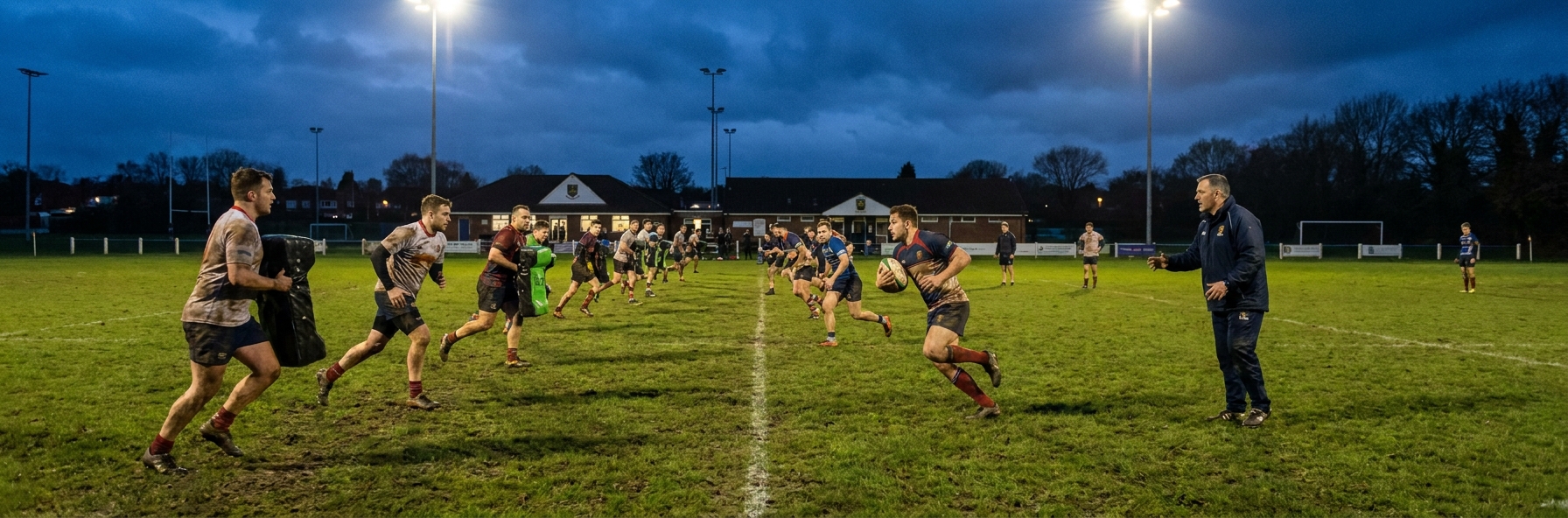
Rugby: skill

Rugby is a game of decisions. Every second, players choose: pass, carry, or kick? Blitz or drift? Jackal or get back in the line? The team that makes better decisions more consistently wins matches - not necessarily the team with more talent or better fitness.

Game management is the skill of making these decisions correctly under pressure, with fatigue setting in, with the crowd noise, with the stakes rising. It can be developed.

The Decision-Making Framework

Good decisions start with good information. Players need to see the game clearly before they can choose correctly.

The OODA loop in rugby:

  • Observe: What do I see? Defensive structure, space, support
  • Orient: What does this mean? Opportunity, threat, neutral
  • Decide: What's my best option? Pass, carry, kick, hold
  • Act: Execute with commitment

The faster and more accurately players cycle through this loop, the better their decisions. Training should develop each stage.

Developing Observation Skills

Many poor decisions come from poor observation. Players who don't see the full picture can't make informed choices.

Training observation:

  • Pre-scan: look before receiving the ball
  • Peripheral awareness: what's beside you, not just ahead
  • Key cues: what specifically to look for (defender's hips, space, numbers)

Drills for observation: Play games where the coach calls "freeze" and asks players to describe what they see. What options exist? Where's the space? Where's the threat?

Situational Awareness

Understanding the game situation frames decision-making. The right decision at 0-0 in the first minute differs from 3-0 down in the 79th minute.

Situation factors:

  • Score: leading, trailing, or level
  • Time: first half, second half, final minutes
  • Field position: own 22, midfield, attacking 22
  • Conditions: wind, rain, surface
  • Momentum: who's on top right now?

Players need to know the situation without thinking about it. Score, time, and field position should be automatic awareness.

Risk Management

Every rugby decision involves risk. The question is whether the potential reward justifies the risk in this specific situation.
High-risk decisions:

  • Running out of your own 22
  • Offloads under pressure
  • Speculative kicks without chase support
  • Committing extra players to the ruck

When high-risk is acceptable:

  • Trailing with time running out
  • Attacking in the opposition 22
  • Momentum strongly in your favour

When to play conservative:

  • Protecting a lead late in the game
  • Deep in your own half
  • Opposition on top and looking for turnovers

Pressure Moments

Certain moments in matches carry extra pressure. Decision-making under pressure deteriorates without specific training.

High-pressure scenarios:

  • Final play of the half or game
  • Penalty opportunity to win/draw the match
  • Defending a one-point lead in your 22
  • Restart after conceding a score

Training pressure: Create pressure in training through consequences, time limits, and competitive scenarios. Players who've experienced pressure in training cope better when it matters.

Communication in Decision-Making

Rugby decisions are rarely individual. Communication coordinates group decision-making and ensures everyone understands the plan.
Essential communications:

  • Ball carrier: "Carrying!" "Kicking!" "Looking left!"
  • Support: "With you!" "On your shoulder!"
  • Defence: "Up!" "Drift!" "Numbers!"
  • General: "Time!" "Space outside!" "Keep it!"

Leaders must take ownership of communication. The fly-half and captain should constantly talk, directing the team's decision-making.

Learning from Decisions

Post-match review should examine decisions as much as execution. Why did we make that choice? What did we see? What would we do differently?

Effective review questions:

  • "What was your thinking there?"
  • "What options did you see?"
  • "Given what you know now, what would you do?"
  • "What can we learn from this?"

Avoid blame. Focus on understanding and improvement. Players who fear judgment stop taking responsibility for decisions.

Developing Decision-Makers

Coaching approaches:

  • Guided discovery: ask questions rather than give answers
  • Constrained games: rules that force specific decisions
  • Decision overload: faster game speed to develop instinct
  • Post-play review: brief discussions about choices made

The goal is players who can read, decide, and act without waiting for coach instruction. Games move too fast for external direction - players must be autonomous decision-makers.

Key Coaching Points

  • Good decisions require good observation - train players to see
  • Situation awareness frames every choice
  • Risk must match the situation
  • Pressure can be trained - create it in practice
  • Communication coordinates group decisions

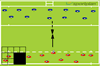
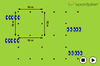
Drills to Develop Game Intelligence

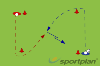
VIEW ALL DECISION MAKING DRILLS

JOIN SPORTPLAN FOR FREE

  • search our library of 1100+ rugby drills
  • create your own professional coaching plans
  • or access our tried and tested plans
skill DRILLS
View All
Unfortunately there were no results for your search! Please try again
skill SESSIONS
View All
skill ANSWERS
View All

Looking for day 0 skills to te...

I am looking for a Day 0 type of session for American children who may have never held a rugby ball. If I move forward with a rugby exhibition/team creation in the neighborhood, I want to make sure I know how/what to teach Day 0. I'm hoping that interest is growing for touch and flag rugby due to the recent in Philadelphia between the USA Eagles and the Maori All Blacks. I was there. It was fantastic. Tickets sold out so fast, I think there will be more of these in the area. Thanks.
Doug Jones Coach, United States of America

how would you describe key factor analysis in one sentence?

how would you describe key factor analysis in one sentence thanks

peter frantz Coach, United States of America

Tackling nerves - I coach 10 year old boys. Some boys?

Tackling nerves - I coach 10 year old boys. Some are very nervous about being hurt when tackling opponents although the same guys are like lions with the ball in hand. As a result our defence suffers. We have tried hammering home the correct technique to give confidence but to no avail. Can anyone suggest any psychology or drills I might try?

Archived User Coach

positional skill - how can i improve a props defence?

positional skill - how can i improve a props defence / decision making off the side of a ruck / maul?

david clark Coach, South Africa

unit skill - how can i develop play from a catch and?

unit skill - how can i develop play from a catch and drive 2 a line out

david clark Coach, South Africa

how do you coach aggression?

Ask a question and have it answered by Coaches from around the world and IRB Educators.

Ed Burns Coach, Ireland

I am coaching the U11 this season. There are some significant?

U11 Rugby I am coaching the U11's this season. There are some significant rule changes from U10. Please can I get some advice on what lessons were learned from coaches who have been through a similar experience.

William OBrien Coach, England

Hello, i am after some help with planning a half hour?

Hello, i am after some help with planning a half hour session in off loading out of the tackle

Archived User Coach

Does anyone know of an assessment for U10's

We have a large squad and need a transparent way to assess our players to justify the team selection - does anyone know of, or use an assessment tool to assess skills in this age group?

Archived User Coach

New Womens Team First Practice Drills

I am coaching a brand new women's team. From our recruitment we have a mixed skill level. What drills should I run at the first few practices to introduce the game and skills, without overwhelming brand new players? I want to make it fun and not just running drills but also don't want to scare people away.Thanks!

Archived User Coach

U10s mini rugby small sided game variations

I did the level 1 and have bought into the philosophy - small sided, conditioned games rather than drills with boys standing in lines and being told where to run. I think it would be good to share ideas of variations that coaches use to focus on specific areas, and how to keep it fresh week in week out.Simply, I award points for good application of the skill we're focusing on. 3 points for good body position in the ruck or driving an opponent back. Only 3 points for a try motivates them to execute the skills.

Wayne Jeremiah Coach, England

Getting 9-10 year olds to spread the ball out wide

Getting quite frustrated that my u10's are not using the space on the pitch and tend to bunch up. Despite various drills and game scenarios to force them to spread out and pass to someone in space they revert in any game to bunching up around the ball and taking it back into the thick of the opposition rather than looking left or right! Any ideas how to change their ways?

Ian G Coach, England

Coaching a large team

Hey there everyone. I'm taking on a head coaching role for a collegiate women's side that is about 35-40 players deep. I'm looking for any general planning strategy that can maximize keeping everyone engaged and active in the practice with as little standing around as possible. Any tips or way ahead is greatly appreciated, cheers.

Bob Newbanks Coach, United Kingdom

gymnast with amputated arm

Bar routine for gymnast with amputated arm

Mandi Smith Coach, United Kingdom

Tackler

Get on feet without using knees ?

Krappie Odendaal Coach, South Africa

Preseason

What's the recommended periodisation for introducing each element during preseason in a 12 week block?

Nela Tuipulotu Coach, Australia

Developing a 1:1 coaching plan...

Hi I’m a proud dad who wants to help his 12 year old son develop as an aspiring number 12/13. No experience at all coaching but willing to give it a go. He already trains with his team of course but only once a week. I’d like to supplement that with a plan that he and I can follow 2 to 3 times a week but limited realisticallly to he and I. Passing and tackling and speed and agility I’m guessing are key? Anything on decision making would also be good. Any advice gratefully received!

Carl Mooney Coach, England

First time coaching the U13s n...

I have just started helping our head coach with under12's team. He wants to retire and has put me forward to be head coach next season. I am a little worried on how i should aproach training with the boys, going to a full 15 a side team on a full pitch. Any ideas would be greatly appreciated.

Archived User Coach

I am putting together a skills...

I am putting together a skills matrix of suggested/expected skills a child should have as they progress through the Continuum. eg, by under 7 a player should be able to do ABC, by under 8 they should be able to do DEF, by under 9 they should be able to do XYZ, etc. I want to break this down into novice, core and advanced, as well as positional (as they get older) Does anyone know of a format that exists like this already somewhere?

Archived User Coach

When can I start teaching tack...

I coach under 8's and next season they will start contact. When am I allowed to start teaching them tackling skills? I sit january during their under 8 season or at the start of the under 9 season ?

brian mills Coach, England

JOIN SPORTPLAN FOR FREE

  • search our library of 1100+ rugby drills
  • create your own professional coaching plans
  • or access our tried and tested plans

Sportplan App

Give it a try - it's better in the app

YOUR SESSION IS STARTING SOON... Join the growing community of rugby coaches plus 1100+ drills and pro tools to make coaching easy.
LET'S DO IT