Rugby: strategy

September 2026

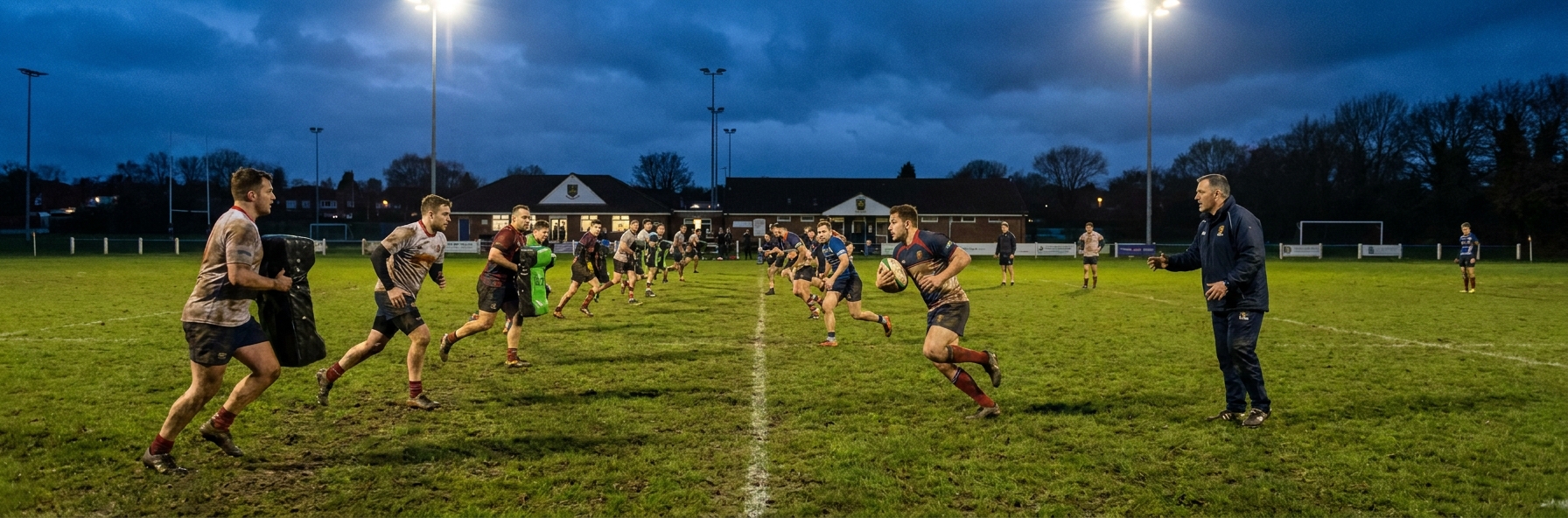
Early season in community rugby has a familiar pattern. The first few matches are full of dropped balls, passes that arrive behind runners, and promising overlaps that die because someone could not catch and give in one movement. It is rarely a lack of effort. It is handling that was learned without pressure, being asked to work under pressure.

The fix is not more passing lines. It is a handful of simple technical habits, drilled until they are automatic, and then deliberately tested against defenders, time limits and tired legs. That applies to your props and second rows just as much as your centres.

Why Handling Breaks Down

Most handling errors come from the same few causes. Hands arrive late, so the ball is caught against the chest and has to be reloaded before it can be passed. The catch is taken beside or behind the body, so the carrier drifts and loses the shape of the line. And players have a strong side, so anything asked of the weaker hand becomes slow and loopy.

Pressure magnifies every one of these. A defender closing the space removes the extra half-second a player was using to tidy up. Fatigue does the same thing more slowly. If the technique needs time, pressure will expose it.

A Five-Step Framework

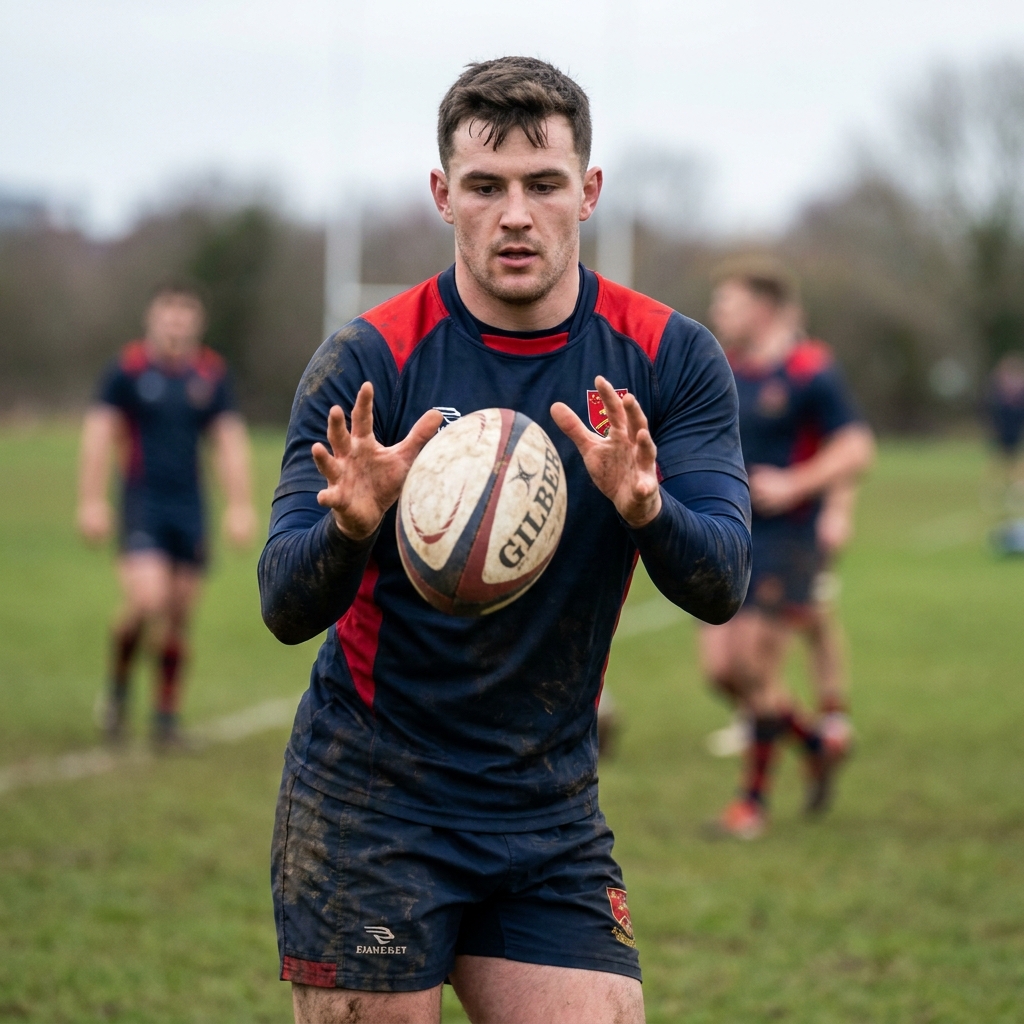
Step One: Hands early. Receivers show a target with both hands up and fingers spread before the ball is passed, not as it arrives. The passer has something to aim at and the catcher is ready to give straight away.

Step Two: Catch in front. Reach for the ball and take it early, away from the body. A catch in front keeps the player running straight and lets them move the ball on without reloading at the hip.

Step Three: Pass off both hands. Build the weaker side on purpose. In every handling block, make sure the ball travels both ways in equal amounts, and coach the same finish: hands following through towards the target.

Step Four: Choose short or long. A short, flat pass keeps a defender fixed and suits tight spaces. A longer pass moves the ball past a defender into space but gives the defence more time to drift. Teach players to look up before they catch so the decision is already made.

Step Five: Keep it simple when tired. Late in a phase or a match, the right pass is often the simpler one. Encourage players to pick a pass they can deliver accurately when their legs have gone, rather than the ambitious one that only works when they are fresh.

How to Train It

Start with a short technical block where the only focus is hands early and catching in front. Keep it moving and keep the reps high. Then add one form of pressure at a time: a defender who closes, a time limit, or a narrow channel.

Finish with handling under fatigue. Put the passing work straight after a short, sharp conditioning effort, or build it into a continuous game so players have to catch and pass while breathing hard. For forwards, make the passes short, flat and close to contact, because that is where they will need them.

Key Coaching Points

  • Show hands early as a target before the pass is thrown, not as the ball arrives.
  • Catch the ball in front of the body so there is no need to reload before passing.
  • Give the weaker hand equal work in every handling session, for backs and forwards.
  • Look up before the catch so the short or long decision is made in advance.
  • Add pressure one layer at a time: a defender, then time, then fatigue.
  • When players are tired, reward the accurate simple pass over the ambitious one.

Recommended Drills

VIEW ALL PASSING DRILLS

Frequently Asked Questions

My forwards say passing is a job for the backs. How do I get them to buy in?

Show them where the ball goes to ground in your matches. Most community sides lose possession close to the ruck, not out wide. Keep forwards' handling work short, flat and near contact so it feels like their game, and they will see the point quickly.

Should I teach the spin pass to everyone?

Not before the basics. A spin pass is useful for distance, but a player who cannot catch in front and give a flat pop pass off both hands will not benefit from it. Build accurate short passing first, then add the spin pass for players who need the range.

How much handling should we do in a session?

A little and often works better than one long block. A short technical focus in the warm-up, handling built into your games, and a pressured practice near the end when players are tired will do more than twenty minutes of static passing lines.

strategy DRILLS
View All

3 Touch Kick

Split your players into two teams, giving one group of players a set of coloured bibs to set them apart, and quickly tell your players the following laws: We will be playing a rugby league style touch. When touched: set the ball down, stand over the ball, allow the scum-half to move the ball away from the point of contact. The defenders should stay on side following a touch, and should not compete for the ball. Any infringements in defence should result in the defending team conceding 10 Meters or possibly giving 1 or more extra touches to the attacking team. I'll leave this to your judgement depending on your team's age, skill level, and your session target/s. The attacking team can sustain three touches before they have to kick. Their kick should be as it would be in the game: a kick to touch, a kick for territory, or a kick that can be regained e.g. a grubber kick. The defenders should behave as they would in a real game. Quick put in's from the touchlines replace lineouts. Defenders who take the ball from an attacking kick should counter attack. A forth touch results in a turn over. The Scrum Half has a maxium of 5 seconds to move the ball from the point of touch. A ball kicked directly to touch from outside the attacking teams 22, or where the ball has been taken into the 22 by the attacking team and then kicked into touch - will result in a turn over with play starting on the five meter line closest to where the kick was made. The defence should be 10 meters back. A ball kicked from inside the attacking teams 22 can go directly to touch, as long as the attacking team did not carry the ball into their own 22 before the kick. The resulting put in will be to the opposition from where the ball has went into touch. Quick put-in's are enoucraged, if not possible the ball is played from the 5 meter line with the defence 10 meters back. Give points for quick put ins that work. Feel free to play with any of noted laws, let us know the law variations that work for you!
Warm Up

Unfortunately there were no results for your search! Please try again
strategy ANSWERS
View All

My fowards seem afraid to ruck and stand around the?

My fowards seem afraid to ruck and stand around the ruck while in the way of the scrum half trying to get the ball out to the backs. They also don't support the ball carrier while he is being tackled. Please help me with any suggestions!!!

William Barrett Coach, United States of America

how do i coach a backline defence against the opponents?

how do i coach a backline defence against the opponents attack from a midfield scrum ?

Archived User Coach

What are the key performance indicators for a lock ?

What are a lock's key performance indicators during a game ?

Greg Nelson Coach, Australia

Any ideas on a session I can do on an athletics track?

Any ideas on a session I can do on an athletics track for a senior team. It's the first session back after the Christmas break and we've got an important game coming up on Saturday if the weather holds up.

Archived User Coach

How can i learn and understand strategy of my possition?

How can i learn and understand strategy of my possition. I/m playing at possition 10. Is there any literature to read about?

Archived User Coach

New to the site is there any tactical or game strategy?

New to the site is there any tactical or game strategy resources versus drills?

Archived User Coach

What is the best way to share playing vocab at this site...

...where it will list and describe playing terminology such as shave, tackle-back, steal, forehand.

Ejaz Syed Coach, United States of America

Match Day clipboard organizer

I'm looking for a pre printed match day organizer for my clipboard. Starting lineup and subs, keeping score, strategy, etc.

Mark Dixon Coach, United States of America

Coaching a large team

Hey there everyone. I'm taking on a head coaching role for a collegiate women's side that is about 35-40 players deep. I'm looking for any general planning strategy that can maximize keeping everyone engaged and active in the practice with as little standing around as possible. Any tips or way ahead is greatly appreciated, cheers.

Bob Newbanks Coach, United Kingdom

Attacking

how can we improve. 1. Rucking especially at the wings.2. Ball presentation 3. Predictable attack patterns. 4. Running onto the ball5. Running angles6. Ineffective kicking game

Rutakiirwa Ambrose Coach, Uganda

Coaching a large team - Sportp...

Hey there everyone. I'm taking on a head coaching role for a collegiate women's side that is about 35-40 players deep. I'm looking for any general planning strategy that can maximize keeping everyone engaged and active in the practice with as little standing around as possible. Any tips or way ahead is greatly appreciated, cheers.

Bob Newbanks Coach, United Kingdom

First time coaching the U13s n...

I have just started helping our head coach with under12's team. He wants to retire and has put me forward to be head coach next season. I am a little worried on how i should aproach training with the boys, going to a full 15 a side team on a full pitch. Any ideas would be greatly appreciated.

Archived User Coach

My fowards seem afraid to ruck...

My fowards seem afraid to ruck and stand around the ruck while in the way of the scrum half trying to get the ball out to the backs. They also don't support the ball carrier while he is being tackled. Please help me with any suggestions!!!

William Barrett Coach, United States of America

Getting 9-10 year olds to spre...

Getting quite frustrated that my u10's are not using the space on the pitch and tend to bunch up. Despite various drills and game scenarios to force them to spread out and pass to someone in space they revert in any game to bunching up around the ball and taking it back into the thick of the opposition rather than looking left or right! Any ideas how to change their ways?

Ian G Coach, England

JOIN SPORTPLAN FOR FREE

  • search our library of 1100+ rugby drills
  • create your own professional coaching plans
  • or access our tried and tested plans

Sportplan App

Give it a try - it's better in the app

YOUR SESSION IS STARTING SOON... Join the growing community of rugby coaches plus 1100+ drills and pro tools to make coaching easy.
LET'S DO IT