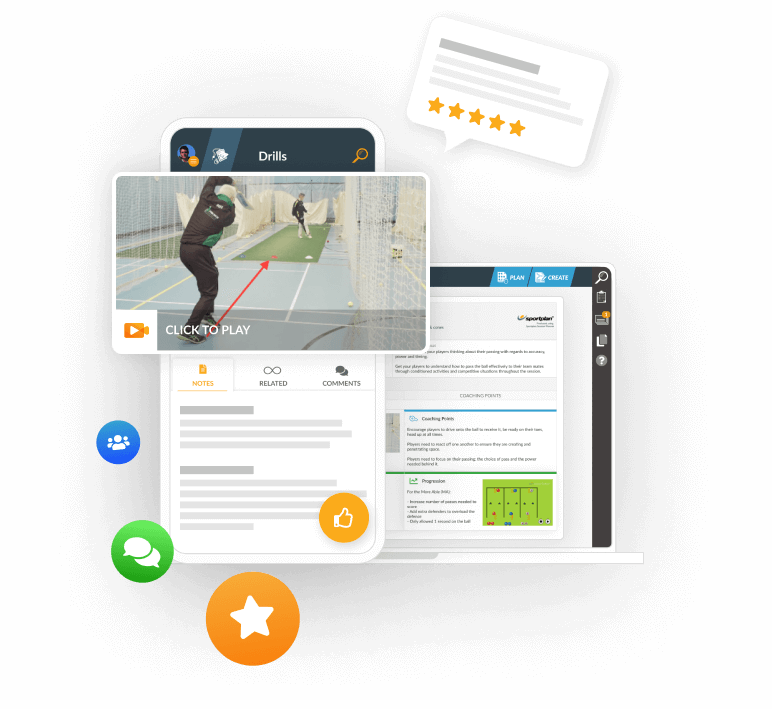
This game can be played in teams (6-10 a-side) or in pairs (8-10 players).
Rules of the game:
There should be a batter at both ends.
If playing in pairs, give each pair two or three wickets. If playing in teams, when a wicket falls it is the turn of the next batsman. Tip and run, or two or three balls to make a run.
The coach throws either all front foot defence or all back foot defence bowls.
The fielders must stay on the cones or with one hand on the wall until the ball is thrown, otherwise batsmen automatically get a two run bonus.
Ways of getting out:
Bowled, caught, run out, stumped, playing an attacking shot, or failing to score off the limited number of deliveries.
The batsman can only score singles but the boundaries count for overthrows.
Overthrows: side walls = 2 runs, back wall behind wicket keeper = 1 run, front wall = 4 runs (Unless you hit a 4 you can run singles to add to the side and back wall scores.)
If a batsman leaves the ball it does not count and he does not have to run.
If the batsman plays and misses it counts as a delivery
Players must try and play with the full face of the bat as much as possible, even when trying to work the ball into gaps.
This can be done by maintaining a high elbow in the shot, and just a turn of the wrists upon impact.
Pre-season is the best time to rebuild and refine batting technique without the pressure of match results. This article covers the fundamental batting positions that underpin consistent run-scoring, provides a progressive session framework from shadow batting to live bowling, and highlights the common pre-season mistakes that coaches should avoid.
Fielding placement in limited overs cricket is a tactical chess match that changes with every phase of the innings. This article breaks down how captains should set fields during the powerplay, middle overs, and death overs, and provides practical coaching sessions for developing game-aware fielders who anticipate rather than react.
With IPL 2026 starting this month, we break down the art of powerplay bowling - field placement, line and length, and how to turn the fielding restrictions to your advantage.