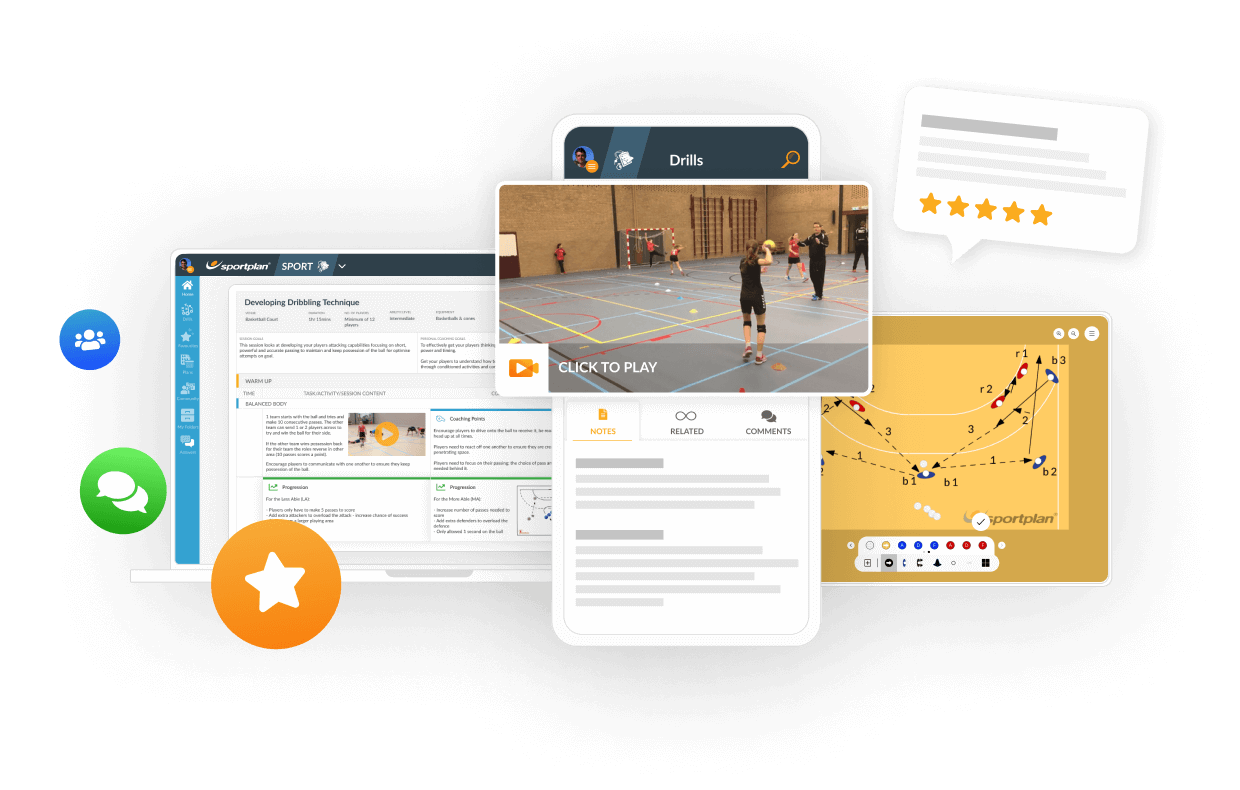
Based on the defender's movement player 4 should decide whether to pass to player 6, player 5 or not pass at all and take the shot on themselves.
Blue player 1 starts with the ball and moves to make their defender follow them out of position, once they've dragged them outside they pass to player 2 who does the same and then passes to player 3 who passes to player 4.
At this stage the game becomes 'live'. Blue 6 is stood between the two defenders and blue 5 is ready to make a run down the outside.
Depending on the decisions made by the defence player 4 can pass early to player 6, throw the ball into the path of player 5 or simply go it alone and take the shot on themselves.
Give all your players a chance to be the decision maker (blue 4).
If the ball is intercepted the defenders should play the ball out to the half way line before setting up and restarting this drill.
Wing players operate in the most demanding shooting position on a handball court, where acute angles and a close goalkeeper make finishing a specialist skill. This article breaks down the technique, decision-making, and training progressions that coaches need to develop elite wing finishing.
The transition from attack to defence is the most vulnerable moment in handball. This article examines the 3-second recovery principle, the specific roles players must adopt during transition, and the training scenarios that build a team's ability to recover defensive shape under pressure.
Handball demands explosive power, repeated sprint ability, and the strength to compete physically for 60 minutes. Sport-specific conditioning develops the athletic qualities that underpin elite performance.