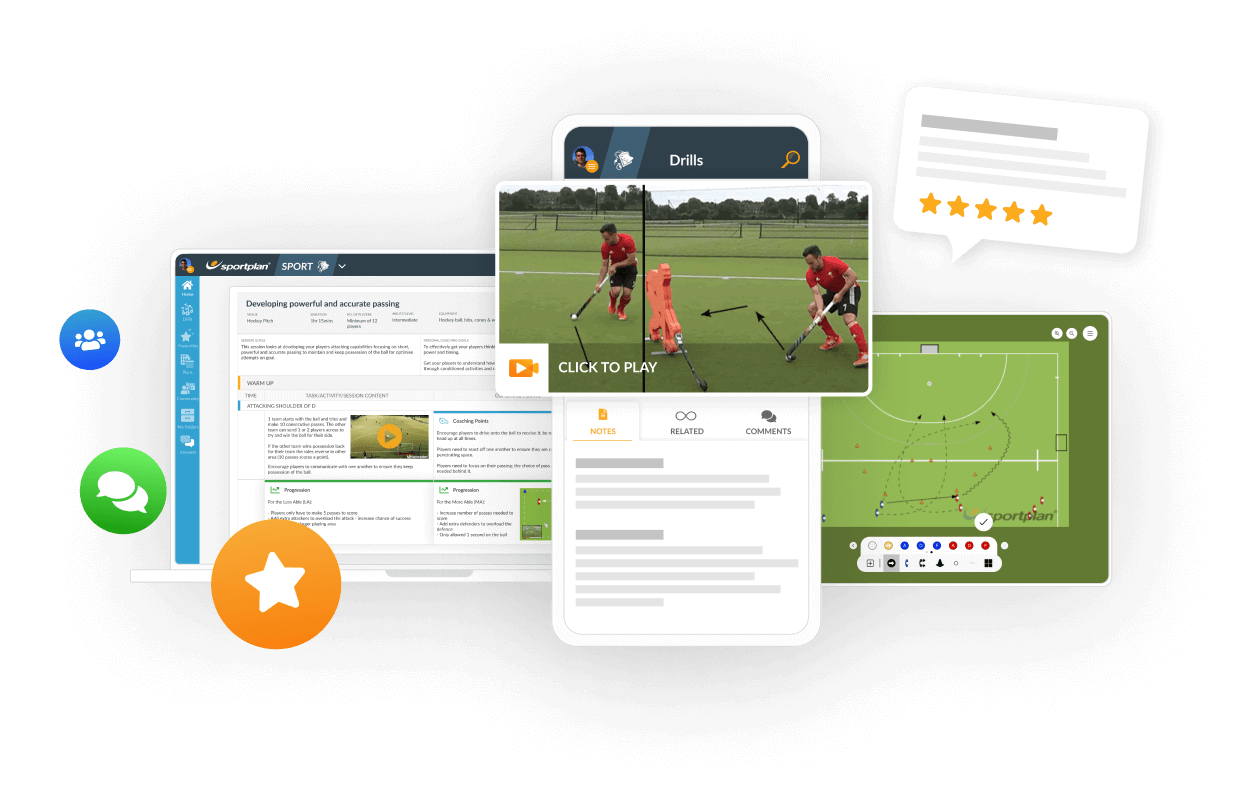
Exercise starts with the ball being played to the half back, then down the line for a player running out to receive.
This player should then control the ball before switching it across to the center half.
The center half then passes the ball to the Inside-forward who then passes the ball to the far post for the original receiver to run onto and score.
The next ball starts immediately after on the opposite side for the player to lead out and receive the ball, pass it to the Center Half.
The Center Half then passes the ball to the next channel and the ball should be passed to the far post for the player who started the move to receive and finish.
A second team can simultaneously do the same practice in the opposite direction.
Although this can be complicated to set up initially once it is in place it is well worth it as it gets players moving - making runs and playing sharp, fast and meaningful passes.
If your players find this exercise difficult to set up you can use cones to show where they should be running to and from.
in more ways than one
The best hockey players in the world do not just react faster; they scan more frequently and process information before the ball arrives. This article explores the science behind scanning, how to coach spatial awareness as a habit, and practical drills that force players to lift their heads and read the game.
In hockey, you can only score from inside the circle. Getting the ball into the D with purpose and creating genuine shooting chances is the hardest part of attack. This article examines the different types of circle entry, why entry angle determines shot quality, and how to train your team to penetrate the most congested area on the pitch.
The best teams don't just press - they press at the right moment. Here's how to train your players to read the cues.