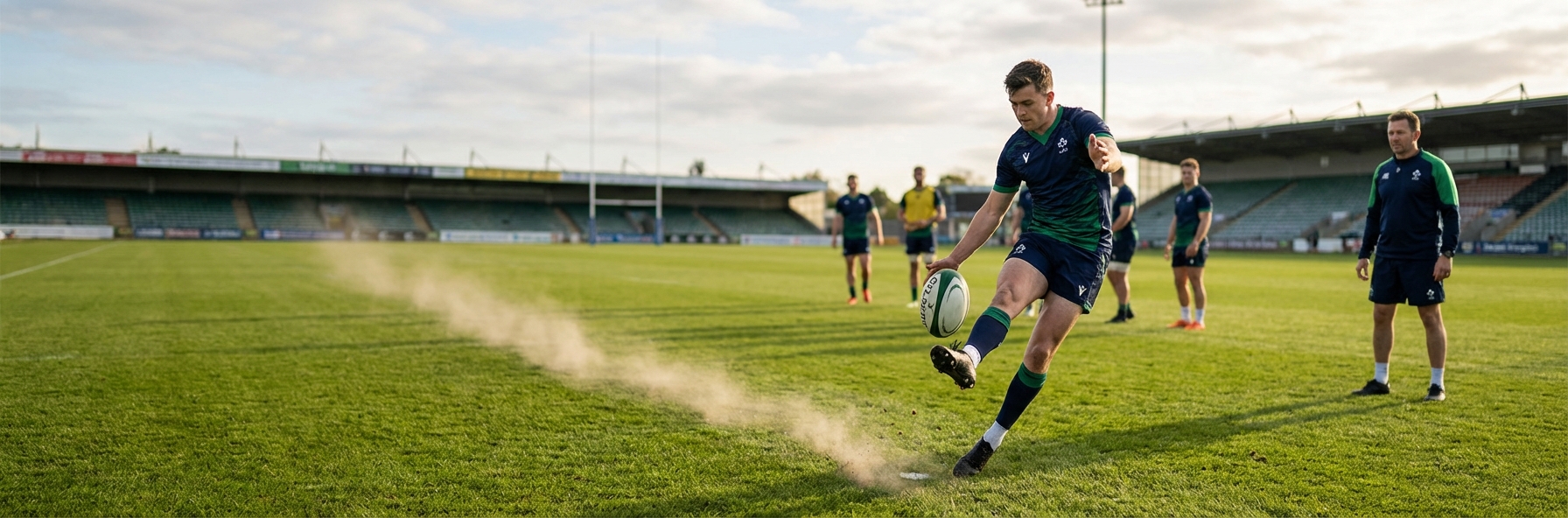
The tactical kick has evolved from pressure relief to primary weapon. Modern rugby increasingly values territory over possession - the team that plays in the right areas of the pitch creates more scoring opportunities, regardless of possession statistics.
The introduction of the 50:22 law has accelerated this trend, making intelligent kicking even more rewarding.
Why Territory Beats Possession
Running the ball out of your own half is high-risk. Turnovers in your 22 lead directly to opposition points. A kick concedes possession but transfers the risk to the opposition.
The territory advantage:
- Force opponents to exit from their own half
- Mistakes in their territory are less costly for you
- Build pressure through field position
- Create turnover opportunities from their exit kicks
Teams that kick to exit their own half minimise the risk of conceding from own-half turnovers. This isn't negative rugby - it's intelligent risk management.
Types of Territorial Kicks
The Box Kick
Executed by the scrum-half, the box kick is a high, spiralling kick designed to allow chase and contest. It's used from rucks when the blindside is congested or when you need to exit under pressure.
Key execution points:
- Height over distance - time for chasers to arrive
- Spiral for predictable flight
- Aim for space, not directly at fielders
- Communicate chase responsibilities before kicking
The Clearance Kick
A long kick from inside your 22, aimed at gaining maximum territory. Usually struck by the fly-half or full-back, it should find touch or push the opposition deep into their half.
When to clear:
- Under defensive pressure in your 22
- After absorbing multiple phases of attack
- When field position is dire
The 50:22
The 50:22 law rewards kicks that bounce in the field of play, cross the 22, and find touch. The kicking team throws in at the resulting lineout. This has changed tactical kicking fundamentally.
50:22 execution:
- Must be kicked from behind your own 10-metre line
- Ball must bounce in the field of play
- Cross the 22 and go into touch
- Grubber or chip kicks work best
The 50:22 rewards accurate kicking to the corners and punishes full-backs who stand too narrow or too deep.
The Contestable Kick
High kicks designed to be contested in the air. The aim is either to regain possession or force errors from the catcher. These require excellent chase coordination.
Contestable kick principles:
- Height is essential - chasers need time
- Accuracy matters - kick to space, not players
- Legal contest - don't take the man in the air
- Arrive as ball arrives
The Chase: Turning Kicks Into Pressure
A kick without an effective chase is just giving the ball away. The chase turns territorial kicks into pressure situations.
Chase organisation:
- Designate chasers before the kick
- First chaser aims to pressure the catch
- Second chaser covers the break
- Remaining players set the defensive line
If they catch clean: Pressure their exit kick. Force errors or poor kicks back.
If the ball bounces: Attack the chaos. Loose balls in the opposition 22 are golden opportunities.
When Not to Kick
Kicking has costs. You surrender possession and give the opposition the chance to counter. There are times when keeping the ball makes more sense.
Keep possession when:
- You have dominant field position already
- Attack is making clean line breaks
- Opposition defence is tired or disorganised
- Conditions make kicking unreliable (wind, rain)
The best teams blend kicking and carrying. They read the situation and choose the right option.
Training the Kicking Game
Individual technique: Kickers need daily reps. Different distances, different wind conditions, both feet if possible.
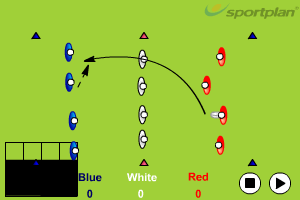
Team coordination: Practice kick-chase combinations. Everyone must know their role before the kick happens.
Decision-making: Play games where the choice between kick and carry is genuine. Review decisions afterwards: "Why did you kick there? What did you see?"
Key Coaching Points
- Territory often matters more than possession
- The 50:22 rewards accurate kicks to the corners
- A kick without a chase is a gift
- Know when to kick and when to keep the ball
- Train kicking decisions, not just kicking technique


 sportplan_rugby