Player Welfare Is a Coaching Responsibility
Rugby is a contact sport. That will never change. But how we manage contact, monitor its effects, and protect players has changed dramatically. Smart mouthguard technology, tighter concussion protocols, and a growing understanding of head impact exposure mean that coaches at every level now carry a genuine responsibility for player welfare.
This isn't about making rugby soft. It's about making rugby sustainable. Players who are protected properly play longer, train harder, and perform better. Welfare and performance aren't opposites - they're partners.
The 2026 season has brought these issues into sharp focus, with new protocols rolling out across professional and community rugby. Here's what every coach needs to understand.

What Smart Mouthguards Measure
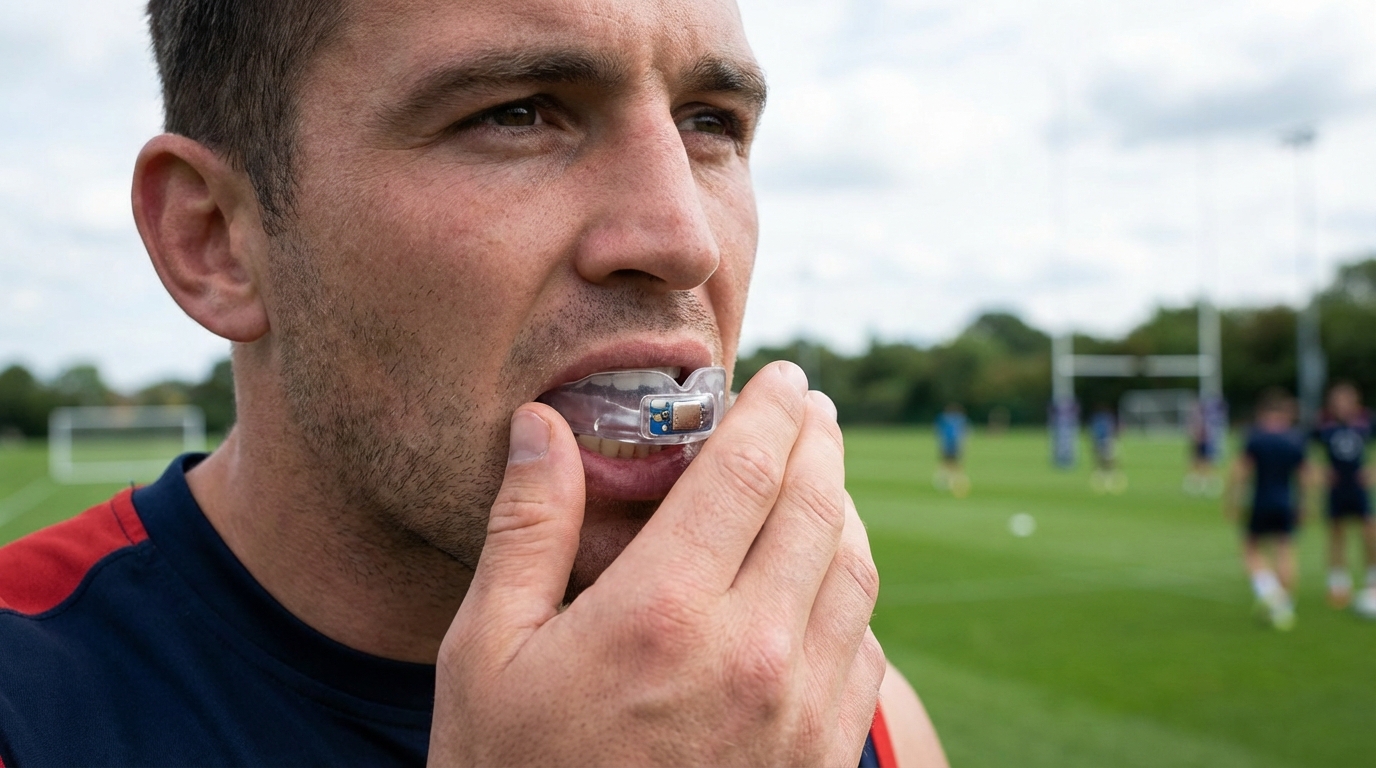
Smart mouthguards contain accelerometers and gyroscopes that measure the forces acting on the head during contact. They track linear acceleration, rotational velocity, and the duration of impact events. This data is transmitted in real time to medical staff on the sideline.
At professional level, smart mouthguards have been mandatory in the Premiership and are increasingly common across the Top 14 and United Rugby Championship. The data they generate is helping medical teams make faster, more informed decisions about whether a player should continue after a head impact.
For community coaches, the technology is becoming more affordable. Several manufacturers now offer consumer-grade smart mouthguards that sync to a phone app and flag high-impact events. You don't need a full medical team to benefit from the data.
Concussion Protocols for 2026
World Rugby's updated concussion protocols for the 2025-26 season have tightened the requirements at every level. The key changes coaches must know:
- Immediate and permanent removal: Any player displaying clear signs of concussion must be immediately and permanently removed from the match. No exceptions.
- Extended stand-down periods: The minimum stand-down for a confirmed concussion is now 12 days for adults and 23 days for under-18s. Graduated return-to-play protocols must be followed.
- Head contact process: Any head contact event triggers a structured assessment, even if the player appears unaffected. The "if in doubt, sit them out" principle is now a mandatory rule, not a guideline.
- Training load monitoring: Clubs are encouraged to monitor cumulative head impact exposure across training and matches, not just match-day incidents.
How to Teach Safe Tackling Technique
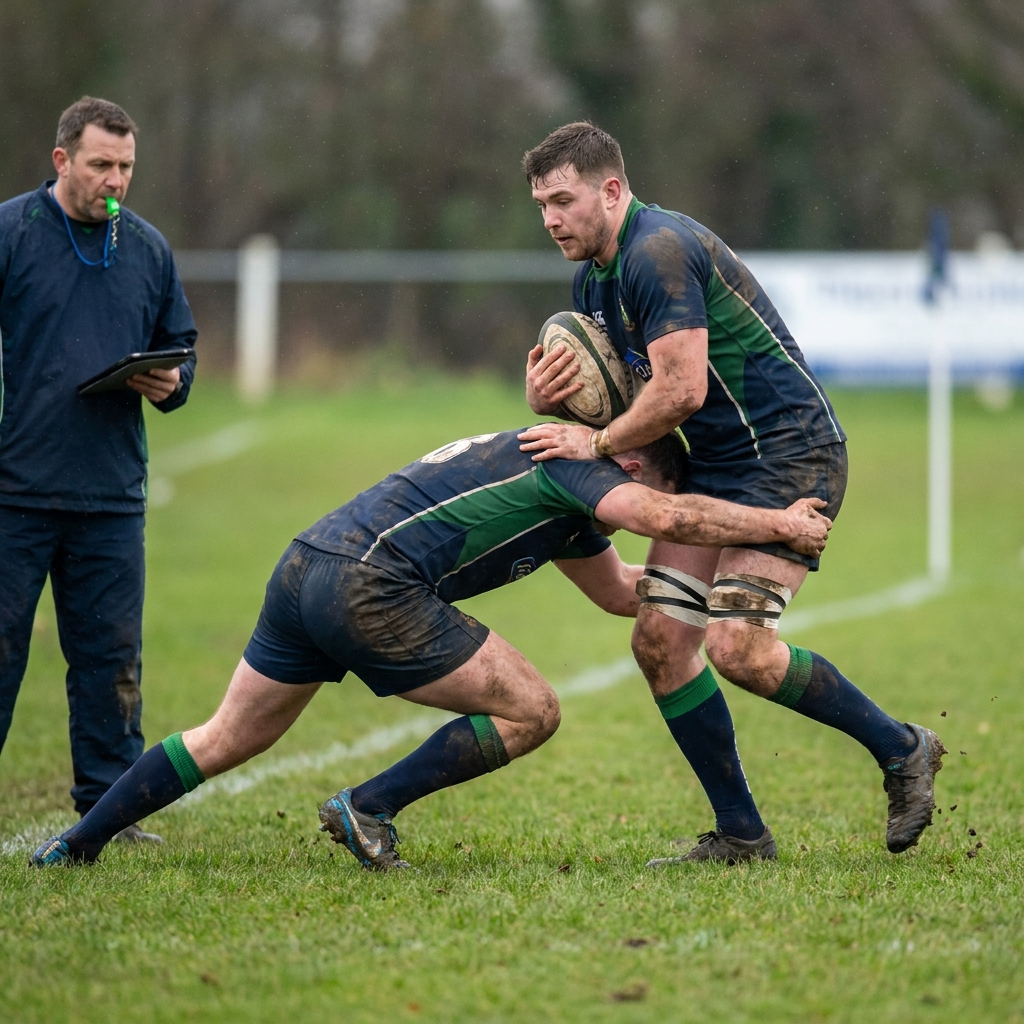
The single biggest thing a coach can do for player welfare is teach proper tackling technique. The majority of concussions in rugby occur during the tackle - and the tackler is more at risk than the ball carrier.
Key technical points for safe tackling:
- Head position: Head behind or to the side of the ball carrier, never in front. This is the most critical safety point in any tackle.
- Shoulder contact: Lead with the shoulder, not the head. The contact point should be the meaty part of the shoulder driving into the ball carrier's midsection.
- Ring of steel: Arms wrap tightly around the ball carrier. A tackle without arm wrap is both dangerous and increasingly penalised.
- Low entry point: Tackle at hip height or below. High tackles are the primary cause of head-to-head contact.
These aren't advanced techniques. They're fundamentals. But they need to be coached, reinforced, and corrected at every session. Don't assume players know how to tackle safely because they've been playing for years.
Progressive Contact Training
One of the most important shifts in modern coaching is the move towards progressive contact. Instead of throwing players into full-contact sessions from week one, smart coaches build intensity gradually across a training block.
A progressive contact framework:
- Phase 1 - No contact: Footwork, body position, and decision-making drills using touch or tag.
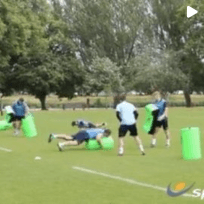
- Phase 2 - Controlled contact: Tackle shields and pads. Full technique at reduced intensity. Focus on body shape and head position.
- Phase 3 - Semi-live: One-on-one contact at controlled speed. Ball carrier runs at 70% pace. Tackler focuses on safe technique.
- Phase 4 - Live: Full-speed contact in game-realistic scenarios. Only after technique is consistently safe at lower speeds.
This framework applies to pre-season preparation, weekly training plans, and the rehabilitation of players returning from injury. Never skip phases. The body and brain need time to prepare for contact.
Managing Return-to-Play
When a player suffers a concussion, the return-to-play process must be followed to the letter. This isn't negotiable, regardless of how important the player is or how well they say they feel.
The graduated return-to-play protocol:
- Stage 1: Complete rest until symptom-free for 24 hours
- Stage 2: Light aerobic exercise (walking, swimming, stationary cycling)
- Stage 3: Sport-specific exercise (running drills, no contact)
- Stage 4: Non-contact training (full training, no contact elements)
- Stage 5: Full-contact practice (after medical clearance)
- Stage 6: Return to match play
Each stage must last a minimum of 24 hours for adults and 48 hours for under-18s. If symptoms return at any stage, the player drops back to the previous stage and restarts. Document everything.

Coaching Responsibilities
As a coach, you are the first line of defence for player welfare. The law is clear: coaches have a duty of care to their players. This means:
- Teaching safe technique as a non-negotiable foundation
- Monitoring contact load across training weeks
- Removing any player with suspected concussion immediately
- Following return-to-play protocols without shortcuts
- Creating a culture where players feel comfortable reporting symptoms
- Keeping records of all head injury incidents and actions taken
The last point matters more than you might think. Players - particularly young men - will hide symptoms to stay on the pitch. Your job is to create an environment where reporting a headache or feeling dizzy is seen as responsible, not weak.
Technology Helps but Doesn't Replace Good Coaching
Smart mouthguards, impact sensors, and sideline assessment tools are valuable. They give you data you didn't have before. But they don't replace the fundamentals of good coaching.
A smart mouthguard can tell you that a player received a significant head impact. It can't teach that player to tackle with their head in the right position. A sideline app can flag a high-force collision. It can't build a training culture where contact load is managed intelligently across the season.
Use the technology. Embrace it. But never lose sight of the fact that the most powerful welfare tool in rugby is a coach who teaches safe technique, manages training load, and puts player wellbeing first.
Frequently Asked Questions
Are smart mouthguards affordable for community clubs?
Consumer-grade smart mouthguards now start from around 50-80 pounds. They're not as sophisticated as the professional systems, but they'll flag significant impacts and give you data to work with. Some unions offer subsidised access for youth teams.
What should I do if a player refuses to come off after a head impact?
Remove them anyway. You have the authority and the duty to do so. Explain that this is non-negotiable and that you're protecting their long-term health. Have a conversation with the player privately afterwards, not in the heat of the moment.
How much full-contact training should we do each week?
Current best practice suggests limiting full-contact training to one session per week during the season, with that session lasting no more than 15-20 minutes of live contact. Use controlled and semi-live contact for the rest of your technical work.
Can I reduce concussion risk through training alone?
You can significantly reduce risk by coaching proper technique, managing contact load, and building neck strength. Research shows that stronger neck muscles reduce head acceleration during impacts. Include neck strengthening in your conditioning programme.
 sportplan_rugby