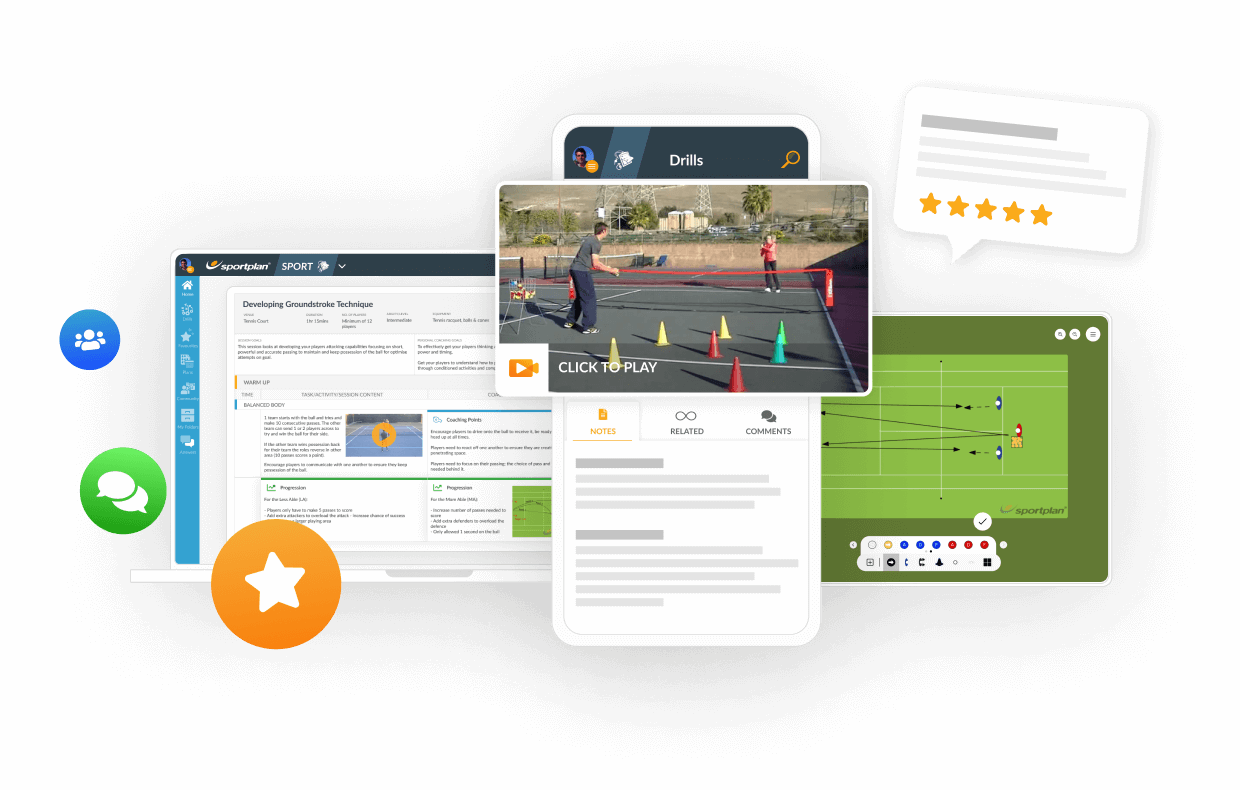
Cones (stations) are set on the player's side, who starts from the first cone. The coach feeds the ball and the player has to hit backhand inside the court. If the shot is good, the player is moving to the next cone (station). If not, the player has to try again until it is done.
Nowadays kids love games because of phones and tablets available for them every minute. That is why if we want them to participate in tennis we have to make this sport as fun as activities that they pick during own free time. Creating games or challenges is a good first step to evolve simple hitting sport into a quest that they want to be part of.
In this drill this player works on different backhand strokes. We have to remember that different spots on the court require technical modifications in strokes to maintain high level of consistency. Each backhand in tennis is a little bit different so giving kids various stations to hit from will help them to develop backhand that they will successfully use in the future. Additionally during this exercise your players are working on character development because if they can't pass one station they have to be patient and motivated to get through it.
Wimbledon has just crowned another champion, and if you watched closely you saw the same thing every year: the best returners quietly won the tournament. Here is how to coach a return that pressures the server rather than just surviving it.
Wimbledon arrives at the end of June and the grass court swing transforms how the game is played. Low bounces, slippery footing, and rewards for forward play demand a different tactical mindset. Here is how to coach it.
With Roland Garros centre stage in May, clay court tennis demands a different toolkit: controlled sliding, longer rallies, and patient point construction. Here is how to coach the surface that humbles power players and rewards craft.