TRANSFORM YOUR TEAM'S SEASON WITH PROFESSIONALLY PLANNED SESSIONS
Use our expert plans or build your own using our library of over 700+ drills, and easy-to-use tools.
JOIN NOWif 13 decides to take a hit who will support him between 10 and 12
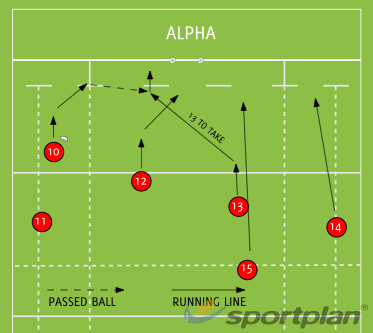

Good tactical question, and the honest answer is it depends on where the defence is light, but as a default look to 12 first. The inside centre is usually shadowing 13 already and sits closest to that channel, so he can arrive quickest as the first support runner, with 10 staying a touch deeper to cover the next pass or a switch back infield. If the defence has shot up hard and left space out the back, 10 drifting wide to support instead can be the better read. Coach it as a picture, not a fixed rule: whoever is closest with the clearest running line fills in, while the other holds width or depth so you don't lose shape if 13 gets held up.

in more ways than one
 sportplan_rugby



Greasy balls and soft pitches turn tidy handling into a lottery. Here is how to coach your players to keep hold of the ball when November conditions bite.

Most line breaks are made by support runners, not ball carriers. Teach the angles, depth and timing that get them there.

The isolated ball carrier is rugby's spookiest turnover. Here is the five-step fix, plus drills that rebuild support lines fast.
Use our expert plans or build your own using our library of over 700+ drills, and easy-to-use tools.
JOIN NOW