Field Hockey: bram

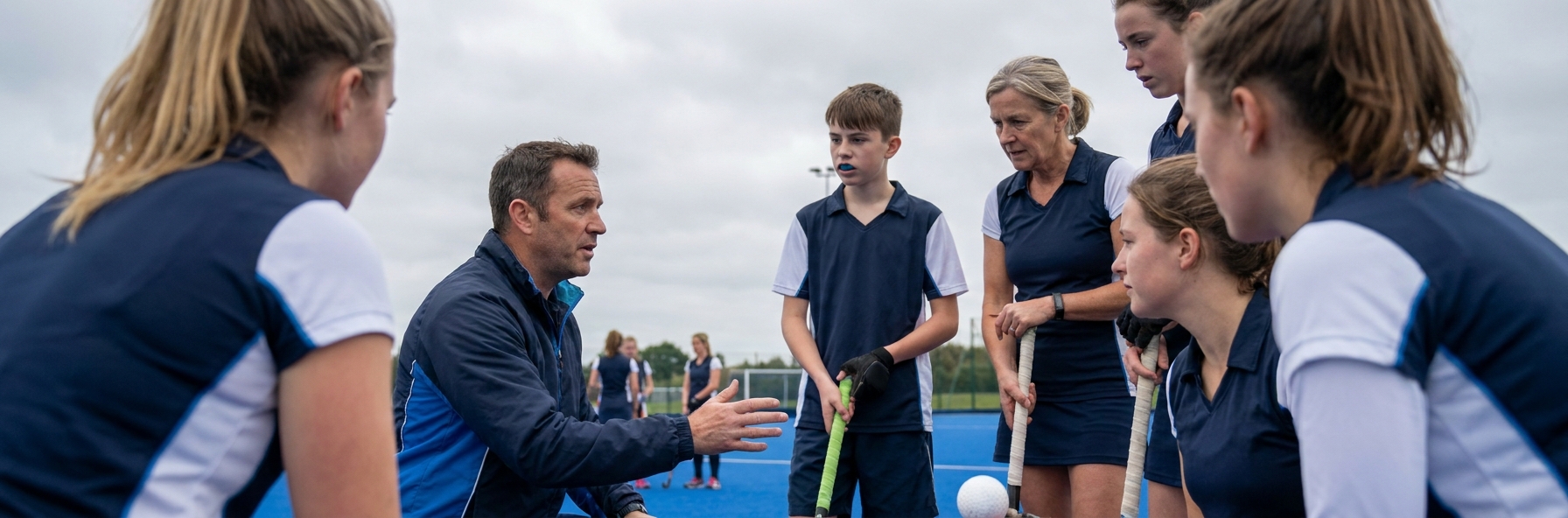
Connection-Based Coaching has emerged as a significant movement in hockey coaching. The core idea is simple but powerful: the relationship between coach and player is the foundation upon which all development is built. Without trust, without genuine connection, coaching effectiveness is limited.

This isn't soft philosophy. Research consistently shows that athletes who feel psychologically safe, who trust their coach, who believe their coach genuinely cares about them, perform better and develop faster.

What is Psychological Safety?

Psychological safety is the belief that you can take risks without being punished or humiliated. In a hockey context, it means players who feel safe to:

  • Try new skills without fear of criticism for failure
  • Ask questions without being made to feel stupid
  • Offer ideas without being dismissed
  • Make mistakes in matches without losing their place
  • Express concerns without negative consequences

When psychological safety exists, players are more creative, more willing to stretch themselves, and more honest about their development needs.

Building Connection

Know Your Players

Do you know what motivates each player? Their life outside hockey? Their hopes and concerns? Connection requires knowledge, and knowledge requires investment in getting to know people.

This doesn't mean becoming best friends. It means showing genuine interest, remembering what players tell you, and demonstrating that you see them as people, not just performers.

Listen More Than You Speak

Many coaches do too much telling. Connection-based coaching emphasises listening. When players speak, give them full attention. Ask follow-up questions. Reflect back what you've heard to show understanding.

Listening builds trust because it demonstrates respect. When players feel heard, they're more receptive to coaching.

Consistency and Reliability

Trust is built through consistent behaviour over time. If you say you'll do something, do it. If you have standards, apply them equally to everyone. Inconsistency destroys trust faster than almost anything else.

Appropriate Vulnerability

Coaches who admit mistakes, acknowledge what they don't know, and share their own development journey build stronger connections than those who project infallibility. Appropriate vulnerability models the openness you want from players.

Connection in Practice

Individual Check-Ins

Brief one-to-one conversations build connection over time. Not always about hockey - sometimes just "How are you?" delivered with genuine interest. These small interactions accumulate into strong relationships.

Personalised Feedback

Generic feedback shows you're not paying attention. Specific, personalised feedback shows you see the individual. "Good work" is less powerful than "I noticed you recovered really quickly after that turnover - that's the response we need."

Celebrating Progress

Connection-based coaches celebrate development, not just outcomes. The player who improves from poor to average has achieved as much as the player who was always excellent. Recognition should reflect effort and progress.

Managing Difficult Conversations

Strong connections make difficult conversations possible. When players trust you, they can hear hard truths. When they don't, the same truths are rejected as unfair criticism. Build the connection first; the honest feedback can follow.

Team-Level Application

Connection isn't just coach-to-player. Teams with strong player-to-player connections perform better. The coach's role includes creating conditions for these connections:

  • Team-building activities that build genuine relationships
  • Training structures that encourage collaboration
  • Addressing behaviours that damage team connection
  • Celebrating collective achievements

Common Barriers

"I don't have time": Connection doesn't require separate time - it's embedded in how you do everything. A two-minute conversation while setting up equipment still counts.

"It's soft": The evidence says otherwise. High-performance environments increasingly recognise that connection underpins performance, not detracts from it.

"Not all players want it": Different players need different levels and types of connection. Read what each individual needs and adjust accordingly.

Key Coaching Points

  • Psychological safety enables risk-taking and growth
  • Know your players as people, not just performers
  • Listen more, tell less
  • Be consistent and reliable
  • Personalise your interactions and feedback
  • Create conditions for player-to-player connection

Drills That Build Team Connection

VIEW ALL SMALL-SIDED GAMES

JOIN SPORTPLAN FOR FREE

  • search our library of 1000+ hockey drills
  • create your own professional coaching plans
  • or access our tried and tested plans
bram DRILLS
View All
Unfortunately there were no results for your search! Please try again
bram ANSWERS
View All

What are the best drills to get players to release?

What are the best drills to get players to release the ball quickly?

Archived User Coach

Indoor Hockey Situations for Russel Garcia- Solutions to tactical situations

2 Indoor Hockey situations%3A 1.)Could Sportsplan have Russel lay out how to defend a free hit/push into your circle from the left,center and right? More importantly show how the team moves/shifts when a pass is made from that area of the court to another in this situation. 2.) How to play against a 1/2 court system defense. What should the team be looking to do to find space and be successful.

Archived User Coach

can i have some steps about how i could analyze a team?

can i have some steps about how i could analyze a team?

Archived User Coach

The new rules - what will UK coaches be focussing on?

The new rules - what will UK coaches be focussing on most? (Living in NZ, we're playing them now!)

sue shelswell Coach, New Zealand

New rules, the attacking 5 yard hit outside the D -?

New rules, the attacking 5 yard hit outside the D - has anyone got any great ideas for set plays?

sue shelswell Coach, New Zealand

Hi Bram, Where do I find passing practises on the site?

Hi Bram, Where do I find passing practises on the site using the bola hockey ball machine? Ta Ian

Ian Cordwell Coach, United Kingdom

My team is very poor in defense, so we change the system?

My team is very poor in defense, so we change the system to 3-2-3-2, but, now i dont have punch in offensive. What can i do?

Archived User Coach

what are the best drills for defending the left channel?

I can find lots of defensive drills, but am not sure which would be best for defending the left channel.

Archived User Coach

FORMATION HELP NEEDED!

FORMATION HELP NEEDED! What formation would be suitable for a mixed gender team aged 16-18!? Most of the players have not played anything other then 442, but i want to attack with 3 forwards. any suggestions?

Archived User Coach

Currently coaching years six to eight. 40 young lads?

Currently coaching years six to eight. 40 young lads - all keen as mustard but with different skill levels and experience.It would seem best to stream. But I am concerned this creates an elite divide...At this age is it enough to power through core skills e.g passing using slaps, pushes and clip hit exercises or should we be - in spite of numbers trying to coach technique one to one... The enthusiasm is great but so many youngsters need a broader brush approach which is concerning me...

Archived User Coach

finishing

I have done numerous exercises on goalscoring but my girls cant seem to finish. Any suggestions?

Archived User Coach

Bram. I have a question on your answer about defending the left channel?

Bram. I have a question on your answer about defending the left channel. Over the years I've heard various different views on how to defend the left channel. You answer suggest forcing the attacker on to the strong side where an inside defender can provide a cover tackle if necessary. Fine. Other rhetoric suggests keeping the attacker wide and restricting the route to goal. For me, your suggestion offers the greatest risk. Can you provide some perspective of these two approaches.

whitlock Coach, England

Warm-up drills to get players thinking?

Can someone suggest a really good warm-up drill or exercise to get players thinking/concentrating/making decisions? I.e. something prior to a match, after having done a physical warm-up, dynamic stretches, any SAQ and technical stuff

Gary Thompson Coach, England

Presses

Would anybody like to give me a diagram of 3/4 press and half court please ?

Simon Lowry Coach, Ireland

How do I teach and improve soft hands skill?

Any tips or drills for improving 'soft hands'?

Gary Thompson Coach, England

How to keep kids from getting ...

Hi all just wondering if there are any coach's that have any good tip for a new coach like me. I am coaching under 6/8yr olds and find they get bored very easy. How do you keep them from getting bored and what fun drills do you use? Cheer James first time coach

James Batt Coach, New Zealand

u10 team selection and playing...

I am coaching u10 BOYS this year for the first time, have only worked with u7-u9's, as I have it there are now 8 players per side. How do I determine which players to play in which positions and what format do I play? Do we have to play with a dedicated goalie or just backs? At this age do I pick the 8 most talented players and slot them in positions or do I pick players according to positions? Hope this makes sense...

Archived User Coach

'16' hit out drill | Sportplan

I'm finding it really hard to find a practise relating to hit outs on a 16 for my over 35's squad. They are still very "grass" based players and I would like help in trying to find a drill that will show them that hitting the ball straight down the middle of the pitch to the opposition isn't the only option? Hope you can help Jax

Jax Pheiffer Coach, England

What is the best drill for tea...

My team have asked for drills to help them at 16s, can anyone help me

Jax Pheiffer Coach, England

My team are constantly allowin...

My team are constantly allowing oppositions to score from penalty corners we do 1st runner 2nd runner amp; 2 players on the post, what can I do.

Leanne Johnston Coach, Ireland

JOIN SPORTPLAN FOR FREE

  • search our library of 1000+ hockey drills
  • create your own professional coaching plans
  • or access our tried and tested plans

Sportplan App

Give it a try - it's better in the app

YOUR SESSION IS STARTING SOON... Join the worlds largest hockey coaching resource for 1000+ drills and pro tools to make coaching easy.
LET'S DO IT