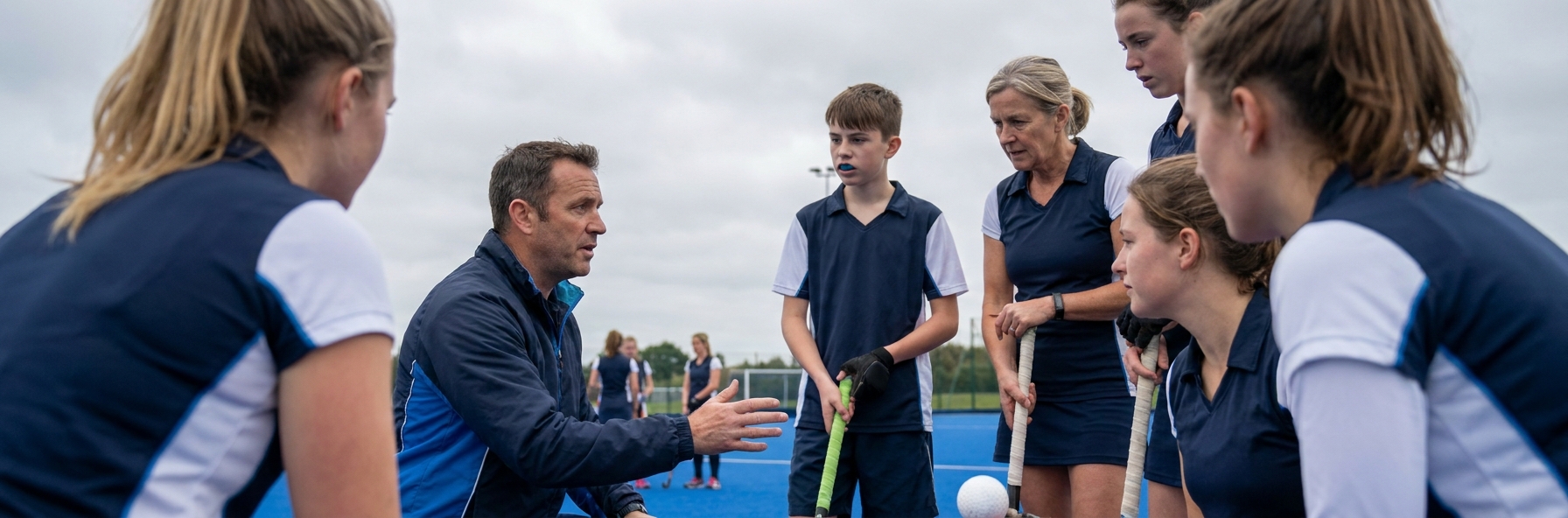
Field Hockey: carrying the ball

England Hockey's "25 in 2025" initiative has been touring the country, bringing two-hour on-pitch workshops to 25 locations. The focus: practical practice ideas that coaches can take straight back to their clubs. Here's a summary of the key concepts being shared.

The Philosophy

The workshops are designed for everyone involved in delivering hockey, from experienced coaches to volunteers just starting out. The emphasis is on fun, engaging sessions that keep players coming back - because player retention depends on the quality of the experience we create.

Each workshop covers arrival activities, carrying and passing progressions, and game-based learning. Participants leave with a bank of ideas they can implement immediately.

Arrival Activities That Work

The first few minutes of any session set the tone. Arrival activities should be:

Self-managing: Players can start without detailed instruction. This lets the coach focus on organisation while early arrivals get active.

Engaging: Not just standing in lines. Movement, decision-making, maybe a competitive element.

Scalable: Works with 2 players or 20. As more arrive, they join seamlessly.

Examples include: grid-based possession games where players can join any team, skill stations with clear visual instructions, and small-sided games that expand as numbers grow.

Carrying and Moving with Purpose

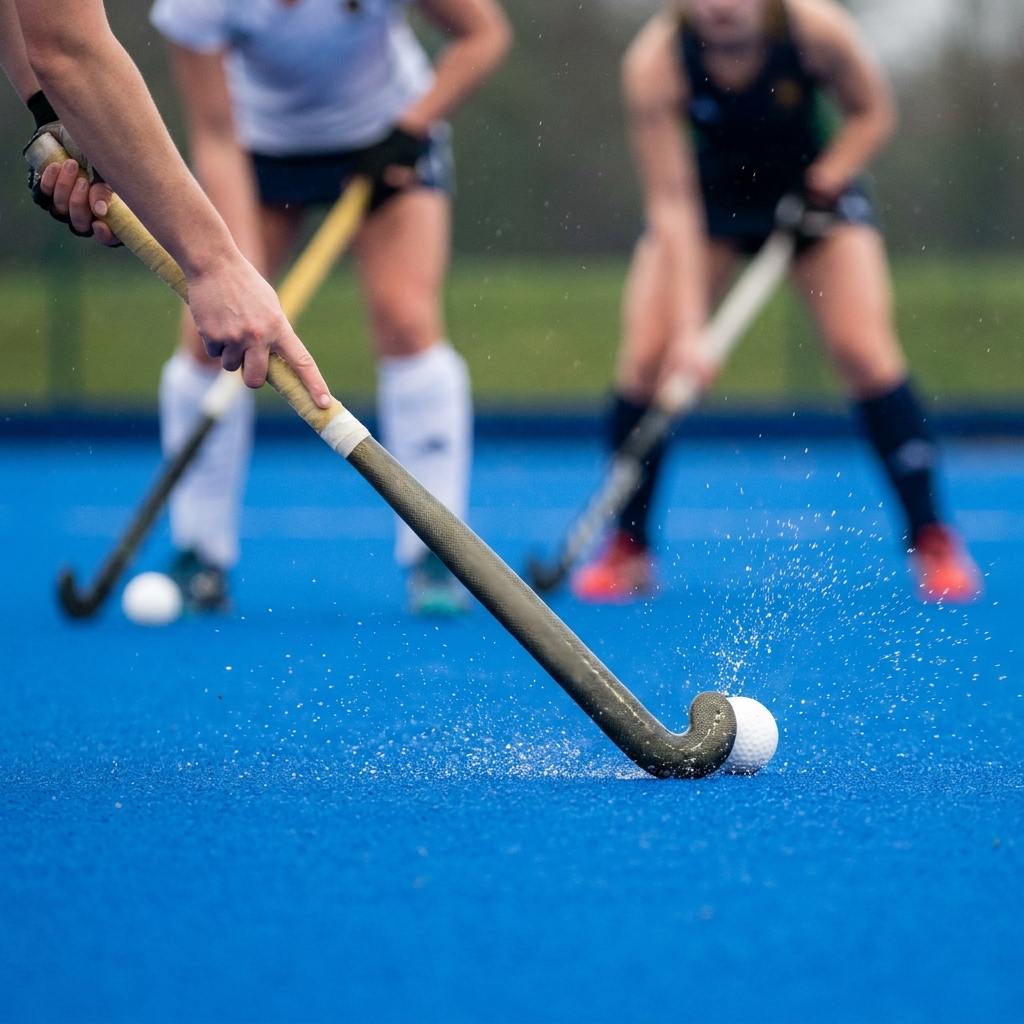
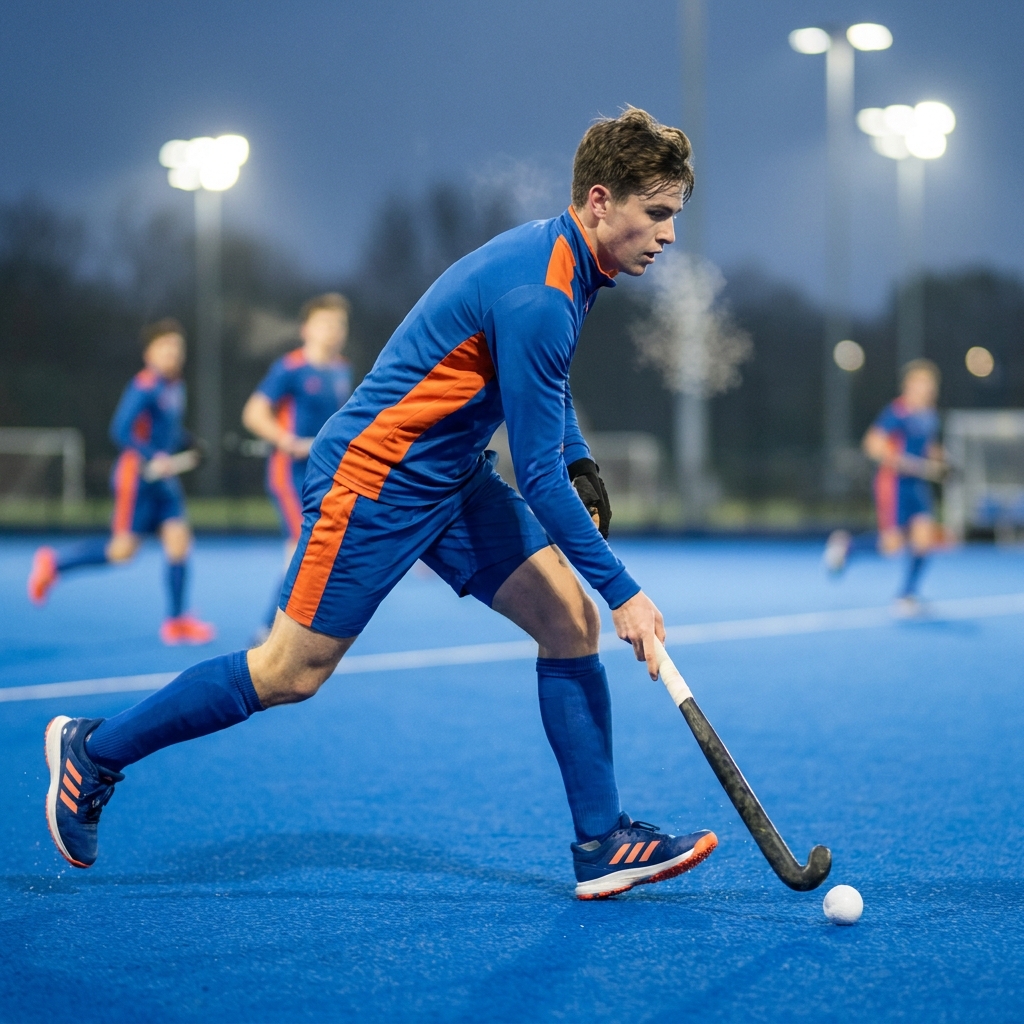
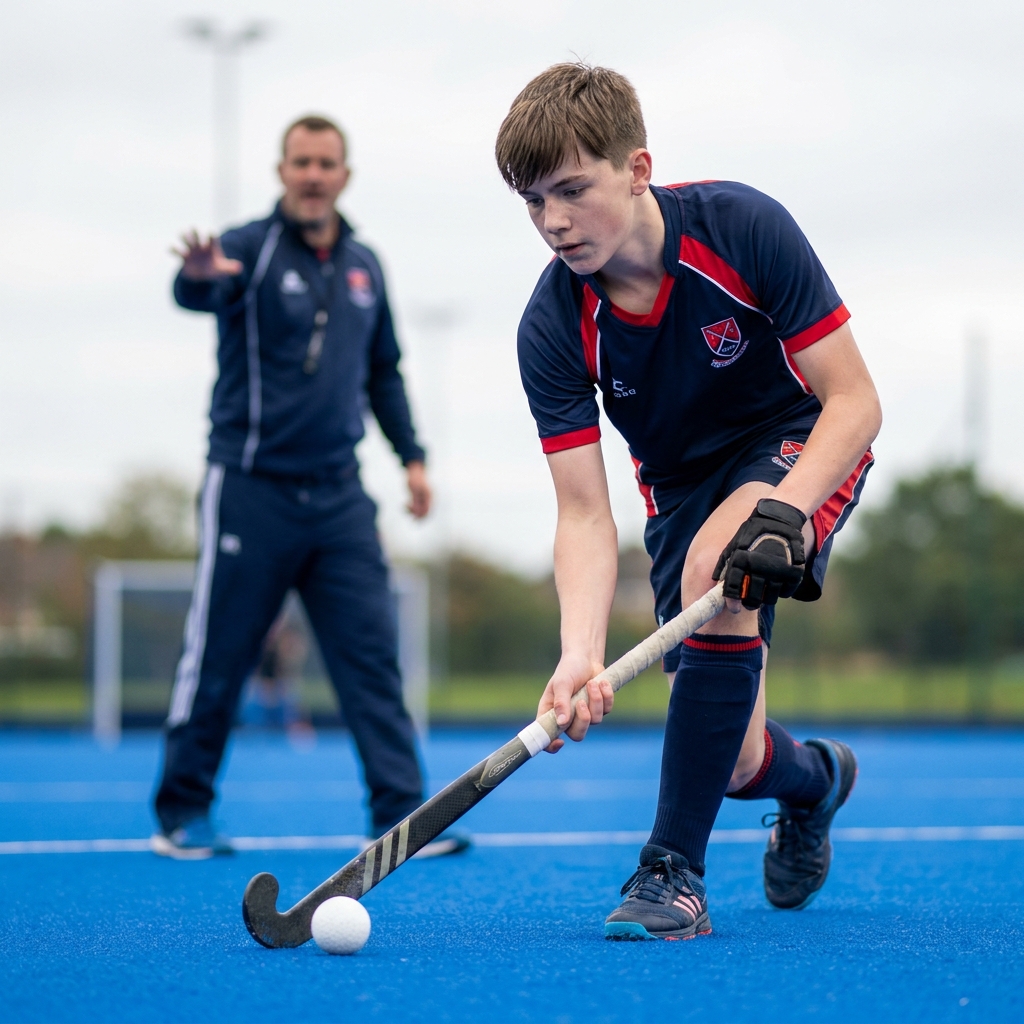
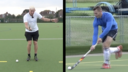
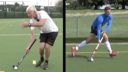
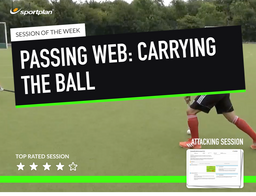
A significant portion of the workshops focuses on ball carrying. The key insight: carrying isn't just about technique, it's about purpose. Why are you carrying? Where are you taking the ball? What's your next action?

Practices progress from technique-focused (head up, ball position, change of pace) to decision-focused (when to carry vs pass, reading space, timing runs with teammates).

The workshops emphasise "game-realistic" carrying - not just running through cones, but carrying with pressure, carrying to eliminate, carrying to create passing angles.

Passing as Communication

The workshops reframe passing as communication between players. A good pass says "here's where I want you to receive." A great pass also says "here's what I want you to do next."

Practices focus on:

  • Weight of pass - firm enough to arrive quickly, soft enough to control
  • Timing - not too early (intercepted), not too late (receiver can't use it)
  • Receiver's next action - passing to the correct foot/side for what follows

Games-Based Learning

Perhaps the biggest takeaway from the workshops is the shift toward games-based learning. Instead of isolated drills, players learn through modified games that naturally develop the required skills.

The coach's role becomes designing games that create the learning outcomes, then facilitating rather than instructing. Questions replace commands: "What did you notice there?" "Why did that work?" "What could you try differently?"

This approach develops players who can problem-solve, adapt, and transfer learning to match situations.

Making Sessions Engaging

The workshops share specific techniques for keeping energy high:

Quick transitions: Minimise time between activities. Have the next game ready before the current one finishes.

Appropriate challenge: Too easy is boring, too hard is frustrating. Find the "just right" level for your group.

Variety within structure: Keep the same game framework but change small elements - scoring methods, playing areas, team compositions.

Player voice: Give players choices. "Do you want to play again or try something new?" This builds ownership.

Video Support

All workshop practices are available on YouTube, allowing coaches to revisit and refine after attending. This resource bank is growing as the roadshow continues.

Who Should Attend?

The workshops are pitched at all levels. Experienced coaches report learning new ideas and getting reinforcement of good practice. New coaches gain confidence and practical tools. The shared experience of learning together builds community within the sport.

If a workshop is coming to your area, it's worth attending. The time investment is small; the return in practical ideas is significant.

Key Coaching Points

  • Arrival activities set the tone - make them engaging
  • Carrying with purpose, not just technique
  • Passing is communication between players
  • Games-based learning develops problem-solvers
  • Keep sessions varied and appropriately challenging

Drills to Build Your Practice Bank

VIEW ALL WARM-UP DRILLS

JOIN SPORTPLAN FOR FREE

  • search our library of 1000+ hockey drills
  • create your own professional coaching plans
  • or access our tried and tested plans
carrying the ball DRILLS
View All
Unfortunately there were no results for your search! Please try again
carrying the ball ANSWERS
View All

Field Hockey - Half field press. - Help
Can anyone provide me ideas on how to combat a half field press in hockey?

Archived User Coach

HELP! When i have the ball, am moving quicly and a defender comes, i cant' get past them, and i can't recover fast enough

Whenever i have the ball, and i'm moving up the field, everytime a defender comes and tries to take the ball, they always succed. This is a big problem of mine, i almost always lose the ball to a defender when i'm moving, and i usually can't recover (not that i literallyy CAN'T, the defender is just to far past me to be able for me to get the ball back)and get back the ball, and i feel really dumb because i'm a very talented player, but i'm alwayse afraid to take the ball mainly just because when i move fast and a defender comes, i try to lift the ball and it just doesn't work, and i normally can't pull the ball far enough either cause the grass is thik. PLEASSEEE help me adn give me some advice on recovering and better techniques on how to get by a defender while moving very quickly.

Archived User Coach

pointing at pressure - a clear definition?

Hi all Could someone help me with a clear definition of what "pointing at pressure" is? Thanks, Gary

Gary Thompson Coach, England

How to get ball carriers to pass?

I have a team of 14 year old girls who mostly want to run with the ball rather than pass. A lot of them are strong ball carriers and so often achieve success this way but am concerned that this strategy will not work once the other teams get bigger and stronger, and that it is too one dimensional. What are the best ways to change this approach?

Archived User Coach

Defending the ball carrier

With the new own goal rule it's getting very critical to defend the player who is carrying the ball.The team that I coach had a major problem on this area last season.I've already told them what they sould do in order to make it difficult for the ball carrier to scan for a pass or hit the ball inside our defending circle,or at least make him to drible instead of making a dangerous pass.But,they are not used to doing it and we have conceived a lot of goals that way.We have the same problem at defending a free hit inside our 25 yards,when the attacker dribles with the ball for the neccessary 5 meters and then smashes it into our circle.I am trying to think of a way or an excersise that will make them do it,but I haven't found one.Any ideas for both ways could be very helpful.

Archived User Coach

Level 2 Practical Assessment - Help needed!

Hi all,I've got my level 2 assessment coming up on Sunday and I just wanted to quickly check whether there's a 'recommended' structure to the session plan.Btw, this is a level 2 practical assessment and is with juniors (U14s).One coach has suggested a 3 part approach:1) techniques and skills required2) unopposed 3) opposedThe theme I'm choosing, which is a bit of a generic one, is defending in a channel (as I'm a defender and it's pretty straight forward).I'm not really looking for info on what exactly to include (i.e. theme specific) but rather general structure or whether E.H. have an approved structure to sessions?My session's on Sunday, so a quick reply would be awesome.Thanks,Gary

Gary Thompson Coach, England

drills for backpassing

Have a team of older group of ladies who need to learn to pass the ball back, any good drills for this?

trudy adamson Coach, New Zealand

How to coach school team with novices and experienced players?

Hi,I perhaps naively, expected to have most of our team from last year carry over and only have a few new comers to integrate and get up to speed with the rest. However meeting the team at our first practice last night i find I have five players still at school from last year and the rest all new comers, most of whom had not held a hockey stick at all till practice.This being only my second season coaching (year 9 to year 13 boys) has left me feeling a little blindsided, and feeling quite unsure how to prepare practices that target both groups of boys. Do i lump them both groups together, keep them separate? What drills/exercises to best bring the new comers up to speed.I don't want to neglect either group, keep practice worthwhile for the experienced boys, but also bringing the new comers up to a level were they can mix in with the others and learn organically from them while practicing as a team. David
David Smith Coach, New Zealand

Receiving the ball forward facing

Anybody any ideas on a conditioned game to encourage receiving the ball in a forward facing position?

Mark Stuart-Thompson Coach, England

I'm a new Varsity head coach and don't know what I'm doing

Hi all- I am 37 years old. I played field hockey for 3 years only (in high school). As you can imagine, I'm not very good/experienced. I was a competitive soccer player which made me good enough athletically to play field hockey but anyway, the point is: I never played field hockey at a high level.I now find myself in a head coaching position. (Long story-I did coach some field hockey some years ago and had a blast but it was a while back). Anyway, I have three assistant coaches who aren't much more experienced than I am. Our high school program is VERY weak and so nobody really steps up to coach there.Basically, my question is: what do I do? I have some girls who have played but not much. Then I have girls who literally don't know how to hold their stick and are quite I athletic. We barely have enough girls to field a team. As for drills, I'm trying to use this site but if you were in my position, what specifically would you be doing with these girls so they don't lose 7-0 every game? Right now, I'm focusing on body control and comfort with the ball- (we are playing possession and they are so uncomfortable they just hit the ball away because they don't have the skills to hold). Any help you can give is greatly appreciated!Brooke Asked using Sportplan Mobile App

Archived User Coach

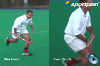
How do i get the right timing for a Jab

How do I get the right timing for a jab im trying to step up my defensive skills and i just cant get the right timing and technique for it Asked using Sportplan Mobile App

Archived User Coach

Rolling player substitution plan

Need help with planning a rolling subs with 11 players and 5 subs.Keeper,4 backs, 4 midfied, 2 strikers.Any ideas please

Barry Prestney Coach, New Zealand

diagonally passing in field hockey

I want video regarding diagonally passing in field hockey

Sukhmanpreet Coach, United States of America

how do we defend counter

how do we defend counter

Lânky Šmove Coach, United Kingdom

How to coach school team with ...

Hi,I perhaps naively, expected to have most of our team from last year carry over and only have a few new comers to integrate and get up to speed with the rest. However meeting the team at our first practice last night i find I have five players still at school from last year and the rest all new comers, most of whom had not held a hockey stick at all till practice.This being only my second season coaching (year 9 to year 13 boys) has left me feeling a little blindsided, and feeling quite unsure how to prepare practices that target both groups of boys. Do i lump them both groups together, keep them separate? What drills/exercises to best bring the new comers up to speed.I don't want to neglect either group, keep practice worthwhile for the experienced boys, but also bringing the new comers up to a level were they can mix in with the others and learn organically from them while practicing as a team. David

David Smith Coach, New Zealand

How do i get the right timing ...

How do I get the right timing for a jab im trying to step up my defensive skills and i just cant get the right timing and technique for it Asked using Sportplan Mobile App

Archived User Coach

5-yard rule in hockey? | Sport...

could someone comment on the 5 yard rule when entering the scoring area? There always seams to be a lot of wrong information regarding this rule.

Gaby Coach, United States of America

Rolling player substitution pl...

Need help with planning a rolling subs with 11 players and 5 subs.Keeper,4 backs, 4 midfied, 2 strikers.Any ideas please

Barry Prestney Coach, New Zealand

diagonally passing in field ho...

I want video regarding diagonally passing in field hockey

Sukhmanpreet Coach, United States of America

how to tackle | Sportplan

tackle how to approach the person in control of the ball

Shirley Perkins Coach, United Kingdom

JOIN SPORTPLAN FOR FREE

  • search our library of 1000+ hockey drills
  • create your own professional coaching plans
  • or access our tried and tested plans

Sportplan App

Give it a try - it's better in the app

YOUR SESSION IS STARTING SOON... Join the worlds largest hockey coaching resource for 1000+ drills and pro tools to make coaching easy.
LET'S DO IT