Field Hockey: junior

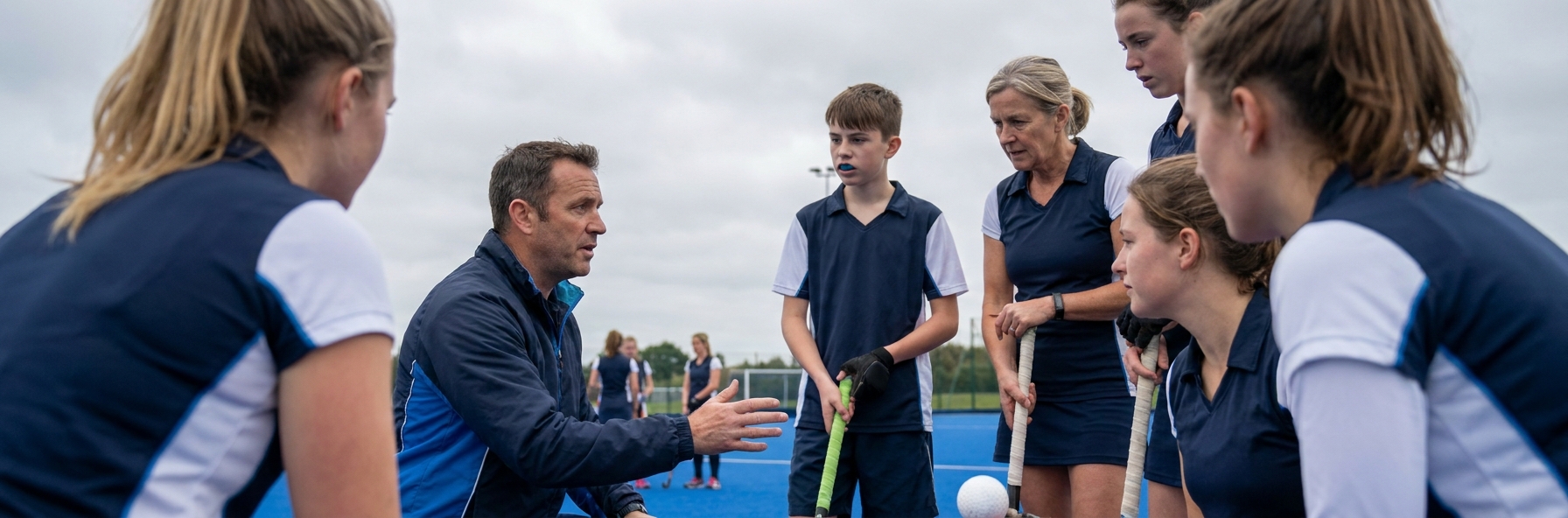
Connection-Based Coaching has emerged as a significant movement in hockey coaching. The core idea is simple but powerful: the relationship between coach and player is the foundation upon which all development is built. Without trust, without genuine connection, coaching effectiveness is limited.
This isn't soft philosophy. Research consistently shows that athletes who feel psychologically safe, who trust their coach, who believe their coach genuinely cares about them, perform better and develop faster.

What is Psychological Safety?

Psychological safety is the belief that you can take risks without being punished or humiliated. In a hockey context, it means players who feel safe to:
  • Try new skills without fear of criticism for failure
  • Ask questions without being made to feel stupid
  • Offer ideas without being dismissed
  • Make mistakes in matches without losing their place
  • Express concerns without negative consequences

When psychological safety exists, players are more creative, more willing to stretch themselves, and more honest about their development needs.

Building Connection

Know Your Players

Do you know what motivates each player? Their life outside hockey? Their hopes and concerns? Connection requires knowledge, and knowledge requires investment in getting to know people.

This doesn't mean becoming best friends. It means showing genuine interest, remembering what players tell you, and demonstrating that you see them as people, not just performers.

Listen More Than You Speak

Many coaches do too much telling. Connection-based coaching emphasises listening. When players speak, give them full attention. Ask follow-up questions. Reflect back what you've heard to show understanding.

Listening builds trust because it demonstrates respect. When players feel heard, they're more receptive to coaching.

Consistency and Reliability

Trust is built through consistent behaviour over time. If you say you'll do something, do it. If you have standards, apply them equally to everyone. Inconsistency destroys trust faster than almost anything else.

Appropriate Vulnerability

Coaches who admit mistakes, acknowledge what they don't know, and share their own development journey build stronger connections than those who project infallibility. Appropriate vulnerability models the openness you want from players.

Connection in Practice

Individual Check-Ins

Brief one-to-one conversations build connection over time. Not always about hockey - sometimes just "How are you?" delivered with genuine interest. These small interactions accumulate into strong relationships.
Personalised Feedback

Generic feedback shows you're not paying attention. Specific, personalised feedback shows you see the individual. "Good work" is less powerful than "I noticed you recovered really quickly after that turnover - that's the response we need."

Celebrating Progress

Connection-based coaches celebrate development, not just outcomes. The player who improves from poor to average has achieved as much as the player who was always excellent. Recognition should reflect effort and progress.

Managing Difficult Conversations

Strong connections make difficult conversations possible. When players trust you, they can hear hard truths. When they don't, the same truths are rejected as unfair criticism. Build the connection first; the honest feedback can follow.

Team-Level Application

Connection isn't just coach-to-player. Teams with strong player-to-player connections perform better. The coach's role includes creating conditions for these connections:

  • Team-building activities that build genuine relationships
  • Training structures that encourage collaboration
  • Addressing behaviours that damage team connection
  • Celebrating collective achievements

Common Barriers

"I don't have time": Connection doesn't require separate time - it's embedded in how you do everything. A two-minute conversation while setting up equipment still counts.

"It's soft": The evidence says otherwise. High-performance environments increasingly recognise that connection underpins performance, not detracts from it.

"Not all players want it": Different players need different levels and types of connection. Read what each individual needs and adjust accordingly.

Key Coaching Points

  • Psychological safety enables risk-taking and growth
  • Know your players as people, not just performers
  • Listen more, tell less
  • Be consistent and reliable
  • Personalise your interactions and feedback
  • Create conditions for player-to-player connection

Drills That Build Team Connection

VIEW ALL SMALL-SIDED GAMES

JOIN SPORTPLAN FOR FREE

  • search our library of 1000+ hockey drills
  • create your own professional coaching plans
  • or access our tried and tested plans
junior DRILLS
View All
Unfortunately there were no results for your search! Please try again
junior DRILL CATEGORIES
View All
junior SESSIONS
View All
junior ANSWERS
View All

I have been intrigued by some anecdotes of a coach?

I have been intrigued by some anecdotes of a coach using tennis balls in a session “that did not pick up a stick for an hour”. It developed hand brain and eye co-ordination and went on to give the feel of the movement of shoulders and hips for the Indian dribble, or at least moving a ball in a figure of 8…anyone heard of this or am I the victim of a wind up? It sounded great and a novel way to ring some changes in a junior session.

Archived User Coach

self pass rule confusion

Hi everyone, I have been hunting for a more detailed explanation on the self pass rule for hockey. My under standing of it is that a self pass must involve the ball moving five meters before it is hit by the player or it must be hit from a dead positon (not moving) I have umpired many games where the players 'tap and hit' the ball, often with another player rushing in to tackle just as the 'tap' is played. This seems dangerous but im not sure if the tackler is playing dangerously or if the 'tap and hit' player is dangerous? I have read the rule book but this rule is not explicit enough. Any interpretaions welcome. Thanks

Archived User Coach

Goalkeeper sessions for juniors needed!

Any sessions for junior keepers would be appreciated. I started keeping at 40 and though I know the things I hated in training ... ie let us all come and kill the keeper, I need help putting together a session or two specifically geared at our under 13 keepers, and an extremely talented under 15 one.

Helen Hanley Coach, England

Where can I find the Junior 10 week hockey programme?
In one of your weekly email, Sportplan advertised a Junior 10 week Hockey Session Plan, is this still available and if so,  where can I download this from please?? I need the plan to suit various skill levels of players as we've got a mixed ability of players to coach in the session.

Greg Cunningham Coach, England

What are the best conditioning skills to practice with a junior high team?

What are the best conditioning skills to practice with a junior high team? (12-14 yrs) We are limited the first few days to indoor practices in a small space. They are not in shape, so we are starting from scratch. Our first game is in 3 1/2 weeks.

Archived User Coach

Best method to teach junior aside players positions and responsibilities?

What are the best methods to teach Junior 8 aside hockey players their positional roles and responsibilities?

Archived User Coach

What hockey drill can I use with Year 3 class?

What drill can I do for year 3 for 15 minutes

Archived User Coach

Looking for a beginner's session plan to use?

Am about to start coaching a new group of beginners and would like a progressive plan to work from, have you got something I can use?

Bill Tasker Coach, England

Typical session for Juniors

Why wont this session open for me when i log in its not there ??

Onny Gajadhar Coach, New Zealand

Short Corner Defence

Preferred short corner defence running system? 3-1, 2-2. Premier League level - where drag flicks are involved.Goalie - logging or staying up?

Emily Wardeiner Coach, Australia

7 a side competition

Looking into creating a 7 a side junior competition for a Junior mixed gender out door season. Any comments

Rodney Johnson Coach, Australia

Indian dribble and running with the ball

how can I make practises such as the indian dribble and running with the ball using the correct grip more entertaining for junior players?

Jerome Carabott Coach, Malta

drills for 10 year olds

hello, I can see there a lots of drills to choose from, however I'm keem to filter these so they are appropriate for junior players. is this possible?

Kim Gorski Coach, Australia

junior keepers closing down angles

I'm looking for drills to give junior goalkeepers confidence to step off the goalline and close down play. ideally fun and ideally helping them become more confident and vocal

Sarah Smith Coach, England

U7 resources

Hi there. I'm looking for fun exciting resources for 7-year olds and below. Any assistance would be greatly appreciated.

Jason Minnaar Coach, Zimbabwe

junior hockey

drills using the push and demo

undefined undefined Coach, United Kingdom

Tactics for 8 a side junior ho...

What is the best way to position teams for 8 a side hockey?

Archived User Coach

Re involving GKs in junior coa...

I really struggle to make practice fun and useful for the GKs. My attention is naturally focussed on the outfield players, meaning most of the time I simply have drills finishing with a shot on goal to keep the GK involved. Pretty boring for them. Any ideas how I can involve them more? Thanks, Charlie

Carol Ridge Coach, England

Typical session for Juniors | ...

Why wont this session open for me when i log in its not there ??

Onny Gajadhar Coach, New Zealand

Where can I find the Junior 10...

In one of your weekly email, Sportplan advertised a Junior 10 week Hockey Session Plan, is this still available and if so,  where can I download this from please?? I need the plan to suit various skill levels of players as we've got a mixed ability of players to coach in the session.

Greg Cunningham Coach, England

JOIN SPORTPLAN FOR FREE

  • search our library of 1000+ hockey drills
  • create your own professional coaching plans
  • or access our tried and tested plans

Sportplan App

Give it a try - it's better in the app

YOUR SESSION IS STARTING SOON... Join the worlds largest hockey coaching resource for 1000+ drills and pro tools to make coaching easy.
LET'S DO IT