Field Hockey: long

September 2026

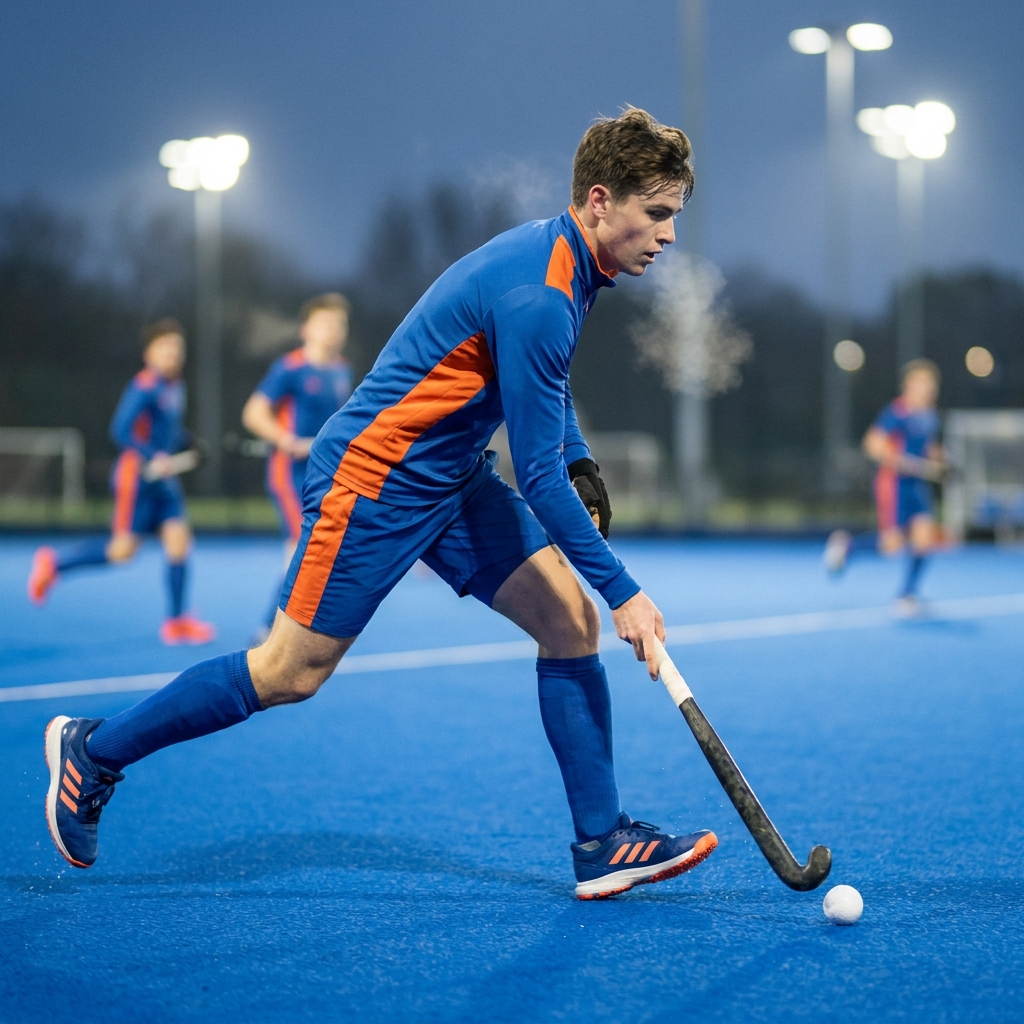
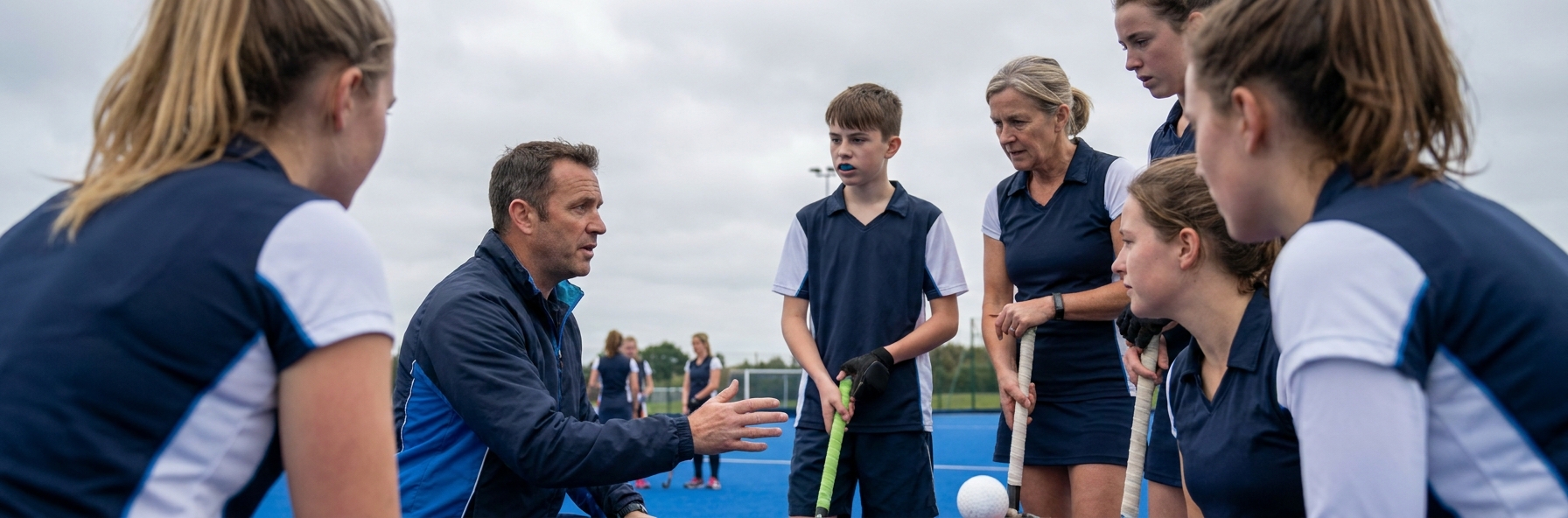
September is when club hockey changes shape. Juniors step up into the lower adult teams, returning players dust off their sticks and new members turn up having not played since school. For a captain or coach, those first few Saturdays are some of the most important of the whole season.

Get it right and you gain players who will be in your first team in three years' time. Get it wrong, and a nervous fifteen-year-old who spent the game chasing shadows quietly stops coming. The difference is rarely about talent. It is about how well the team welcomes them.

What New Players Are Actually Worried About

Most juniors are not worried about skill. They are worried about the pace, the physicality, getting shouted at and letting the team down. New adult players often share the same fears, plus the awkwardness of not knowing anyone.

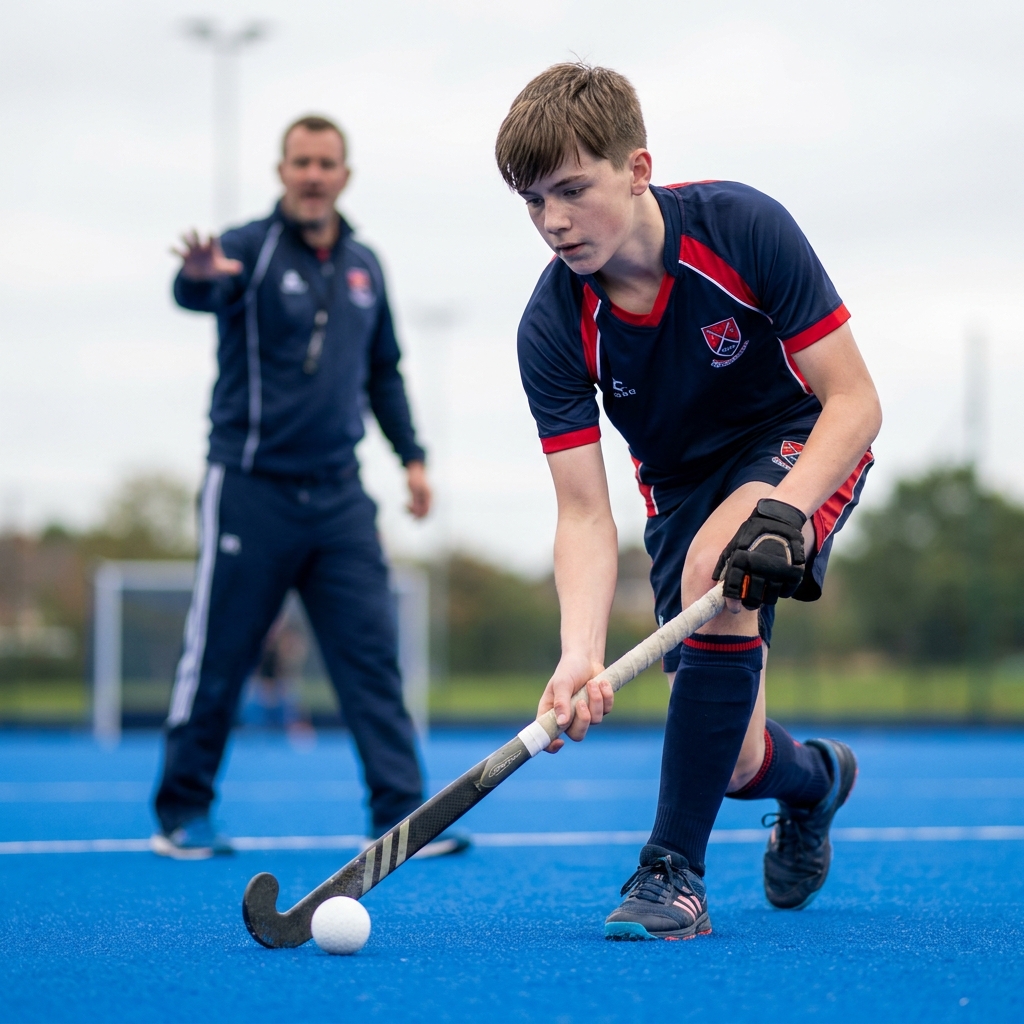
Safety comes first. Make sure every junior has a mouthguard and shin pads, and that your club's welfare officer and captains know the current England Hockey regulations and club policy on juniors playing adult matches. Once the basics are covered, confidence becomes the thing you are really coaching.

A Five-Step Framework for the First Month

Step One: Give them one clear job. "Play left half" is not a job. "Stay goal-side of their right forward and give the ball to our centre-back when you win it" is. A single, simple responsibility lets a new player contribute without needing to understand the whole system on day one.

Step Two: Pair them with a buddy. Pick an experienced, calm player who plays near them on the pitch. The buddy talks them through restarts, reminds them of their job and is the first voice of encouragement after a mistake.

Step Three: Keep team principles short. Three is plenty: get goal-side when we lose the ball, give an option when we have it, and talk. Adults benefit from this as much as juniors, and it stops mixed-experience teams pulling in different directions.

Step Four: Manage minutes deliberately. Use rolling substitutions to give newcomers short, regular spells rather than one long, exhausting block. Try to bring them on at calmer moments, not in the last five minutes of a tight game while defending a penalty corner.

Step Five: Talk to parents early. A quick message before the first match explaining who the captain is, what position their child might play and how substitutions work removes a lot of anxiety on the sideline. Keep feedback to parents positive and specific.

How to Train It

If your club trains mixed groups midweek, use small-sided games where juniors and adults play together in the same units they will play in on Saturday. A newcomer who has practised tracking back alongside their buddy on Tuesday will do it far more naturally at the weekend.

Build in short positional sessions too. Walk through where a defender or midfielder stands when the ball is in different areas, then play it at half pace before adding full pressure. Understanding where to be is the fastest route to confidence.

Key Coaching Points

  • Check kit, mouthguards and club policy before anything else; safety is not negotiable.
  • Give each new player one specific, achievable job rather than a position name.
  • Buddy them with a calm, experienced teammate who plays nearby on the pitch.
  • Keep team principles to three simple, repeatable ideas everyone can follow.
  • Use short, regular substitution spells and choose calmer moments to bring newcomers on.
  • Praise effort and good decisions loudly, and keep corrections quiet and private.

Recommended Drills

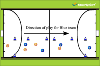
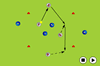
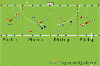
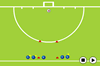
VIEW ALL ROLES AND RESPONSIBILITIES DRILLS

Frequently Asked Questions

Where should I play a junior in their first adult match?

Somewhere with clear reference points and support around them. A wide midfield or wing role with a buddy close by often works well, as the job is easy to explain. Avoid putting a nervous newcomer at centre-back, where one mistake is very visible and very costly.

How do I stop experienced players shouting at newcomers?

Set the standard before the first game. Tell the team that instructions are welcome but criticism is not, and that the captain handles any corrections. If one player keeps doing it, have a quiet word afterwards. The culture of a lower team is set by its senior players.

Should juniors get the same minutes as adults?

Not necessarily the same, but they should get meaningful time every week. Short, regular spells are better than a full game one week and ten minutes the next. Consistency helps them settle, and it shows them they are a real part of the team.

long DRILLS
View All
Unfortunately there were no results for your search! Please try again
long SESSIONS
View All
long ANSWERS
View All

Do you have a good drill for Long Corners ? Difficult?

Do you have a good drill for Long Corners ? Difficult to coach on a cold night - without people standing around too long...

Grant Hunt Coach, United Kingdom

Anybody got any ideas on how to earn respect from teenage girls when your a first time coach?

Anybody got any ideas on how to get 14-15 year old girls to treat a first time coach as a coach and not just a friend?

Archived User Coach

Tournament prep -building fitness.

I have just returned from coaching my first high school hockey tournament. It was great fun but the girls really felt it by the end of the tournament. I want to offer guidance in the form of a fitness build up to the girls for next season but am not sure what my expectations should be. How fit should you be looking to get if you are preparing to play 7 50min games over 5 days? And what types of fitness should I be suggesting? Sprinting and Intervals along with Swimming are things I feel that could be introduced. Ideally it needs to be accessable (not expensive or require special equipment), self managed (to an extent) and let it fit in with their daily rountine as best possible to give them the best chance to commit (i.e. I feel like suggesting they power walk to school rather than get dropped off will work better than asking them to join a gym to do the pelaton classes) Any ideas? Or things that have worked in the past?
Archived User Coach

1st ever training Session Structure?

I have been given my first team ever!! They are 11 year old girls and I wanted guide/ recommendation on how I should structure my one hour sessions? E.g. how long should I spend on a warm up, drill etc. .Cheers,Freya

Archived User Coach

FIH format change - for better or for worse?

As of 1 September, major FIH events such as the Champions Trophy, Hockey World League Final and Rio 2016 Olympic Games will assume a new format that includes moving to four 15-minute quarters and having 40-second time-outs when a penalty corner is awarded and after a goal is scored. Do you think this a positive or negative for the future of hockey?
Sportplan Team Coach, United Kingdom

Long corners (attacking and defending)

Dear all, what are best practices for playing long corners? Please advice for playing long corners while attacking and defending long corners.

Marco Koudijs Coach, Netherlands

Set plays for attackers (such as long corners etc)?

I have a request for a session involving set plays for attackers Eg long corner, hit outside circle, etc Asked using Sportplan on Mobile

Archived User Coach

5-yard rule in hockey?

could someone comment on the 5 yard rule when entering the scoring area? There always seams to be a lot of wrong information regarding this rule.

Gaby Coach, United States of America

Drills for the new long corner and penalty corner

I would like some drills for long corners and penalty corners and the free hit outside the D.?Thanks so much

Thang Coach, Czech Republic

Is there a new Solo run skill

Is there such a new skill in hockey called a solo where you are allowed to scoop the ball up on your stick and run with the ball on your stick ? Thanks.
DEE FEENEY Coach, Ireland

Body position & defending

Hi - I need suggestions for training on Monday. Varsity high school girls, playing on grass. Last couple of games tackling, especially body position, has been weak. Anyone got any great drills? The girls know it's gonna be a hard session..! Thx

Mike Baker Coach, United States of America

How to coach school team with novices and experienced players?

Hi,I perhaps naively, expected to have most of our team from last year carry over and only have a few new comers to integrate and get up to speed with the rest. However meeting the team at our first practice last night i find I have five players still at school from last year and the rest all new comers, most of whom had not held a hockey stick at all till practice.This being only my second season coaching (year 9 to year 13 boys) has left me feeling a little blindsided, and feeling quite unsure how to prepare practices that target both groups of boys. Do i lump them both groups together, keep them separate? What drills/exercises to best bring the new comers up to speed.I don't want to neglect either group, keep practice worthwhile for the experienced boys, but also bringing the new comers up to a level were they can mix in with the others and learn organically from them while practicing as a team. David
David Smith Coach, New Zealand

I'm a new Varsity head coach and don't know what I'm doing

Hi all- I am 37 years old. I played field hockey for 3 years only (in high school). As you can imagine, I'm not very good/experienced. I was a competitive soccer player which made me good enough athletically to play field hockey but anyway, the point is: I never played field hockey at a high level.I now find myself in a head coaching position. (Long story-I did coach some field hockey some years ago and had a blast but it was a while back). Anyway, I have three assistant coaches who aren't much more experienced than I am. Our high school program is VERY weak and so nobody really steps up to coach there.Basically, my question is: what do I do? I have some girls who have played but not much. Then I have girls who literally don't know how to hold their stick and are quite I athletic. We barely have enough girls to field a team. As for drills, I'm trying to use this site but if you were in my position, what specifically would you be doing with these girls so they don't lose 7-0 every game? Right now, I'm focusing on body control and comfort with the ball- (we are playing possession and they are so uncomfortable they just hit the ball away because they don't have the skills to hold). Any help you can give is greatly appreciated!Brooke Asked using Sportplan Mobile App

Archived User Coach

How to deal with high hanging strikers?

How do I defend two High hanging strikers?

Karin Barnard Coach, South Africa

How teach defense match-up zone roles to U13?

Hi, I have a complicated set of questions which shows my limited understanding of field hockey. I’m coaching a U13 team of 22 girls in the U.S., and each player has at least one year of experience. I’ve played FH only with my kids though I have a basic understanding of the game and its concepts from playing soccer and basketball, and watching games for many years. I've coached kids in other sports, this is my first year coaching field hockey. (If you’re wondering why I’m coaching, no parent in my community with playing experience would step up and my daughter loves the game.)A warming: This is a long set of interrelated questions but your taking the time will be greatly appreciated. Problem: The core problem is responsibility conflicts on defense. My players understand concepts of zone and marking separately. I don’t know enough to explain how they should manage the two responsibilities in field hockey. I “get it” by playing other sports for so long and therefore am able to see how they aren’t “getting it.” For clarity, I have in mind two kinds of offense players: OP1 (has the ball); OP2 (doesn’t). The girls understand that zone means each has a certain area to protect; and marking, how to position themselves in relation to offensive player without the ball (OP2), and when to mark tight vs. loose, and to what it means to follow her mark. Situation 1 (Off-ball play): if one OP2 (OP2-A) enter zone of Left Midfield (LM), for example, how LM apply marking principles (a) when OP2-A enters zone; (b) a second OP2 (OP-B) enters zone; (c) if OP2-A leaves zone, LM should (i) release OP2-A and stay on OP2-B or (ii) follow OP1-A and leave OP2-B. How resolve these zone/marking conflicts for other positions: CM/RM? For RD/LD/CD? (We play a basic 3-3-1-3.)Situation 2 (Support teammate pressuring ball (D1). The girls understand basics of channeling, approaching OP1 to tackle, and how D2 should support D1 (e.g., D2 is cover for D2). We’ve done drills (1v2), but transferring into game situations is difficult. How explain D2 maintain zone responsibilities (a) if supporting D1 means D2 (a) vacates assigned zone and/or (b) or OP2 in zone). Situation 3 (Forwards). They are having trouble with changing defensive responsibilities from within the opposing team’s quarter of the field, the middle quarters, and our quarter of the field nearest to our goal. I’ve thought about just making the defense solely marking but that creates its own chaos and tires out the girls. Without these basic concepts, the result is a joyless scrum: players are bunched up on defense, so if there’s a turnover, the players are too close together for a counterattack. This is unfortunate because the speed of field hockey games should appeal to kids in the U.S. Thanks

Brandon Cowart Coach, United States of America

hockey

long passs

bejamin Coach, England

1st ever training Session Stru...

I have been given my first team ever!! They are 11 year old girls and I wanted guide/ recommendation on how I should structure my one hour sessions? E.g. how long should I spend on a warm up, drill etc. .Cheers,Freya

Archived User Coach

I'm a new Varsity head coach a...

Hi all- I am 37 years old. I played field hockey for 3 years only (in high school). As you can imagine, I'm not very good/experienced. I was a competitive soccer player which made me good enough athletically to play field hockey but anyway, the point is: I never played field hockey at a high level.I now find myself in a head coaching position. (Long story-I did coach some field hockey some years ago and had a blast but it was a while back). Anyway, I have three assistant coaches who aren't much more experienced than I am. Our high school program is VERY weak and so nobody really steps up to coach there.Basically, my question is: what do I do? I have some girls who have played but not much. Then I have girls who literally don't know how to hold their stick and are quite I athletic. We barely have enough girls to field a team. As for drills, I'm trying to use this site but if you were in my position, what specifically would you be doing with these girls so they don't lose 7-0 every game? Right now, I'm focusing on body control and comfort with the ball- (we are playing possession and they are so uncomfortable they just hit the ball away because they don't have the skills to hold). Any help you can give is greatly appreciated!Brooke Asked using Sportplan Mobile App

Archived User Coach

How long do you play the advan...

How long do you play the advantage rule? If the ball hits the defenders feet in the D and then you have a shot at goal playing the advantage, but you miss and the defender clears the ball. Is that the advatage over or would you pull it back for a penalty corner?

Susan Barbour Coach, England

Long corners (attacking and de...

Dear all, what are best practices for playing long corners? Please advice for playing long corners while attacking and defending long corners.

Marco Koudijs Coach, Netherlands

JOIN SPORTPLAN FOR FREE

  • search our library of 1000+ hockey drills
  • create your own professional coaching plans
  • or access our tried and tested plans

Sportplan App

Give it a try - it's better in the app

YOUR SESSION IS STARTING SOON... Join the worlds largest hockey coaching resource for 1000+ drills and pro tools to make coaching easy.
LET'S DO IT