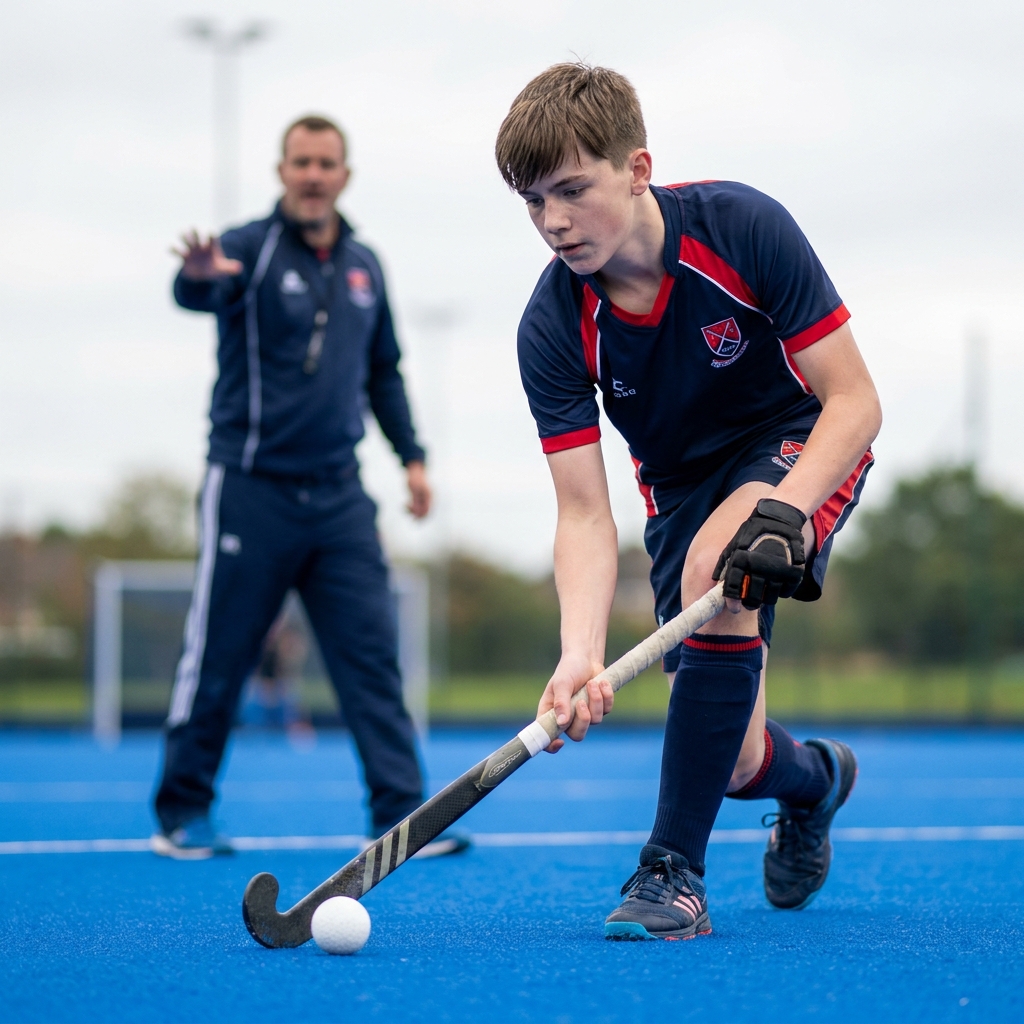
Field Hockey: push shot

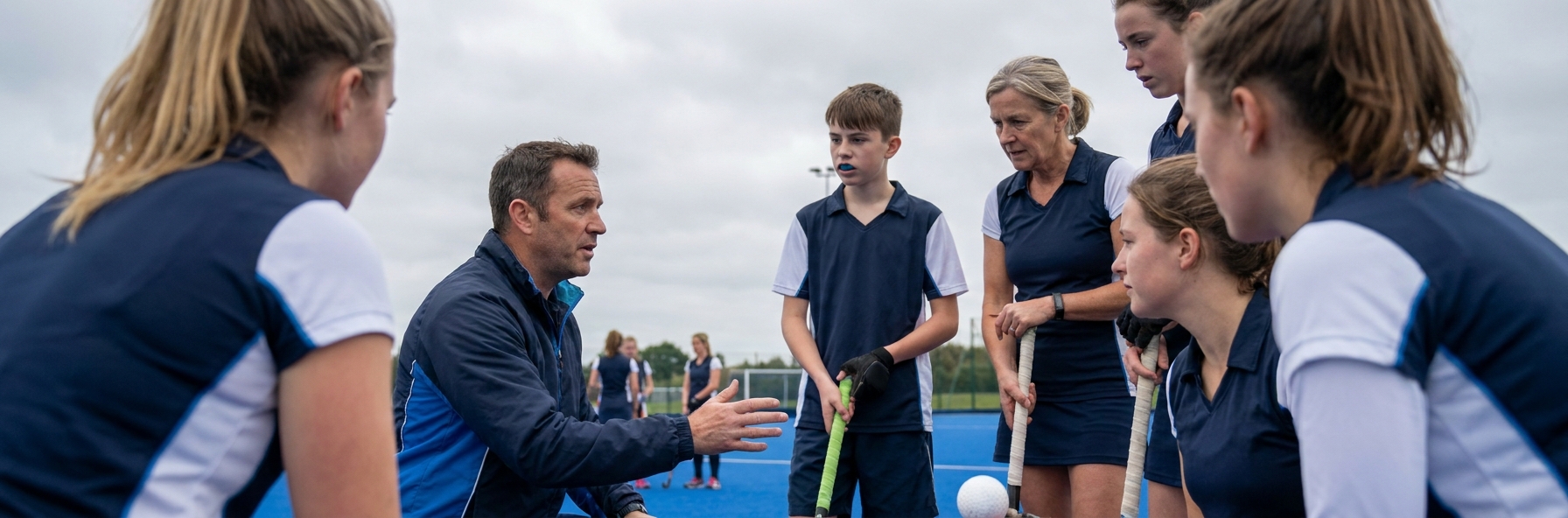
Connection-Based Coaching has emerged as a significant movement in hockey coaching. The core idea is simple but powerful: the relationship between coach and player is the foundation upon which all development is built. Without trust, without genuine connection, coaching effectiveness is limited.

This isn't soft philosophy. Research consistently shows that athletes who feel psychologically safe, who trust their coach, who believe their coach genuinely cares about them, perform better and develop faster.

What is Psychological Safety?

Psychological safety is the belief that you can take risks without being punished or humiliated. In a hockey context, it means players who feel safe to:

  • Try new skills without fear of criticism for failure
  • Ask questions without being made to feel stupid
  • Offer ideas without being dismissed
  • Make mistakes in matches without losing their place
  • Express concerns without negative consequences

When psychological safety exists, players are more creative, more willing to stretch themselves, and more honest about their development needs.

Building Connection

Know Your Players

Do you know what motivates each player? Their life outside hockey? Their hopes and concerns? Connection requires knowledge, and knowledge requires investment in getting to know people.

This doesn't mean becoming best friends. It means showing genuine interest, remembering what players tell you, and demonstrating that you see them as people, not just performers.

Listen More Than You Speak

Many coaches do too much telling. Connection-based coaching emphasises listening. When players speak, give them full attention. Ask follow-up questions. Reflect back what you've heard to show understanding.

Listening builds trust because it demonstrates respect. When players feel heard, they're more receptive to coaching.

Consistency and Reliability

Trust is built through consistent behaviour over time. If you say you'll do something, do it. If you have standards, apply them equally to everyone. Inconsistency destroys trust faster than almost anything else.

Appropriate Vulnerability

Coaches who admit mistakes, acknowledge what they don't know, and share their own development journey build stronger connections than those who project infallibility. Appropriate vulnerability models the openness you want from players.

Connection in Practice

Individual Check-Ins

Brief one-to-one conversations build connection over time. Not always about hockey - sometimes just "How are you?" delivered with genuine interest. These small interactions accumulate into strong relationships.

Personalised Feedback

Generic feedback shows you're not paying attention. Specific, personalised feedback shows you see the individual. "Good work" is less powerful than "I noticed you recovered really quickly after that turnover - that's the response we need."

Celebrating Progress

Connection-based coaches celebrate development, not just outcomes. The player who improves from poor to average has achieved as much as the player who was always excellent. Recognition should reflect effort and progress.

Managing Difficult Conversations

Strong connections make difficult conversations possible. When players trust you, they can hear hard truths. When they don't, the same truths are rejected as unfair criticism. Build the connection first; the honest feedback can follow.

Team-Level Application

Connection isn't just coach-to-player. Teams with strong player-to-player connections perform better. The coach's role includes creating conditions for these connections:

  • Team-building activities that build genuine relationships
  • Training structures that encourage collaboration
  • Addressing behaviours that damage team connection
  • Celebrating collective achievements

Common Barriers

"I don't have time": Connection doesn't require separate time - it's embedded in how you do everything. A two-minute conversation while setting up equipment still counts.

"It's soft": The evidence says otherwise. High-performance environments increasingly recognise that connection underpins performance, not detracts from it.

"Not all players want it": Different players need different levels and types of connection. Read what each individual needs and adjust accordingly.

Key Coaching Points

  • Psychological safety enables risk-taking and growth
  • Know your players as people, not just performers
  • Listen more, tell less
  • Be consistent and reliable
  • Personalise your interactions and feedback
  • Create conditions for player-to-player connection

Drills That Build Team Connection

VIEW ALL SMALL-SIDED GAMES

JOIN SPORTPLAN FOR FREE

  • search our library of 1000+ field hockey drills
  • create your own professional coaching plans
  • or access our tried and tested plans
push shot DRILLS
View All
Unfortunately there were no results for your search! Please try again
push shot ANSWERS
View All

Can you tell me the correct technique for a penalty?

Can you tell me the correct technique for a penalty flick? How you would put it into a training exercise?

Archived User Coach

I need some help with my forwards on the post. They keep missing shots. What is the correct positioning for them and what kind I do to help them score.

Ask a question and have it answered by Coaches from around the world and Sportplan's team of Experts.

Ann Maclean Coach, United States of America

How to lob/chip in a hockey shot?

im twelve, i play for my school team and i am going for a trial at southgate hockey. I  play up front, and i can shoot pretty well but i cant lift it over the keeper. any tips would be much appreiciated

Archived User Coach

Re involving GKs in junior coaching sessions.

I really struggle to make practice fun and useful for the GKs. My attention is naturally focussed on the outfield players, meaning most of the time I simply have drills finishing with a shot on goal to keep the GK involved. Pretty boring for them. Any ideas how I can involve them more? Thanks, Charlie

Carol Ridge Coach, England

Drag-Flicking Tutorial - how to master this skill?

Hi,Out of curiousity, could you list down effective and efficient steps to learn drag-flicking and the drills to master it?

Archived User Coach

Question about a drill in the Sportplan session

Hi, in this week's session "My players lack the ability to pass accurately", there's a progressive exercise called "shoot and recover". Sorry if this is a dumb question but when a player is 'shooting' at their target goal, is the other player allowed to defend the goal?I ask because the diagram makes it look like you're pushing over around 12m and I'd have thought that unless you make the goals huge, with a player defending the goal, people just aren't going to score.Also, if you make the goals really big, it kinda defeats the person of the accuracy element to the exercise.Hope you can assist. Regards,Gary

Gary Thompson Coach, England

Ball "squirting" ahead as players go faster

How to coach fast attackers to control the pace of the ball as they accelerate? At higher speeds, the players' touch on the ball needs to be "softer" but this requires hands and feet to work at varying intensity. I see a lot of speedsters push the ball too far ahead of themselves, the faster they go. The outcome is often a failed shot at goal because the ball runs out of reach or out over the back line.

rachelr Coach, New Zealand

passing drills for girls age 8 to 12

passing drills for girls age 8 to 12

Michelle Hart Coach, Australia

Re involving GKs in junior coa...

I really struggle to make practice fun and useful for the GKs. My attention is naturally focussed on the outfield players, meaning most of the time I simply have drills finishing with a shot on goal to keep the GK involved. Pretty boring for them. Any ideas how I can involve them more? Thanks, Charlie

Carol Ridge Coach, England

How to lob/chip in a hockey sh...

im twelve, i play for my school team and i am going for a trial at southgate hockey. I  play up front, and i can shoot pretty well but i cant lift it over the keeper. any tips would be much appreiciated

Archived User Coach

Problems Clearing the Circle |...

I'm in the U.S., coaching a team of 11-12 year olds, with 1-2 years of experience. Defending the circle, when the ball is loose, my players are not getting control of the ball to hit out of the circle. It's congested with opponent and my team's players. If my players get control, they lose it quickly. If the opponent has control, my players aren't very good at taking the ball or stopping the opponent from taking a shot. Luckily we have a good goalie but she can only do so much. (Full disclosure: I didn't play FH but have a decent understanding of the game. No one else in my community would step up to coach so it's fallen to me.)

Brandon Cowart Coach, United States of America

why is shooting important in h...

why is shooting important in hockey

Archived User Coach

JOIN SPORTPLAN FOR FREE

  • search our library of 1000+ field hockey drills
  • create your own professional coaching plans
  • or access our tried and tested plans

Sportplan App

Give it a try - it's better in the app

YOUR SESSION IS STARTING SOON... Join the growing community of field hockey coaches plus 1000+ drills and pro tools to make coaching easy.
LET'S DO IT